 A K
A K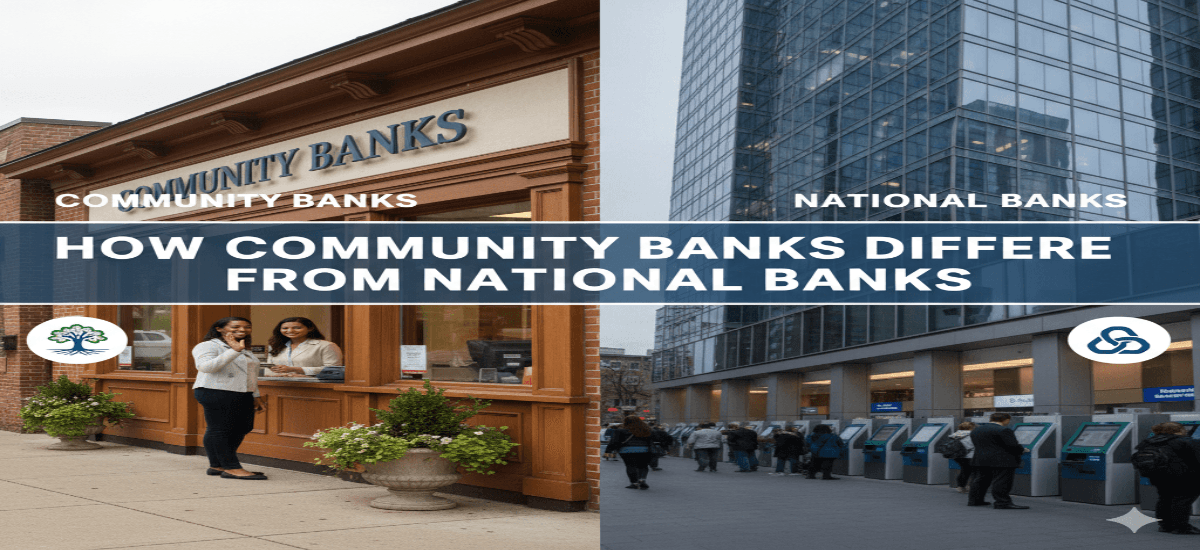
How Community Banks Differ from National Banks?
How Community Banks Differ from National Banks?
From tiny local community banks to enormous national banks with global operations, the U.S. banking sector is diversified. For many Americans, selecting where to bank boils down to choose between these two options. Although both kinds of institutions offer necessary financial services, their structures, offerings, legal frameworks, and interactions with clients are very different. Comprehending these distinctions is essential for people choosing where to create an account as well as for companies, legislators, and communities considering the wider economic effects.
HSBC Cashback Credit Card 2025 – Benefits, Rewards & How to Apply?

A Community Bank: What Is It?
In general, a community bank is a locally owned and run financial institution that caters to small businesses, families, and individuals in a particular region. The Federal Deposit Insurance Corporation (FDIC) reports that the average asset value of community banks is about $10 billion.
Among the characteristics of community banks are:
- Strong decision-making and local presence.
- Pay attention to lending to small businesses.
- Individualized client support.
- Funding for regional economic growth.
Lending decisions made by community banks are more flexible and relationship-based than those made exclusively by credit algorithms since they frequently know their clients personally.
A National Bank: What Is It?
A financial organization that has been chartered and subject to federal regulation by the Office of the Comptroller of the Currency (OCC) is known as a national bank. These banks frequently conduct business in several states and occasionally abroad.
The biggest American financial institutions, such as JPMorgan Chase, Bank of America, Citibank, and Wells Fargo, with trillions of dollars in assets, are examples of national banks.
Important characteristics of national banks include:
- Enormous financial resources.
- Broad range of goods and services (international transfers, mortgages, credit cards, and investment services).
- Extensive branch and ATM networks.
- Heavy reliance on technology and digital platforms.
Differences Between Community Banks and National Banks
Dimensions and Scale
- Community Banks: Usually hold less than $10 billion in assets. Operate within a few towns, counties, or states.
- National Banks: Often hold hundreds of billions or even trillions in assets. Operate nationally and globally.
Customer Service and Relationships
- Community Banks: Known for personal, face-to-face service. Decisions are often made by local staff who understand the community’s needs.
- National Banks: Customer service tends to be standardized, relying on call centers and digital platforms.
Loan Acceptance and Assistance for Small Businesses
- Community banks: Focus on lending to small businesses and frequently use relationship-based credit evaluations. They help local business owners who might not fit the strict requirements of large banks.
- National Banks: Make extensive use of credit models based on data. Even while they provide big loans, small firms with weak credit records could have a harder time getting approved.
Innovation and Technology
- Due to their smaller resources, community banks have historically been slower to adopt new technologies. To be competitive, many are now spending money on online banking, digital payments, and mobile apps.
- National Banks: Pioneers in fraud detection, AI-powered customer support, fintech, and mobile banking systems.
Range of Products and Services
- Community banks: Provide standard banking services such small business loans, mortgages, checking and savings accounts, and more.
- National banks provide a broad range of services, such as corporate financing, wealth management, foreign transfers, and investment banking.
Regulatory Supervision
- Community banks are frequently subject to both federal and state regulation. Compared to large banks, their regulatory obligations are simpler due to their lower size.
- Because of their systemic significance, national banks are subject to strict regulation by federal organizations including the FDIC, the Federal Reserve, and the OCC.
Impact on the Community
- Community Banks: By frequently reinvesting profits locally, they support economic growth. They provide funding to organizations, small companies, and local schools.
- National Banks: Place less attention on particular local areas and more on global investments and shareholder value.
Community Bank Benefits
- Individualized client support.
- Strong backing for small companies.
- Local decision-making.
- Dedication to community growth.
- Increased latitude in loan approvals.
National Bank Benefits
- Extensive selection of goods and services.
- Vast networks of branches and ATMs.
- Advanced online banking resources.
- The capacity to manage huge business accounts.
- In certain situations, scale results in more competitive interest rates.
Issues Community Banks Face
- It’s challenging to compete with national banks’ technologies.
- Growth and risk-taking are restricted by smaller capital reserves.
- Resources may be strained by the expenditures of regulatory compliance.
- Digital-first banking is frequently preferred by younger generations.
Obstacles National Banks Face
- Perceived absence of a personal relationship with clients.
- Complex rules and supervision.
- Exposure to worldwide financial disasters.
- Public mistrust as a result of previous scandals (such as the financial crisis of 2008 and the scandals involving fake accounts).
Community Banks’ Function in Rural America
Community banks are frequently the sole local financial institutions in rural areas. They give families, small companies, and farmers vital loans. Access to reasonably priced loans would be difficult in many rural regions without community banks.
National Banks’ Function in the American Economy
Global competitiveness depends on national banks. They provide funding for foreign trade, multinational firms, and infrastructure. They also connect the U.S. economy with global financial systems, which community banks cannot do.
Which Bank Is Best for You?
Your financial needs will determine whether you choose a national bank or a community bank:
- A community bank can be a better option if you value local decision-making, community impact, and personal relationships.
- A national bank can be a better fit for you if you require extensive product offerings, cutting-edge digital tools, and worldwide access.
For local business and personal loans, many Americans use a community bank; for credit cards, investment accounts, and online convenience, they use a national bank.
In Conclusion: How Community Banks Differ from National Banks?
In the American financial system, community banks and national banks have distinct but equally significant functions. Community banks excel at providing individualized service and supporting the local economy, whereas national banks lead in terms of size and reach. Knowing these distinctions can help businesses and consumers make more informed financial decisions.
Both community and national banks will adjust as the financial landscape evolves due to technological advancements and regulatory changes, but their unique responsibilities will continue to influence the US economy.
The Future of Global Remittances: Trends, Technology, and Economic Impact
The Future of Global Remittances: Trends, Technology, and Economic Impact