 A K
A K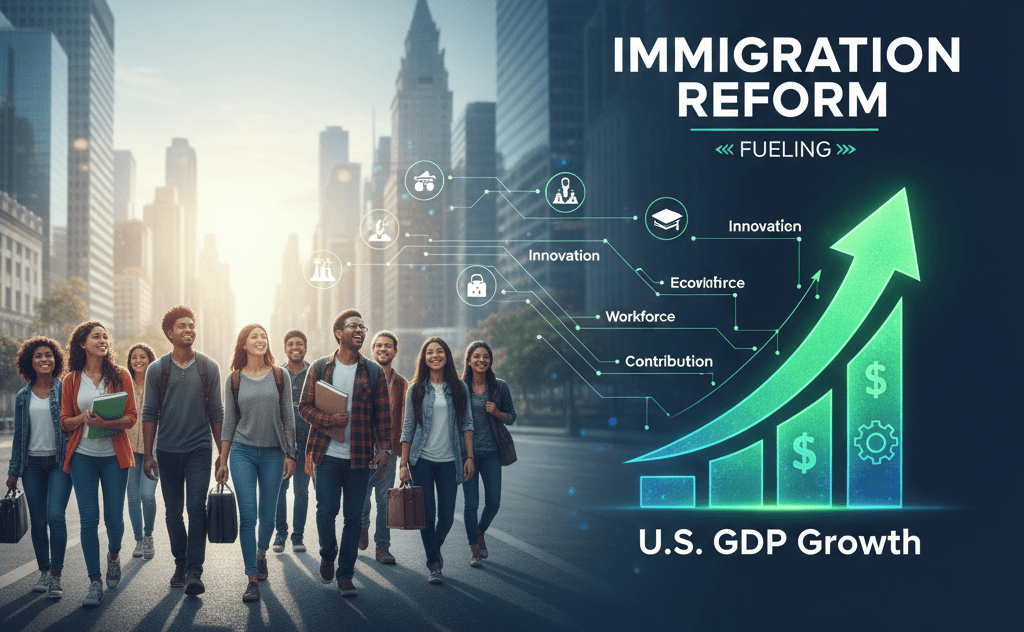
The Impact of Immigration Reform on U.S. GDP Growth
The Impact of Immigration Reform on U.S. GDP Growth
Immigration has always been deeply woven into the fabric of the American story, but in the 2020s it has become more than a cultural or political issue—it has become one of the most critical economic issues shaping U.S. GDP growth. Debates over border enforcement, legal pathways, employment visas, and undocumented workers dominate political conversations. But behind the headlines lies a more fundamental question: How does immigration reform affect the economic growth of the United States?
As demographic shifts, labor shortages, and global competition intensify, economists increasingly argue that the future trajectory of U.S. GDP is closely tied to how the country manages immigration policy.
HSBC Cashback Credit Card 2025 – Benefits, Rewards & How to Apply?

The Economic Basis: Immigration as a Labor Supply Driver
Fundamentally, labor supply and productivity are the two main factors that influence GDP growth. Both are impacted by immigration.
- Immigration Increases Employment
Due to aging populations and dropping birth rates, the U.S. labor force participation rate has been falling for decades. As millions of Baby Boomers retire, employers across sectors—from healthcare to construction to technology—face critical shortages.
Immigration traditionally offsets this trend by adding working-age adults to the labor force. The majority of immigrants arriving in the U.S. are between 20 and 45, the most economically productive years.
Economists note that countries with stagnant or shrinking populations, such as Japan and Italy, have correspondingly slow GDP growth.
- Reform Could Stabilize Long-Term Population Growth
Without immigration, the U.S. would face a rapidly aging population. Social Security, Medicare, and pension systems rely on new workers to sustain benefits for retirees.
Immigration reform that expands legal pathways could help ensure the U.S. remains one of the world’s few developed nations with a growing working-age population.
The Informal Economy and Undocumented Workers
Millions of undocumented workers are thought to already contribute to the American economy, but many are unable to fully engage due to their lack of legal status.
- Legalization May Boost GDP
According to studies, granting legal work status
- increases pay
- raises tax payments
- lessens the exploitation of workers
- increases spending by consumers
This leads to a quantifiable rise in GDP. When workers migrate from informal to formal employment, they typically take on more productive positions.
- Workforce Stability Benefits Businesses
Businesses that depend on unauthorized labor risk productivity losses, legal uncertainty, and employee churn. A more stable and dependable worker force that boosts overall economic productivity would result from legalization or work permit modifications.
The Short-Term and Long-Term Dynamics of Immigration Reform and Inflation
The effect of immigration reform on inflation is one of its less talked-about features.
- Increased Employment Can Lower Wage-Driven Inflation
Particularly in economies that rely heavily on services, labor shortages can raise salaries in ways that raise consumer prices. Immigration can assist offset wage pressures by expanding the workforce.
- More Supply Helps Meet Consumer Demand
With more workers available to produce goods and services, supply chains run more efficiently and shortages ease. Increased supply lowers inflationary pressure.
- Long-Term Price Stability
A growing, productive population creates stable long-term economic growth—a key factor in controlling inflation.
Global Competition: Immigration as a Strategic Asset
In the 21st century, immigration is not merely a domestic issue—it is a global race for talent, labor, and innovation.
- China, India, and Europe Compete for Global Talent
Countries worldwide are adjusting their immigration policies to attract high-skilled workers. The U.S. risks losing its competitive edge if bureaucratic barriers drive talent elsewhere.
- National Security and Economic Security Intersect
Sectors such as AI, quantum computing, biotech, and aerospace require top global talent. Immigration policy influences the U.S. ability to lead in these fields.
- America’s Soft Power
Welcoming immigrants historically strengthened the U.S. global image as an innovation hub. Restrictive policies can diminish this appeal.
Conclusion: The Impact of Immigration Reform on U.S. GDP Growth
Immigration reform is not merely a political issue—it is an economic necessity. With labor shortages affecting key industries, an aging population putting pressure on federal programs, and global competition intensifying, the U.S. stands at a crossroads.
Whether America experiences dynamic GDP growth or faces economic stagnation will depend largely on the policies enacted today.
How U.S. Climate Policy is Shaping the Future of Heavy Industries
How U.S. Climate Policy is Shaping the Future of Heavy Industries