 A K
A K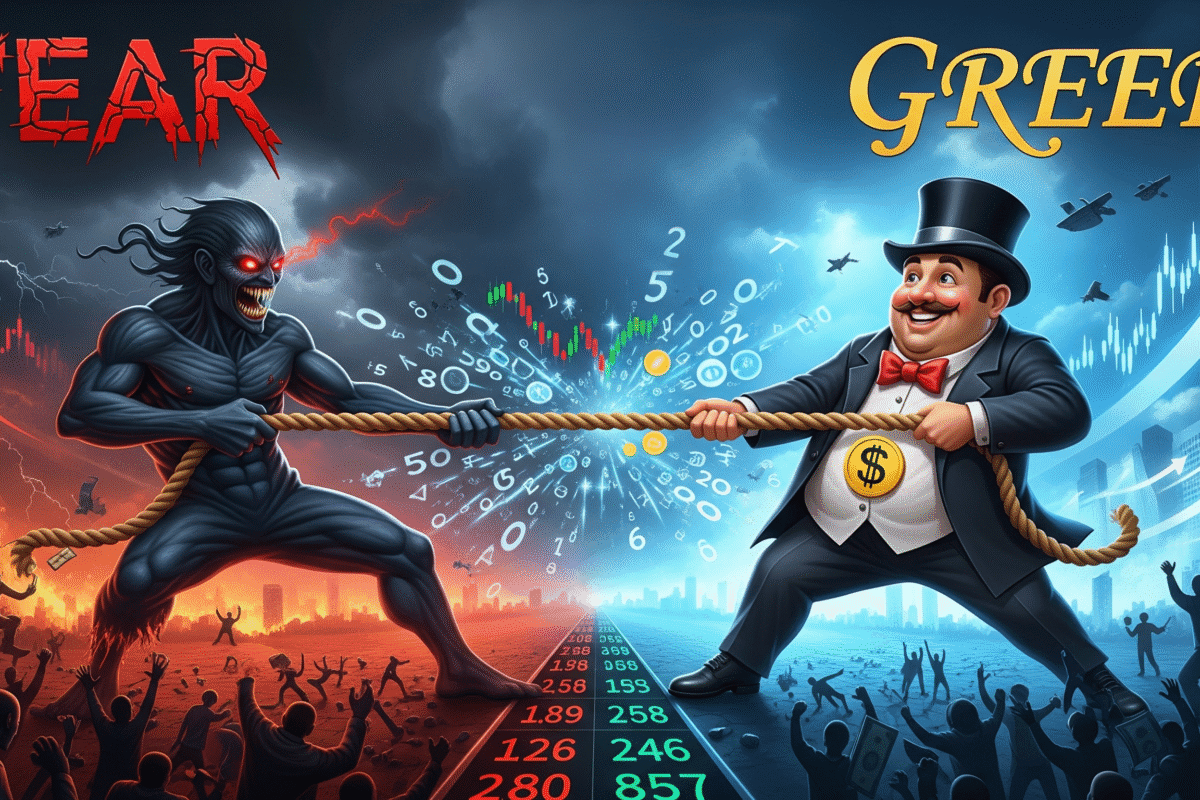
Fear vs Greed: How Emotions Drive Stock Market
Fear vs Greed: How Emotions Drive Stock Market
Human behavior has always been reflected in the stock market. Even if complex algorithms, financial reports, and economic statistics influence prices, there is one indisputable fact at the heart of every transaction: human emotions are what drive markets. Out of all the psychological factors that affect investment choices, fear and greed are the two most potent ones.
Market bubbles, crashes, and everything in between are explained by these two forces, which are frequently in direct antagonism to one another. Fear and greed have controlled the movement of trillions of dollars from the dot-com boom of the late 1990s to the financial crisis of 2008 and even the sharp rallies and declines in 2020–2023.
HSBC Cashback Credit Card 2025 – Benefits, Rewards & How to Apply?

Understanding Fear in the Markets
Fear in financial markets usually manifests as panic selling, risk aversion, and flight to safety. When uncertainty looms—whether due to geopolitical tensions, inflation, or recession fears—investors often rush to sell risky assets and move money into safer investments such as government bonds, gold, or cash.
Common Triggers of Fear:
- Economic Recession: Rising unemployment, declining GDP, and falling corporate earnings spark fear of financial losses.
- Geopolitical Events: Wars, conflicts, or political instability cause investors to sell riskier assets.
- Market Crashes: Sharp declines (like the COVID-19 crash in March 2020) lead to herd-like panic selling.
- Rising Interest Rates: Higher borrowing costs reduce company profits and investor appetite for risk.
Knowing How the Markets Greed
If investors sell out of fear, then aggressive buying is fueled by greed. Taking risks, speculating, and aiming for greater rewards are all examples of greed. Investors frequently ignore hazards in periods of optimism in favor of chasing rising stocks, cryptocurrencies, or real estate.
Typical Greed Triggers:
- Bull Markets: Rising prices attract more investors, creating a cycle of buying and higher valuations.
- Low Interest Rates: Cheap money encourages borrowing and speculative investments.
- Hype & Media Influence: Social media and news coverage amplify “fear of missing out” (FOMO).
- Speculative Bubbles: Overconfidence drives asset prices far beyond their true value, as seen in the dot-com bubble and Bitcoin surges.
The Index of Fear and Greed: A Measure of Emotion
CNN’s Fear & Greed Index, which goes from 0 (extreme fear) to 100 (extreme greed), is one of the most widely used instruments for gauging market sentiment. It uses seven factors to evaluate sentiment:
- Stock price momentum
- Stock price strength
- Stock price breadth
- Put and call options
- Market volatility
- Safe-haven demand
- Junk bond demand
When the index shows “extreme fear,” markets are often oversold, presenting buying opportunities. When it shows “extreme greed,” markets may be overbought and due for a correction.
Case Studies from History: Fear and Greed at Work
1. The 1995–2000 Dot-Com Bubble
Investors flocked to internet stocks out of greed and disregard for fundamentals. When reality sank in, the Nasdaq crashed by almost 80% after surging by almost 400%.
2.The Financial Crisis of 2008
Global markets plunged due to fear of failing banks and toxic mortgage-backed securities. Investors turned to cash and US Treasuries instead of stocks.
3. The 2020 COVID-19 pandemic
In March 2020, fear caused a historic market crash, but a few months later, as stimulus checks and low interest rates propelled one of the world’s quickest bull markets, greed returned.
4. The Craze of Meme Stocks (2021)
Despite poor fundamentals, retail buyers drove up equities like GameStop and AMC due to greed and FOMO.
How Investors Can Control Their Greed and Fear
- Maintain a Long-Term Plan: By concentrating on long-term objectives, you can prevent emotional trading.
- Portfolio diversification involves distributing risk among several asset groups.
- Follow Valuations, Not Hype: Make judgments based on the facts rather than fads.
- For investment timing, use the Fear & Greed Index as a contrarian signal.
- Automate Investments: The emotional impact of market fluctuations is lessened by dollar-cost averaging.
Professional Views: The Psychology of Investing
Experts in behavioral finance contend that irrational investment behavior is caused by emotional biases such herd mentality, confirmation bias, and loss aversion. Research indicates that investors are twice as wounded by losses as they are by gains, which explains why fear frequently elicits bigger reactions than greed.
Conclusion: Understanding the Motivating Factors
Financial markets will always be shaped by the ageless powers of fear and greed. Investors can better manage volatility, steer clear of herd mentality, and spot opportunities when others are panicking or chasing hype by being aware of these emotions.
The apparent takeaway for 2025 is to control your emotions, or else the market will control you.
Why Some Countries Have Stronger Currencies: Global Economic Insights 2025
Why Some Countries Have Stronger Currencies: Global Economic Insights 2025