 A K
A K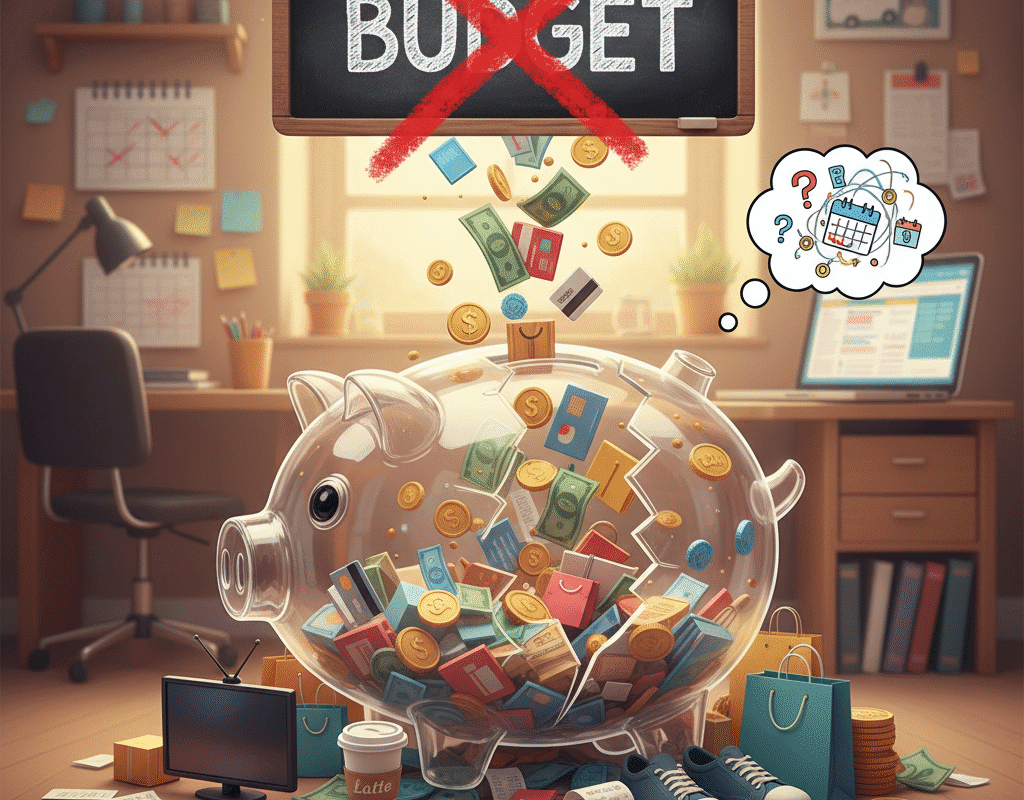
Why People Fail to Stick to Budgets?
Why People Fail to Stick to Budgets?
It has long been argued that the foundation of sound financial management is budgeting. Everyone says that the best way to manage money is to create and stick to a budget, whether it’s from financial experts on TV or personal finance applications that promise rapid answers. However, statistics reveal that most Americans either don’t utilize a budget at all or give up on their budgets after a few months, even though there are a ton of tools and guidance available for budgeting.
A 2024 Bankrate study found that about 74% of American adults said they don’t regularly stick to a budget. This concerning figure begs the crucial question: Why do people disregard budgets even when they are aware of their importance?
HSBC Cashback Credit Card 2025 – Benefits, Rewards & How to Apply?

The Growing Importance of Budgeting in America
With inflation driving up the cost of living, credit card debt hitting record highs, and housing prices continuing to soar, Americans are under increasing financial stress. In such an environment, budgeting isn’t just recommended — it’s essential.
Yet, the irony is clear: the more crucial budgeting becomes, the harder it seems for people to follow through. Financial advisors argue that this disconnect between intention and action is one of the greatest challenges facing personal finance today.
1. Budgeting’s Psychological Barriers
1.1 The “Diet Mentality” of Money
Many people approach budgeting with stringent limitations and a sacrifice-oriented mindset, just like they do when dieting. Excessively tight budgets set people up for failure, much like crash diets frequently fail. The more people feel deprived, the more likely they are to splurge impulsively.
1.2 Current Prejudice
Psychologists explain that humans are naturally wired to prioritize short-term gratification over long-term planning. This phenomenon, called present bias, explains why many people choose a night out over putting that money into savings.
1.3 Emotional Spending
Stress, boredom, or even happiness can trigger spending. Retail therapy has become normalized in American culture, making emotional spending one of the biggest enemies of budgeting.
2. Insufficient Knowledge of Finance
Despite widespread access to financial content online, many Americans never received formal financial education. According to the Council for Economic Education, only 25 states require personal finance classes for high school students.
This knowledge gap often leads to:
- Unrealistic budgets
- Misunderstanding of interest rates
- Failure to account for irregular expenses
- Overreliance on credit cards
Without financial literacy, even the best budgeting apps can only go so far.
3. Typical Errors in Budgeting
3.1 Overly Strict Budgets
A common mistake is creating a budget with no room for fun or flexibility. Failure is nearly a given when every dollar is planned for without taking into consideration the unforeseen circumstances of actual life.
3.2 Ignoring Unusual Costs
Medical costs, yearly subscriptions, and auto repairs are sometimes overlooked while creating a budget. When these expenses pop up, they derail financial plans.
3.3 Using Memory Rather than Monitoring
Many people think they “kind of know” where their money goes but fail to track expenses consistently. Without accurate tracking, budgets become guesswork.
3.4 Not Revisiting the Budget
Life changes — new jobs, rent hikes, family needs. A budget that isn’t updated becomes irrelevant, leading people to abandon it altogether.
4. Inflation in Lifestyle and Social Pressures
4.1 The Impact of Social Networks
The “keeping up with appearances” culture has been fostered by Instagram and TikTok. Even if it doesn’t fit inside a budget, the incentive to spend more is increased when friends and influencers display lavish lifestyles.
4.2 The Influence of Peers
Peer pressure plays a role in overspending on anything from weekend getaways to eating out with friends. Even if it means deviating from financial objectives, many people find it tough to say no.
4.3 Lifestyle Inflation
As people earn more, they tend to spend more — upgrading cars, moving into bigger apartments, or splurging on luxury goods. Without discipline, lifestyle inflation undermines even the best budgets.
5. The Role of Debt in Budget Failures
Credit card debt is one of the biggest reasons Americans can’t stick to their budgets. With the average household credit card debt surpassing $10,000 in 2024, minimum payments alone eat up significant portions of income.
When so much money goes toward servicing debt, there’s little left for discretionary spending or saving, making budgets feel restrictive and discouraging.
6. Technology: Helpful or Harmful?
Apps like Mint, YNAB (You Need a Budget), and EveryDollar have made budgeting more accessible. However, technology isn’t always the magic solution:
- Overcomplicated apps discourage consistent use.
- Alerts and notifications can feel overwhelming.
- Automation can create a false sense of security without building real financial discipline.
7. True Narratives
Case Study 1: 29-year-old Emily had a tight budget that left little space for entertainment. She gave it up completely within two months after several “cheat days.”
Case Study 2: Robert, 41, disregarded sporadic costs such as auto repairs. His entire budget fell apart when he was confronted with a $900 expense.
Case Study 3: Sarah and Mark, 35, never kept a manual tab on their expenditures but instead relied on budgeting tools. Without noticing, they often spent $400 more than they should have each month.
These illustrations show that budgeting involves more than just numbers; it also involves mentality and habits.
8. How to Finally Stick to a Budget
8.1 Start Realistic
Instead of cutting every expense at once, begin by reducing unnecessary costs gradually.
8.2 Use the 50/30/20 Rule
This simple method divides income into:
- 50% needs
- 30% wants
- 20% savings/debt repayment
It’s flexible and easy to maintain.
8.3 Automate Savings
Pay yourself first. Set up automatic transfers to savings before spending on anything else.
8.4 Create an Emergency Fund
Unexpected expenses derail budgets. A $1,000 starter emergency fund can act as a safety net.
8.5 Review Monthly
A budget isn’t static. Regular reviews keep it aligned with real-life changes.
8.6 Make Time for Fun Money
Budgets that include a small allowance for entertainment are more sustainable.
8.7 Seek Accountability
Whether through a financial advisor, spouse, or friend, accountability helps people stick to long-term financial goals.
9. Professional Views
According to behavioral economist Dr. Sarah Newcomb, “people focus on numbers instead of behaviors, which is why budgets fail.” Aligning behaviors with values is essential for financial success.
“A budget is just telling your money where to go instead of wondering where it went,” says Dave Ramsey, personal finance expert. However, when they don’t constantly evaluate and modify it, individuals give up.
Ramsey Solutions Survey (2023): 80% of people who stick to a written budget report feeling more in control of their lives.
10. The American Budget’s Future
People’s money management practices will be increasingly influenced by digital tools and financial education as economic constraints increase. According to experts, there will be an increasing trend toward behavioral finance strategies that emphasize psychology-driven techniques over rigid mathematics.
Budgeting may never be simple, but it is feasible to avoid the typical mistakes that so many Americans make if you have the correct attitude and resources.
In Conclusion
Budgeting is one of the most powerful tools for financial freedom, yet most Americans fail to stick to it. The reasons are complex — ranging from psychological tendencies and lack of education to social pressures and debt burdens.
The good news? With realistic expectations, consistent tracking, and a focus on habits rather than restrictions, sticking to a budget is achievable.
As financial expert Suze Orman puts it: “A budget is not a prison — it’s a plan for freedom.”
By shifting the way we view budgeting — not as a punishment, but as a path to empowerment — Americans can finally break free from the cycle of failed financial plans.
The Economics of Tourism: Growth, Challenges, and Global Impact
The Economics of Tourism: Growth, Challenges, and Global Impact