 A K
A K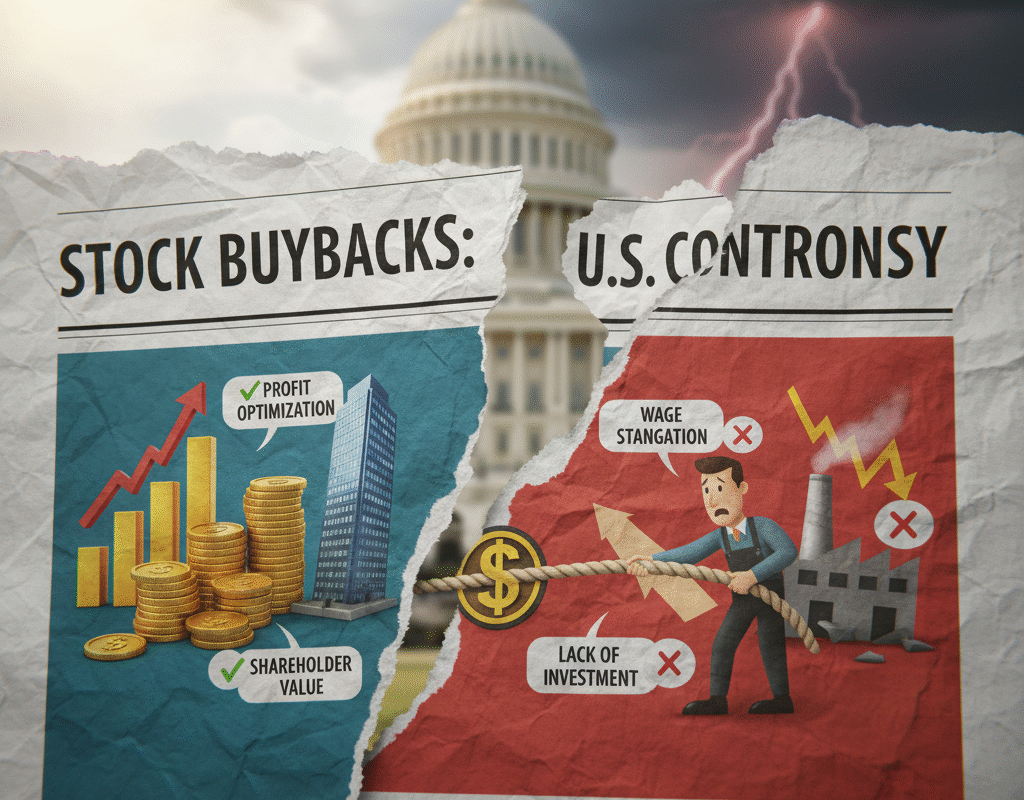
Why Stock Buybacks Remain Controversial in the U.S.?
Why Stock Buybacks Remain Controversial in the U.S.?
One of the most contentious activities in American corporate culture is stock buybacks, which occur when corporations buy back their own shares on the open market. Proponents contend that they are an effective means of giving shareholders their money back and expressing faith in a company’s future. Critics say they magnify inequality, inflate stock prices artificially, divert resources away from workers, and serve primarily to enrich executives whose compensation is tied to share performance.
In recent years, the debate has intensified. Legislative proposals, new regulatory scrutiny, and ongoing economic uncertainty have pushed the buyback conversation from financial circles into mainstream U.S. political discourse. As the American economy continues to adjust to inflation pressures, shifting labor markets, and evolving regulatory landscapes, stock buybacks are once again at the center of controversy.
HSBC Cashback Credit Card 2025 – Benefits, Rewards & How to Apply?

A Synopsis of the History of Buybacks in Corporate America
Up until 1982, buybacks were essentially prohibited. The U.S. Securities and Exchange Commission introduced Rule 10b-18, giving companies a “safe harbor” from market manipulation accusations if they followed specific guidelines.
Once legalized, buybacks exploded.
In the decades since, stock repurchases have grown into one of the dominant uses of corporate profits. In some years, S&P 500 companies have used more money on buybacks than on capital investment, research, development, or employee compensation combined.
The Meaning of the New U.S. Buyback Tax
In 2023, a 1% tax on stock buybacks was implemented. Some lawmakers have proposed increasing it to 4%. Supporters say the tax can:
- discourage excessive buybacks
- encourage companies to reinvest profits in other ways
- raise government revenue
- Critics argue the tax will distort markets and punish legitimate business decisions.
Early data suggests companies are adjusting but not abandoning buybacks entirely. The long-term impact of the tax is still emerging, contributing to ongoing debate.
Worker Advocates Say Buybacks Hurt Labor
Labor unions and worker advocates argue that buybacks divert profits away from wages, benefits, and job creation. Their concerns include:
- Companies claiming they “can’t afford” raises while spending billions on buybacks.
- Buybacks reducing funds available for workforce training.
- The practice making layoffs more likely during downturns.
- A perceived imbalance between rewarding shareholders versus employees.
When companies report record profits and simultaneously announce layoffs while conducting buybacks, public criticism intensifies.
Do Buybacks Make the Best Use of Money? The Business Viewpoint
In some circumstances, buybacks may be the greatest choice from a business perspective.
- When Buybacks Make Financial Sense
- when a business truly feels that its stock is cheap.
- when all high-yield investing options have been explored.
- When excess cash would otherwise sit unused.
- When buybacks offset dilution and keep shareholder value stable.
Supporters argue that preventing buybacks would lead to inefficient capital allocation. They argue that forcing companies to reinvest profits—even when good opportunities don’t exist—can lead to wasteful spending or low-return projects.
Public Perception vs Corporate Strategy
The controversy partly arises because buybacks are a technical financial mechanism, yet they resonate emotionally with the public.
To the average worker, buybacks can symbolize:
- companies rewarding shareholders over employees
- economic inequality
- unfair advantages for executives
- Wall Street benefiting at the expense of Main Street
For companies, buybacks are often a neutral or even responsible financial tool within a broader strategy.
Conclusion: Why Stock Buybacks Remain Controversial in the U.S.?
Stock buybacks sit at the crossroads of corporate strategy, economic policy, and social values. They represent not just a financial mechanism but a symbol of broader debates about:
- Inequality
- Corporate responsibility
- Worker empowerment
- Executive pay
- Long-term U.S. competitiveness
As long as the American economy grapples with questions of fairness, productivity, and the distribution of wealth, stock buybacks will remain a highly contentious issue.
For investors, corporations, policymakers, and workers, the buyback debate is far more than an accounting matter—it reflects the core tensions shaping the future of the U.S. economy.
How U.S. Fintech Regulations Differ Across States: A Comprehensive Breakdown
How U.S. Fintech Regulations Differ Across States: A Comprehensive Breakdown