 A K
A K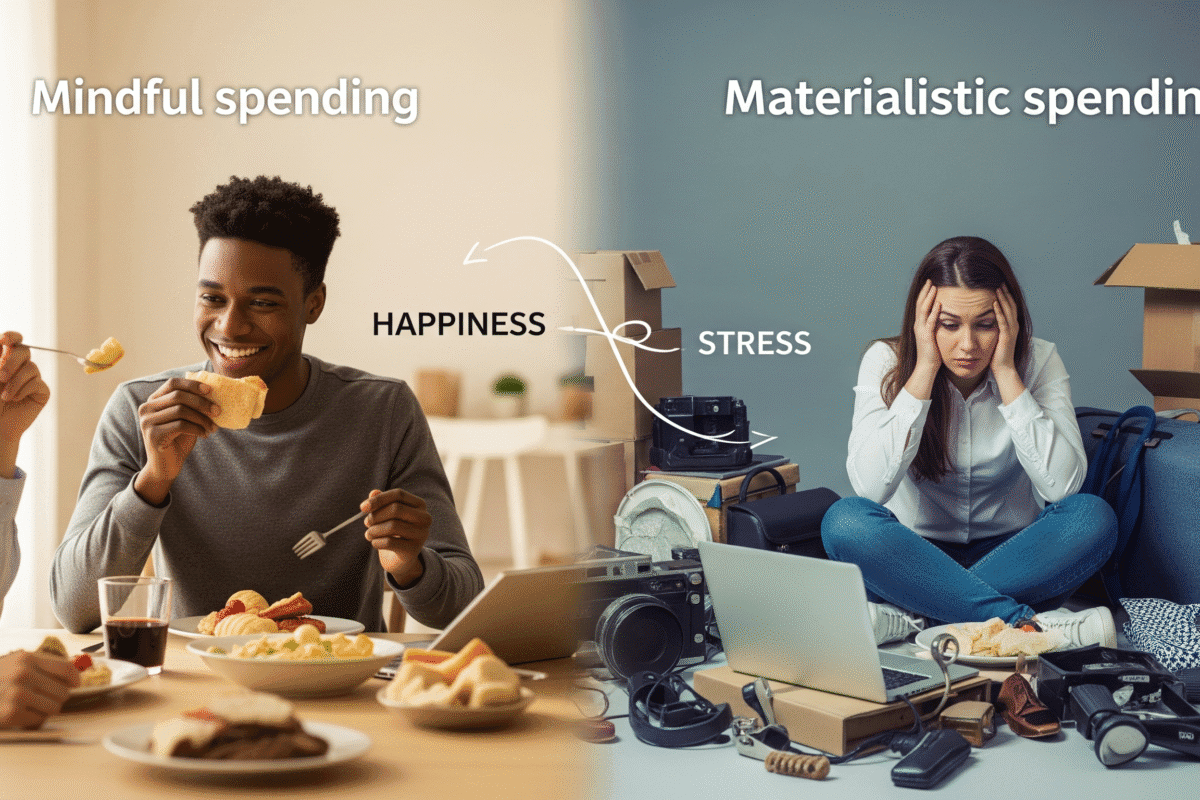
The Link Between Happiness and Spending:
The Link Between Happiness and Spending:
In the United States, conversations about happiness often lead back to one critical factor—money. From managing household expenses to buying experiences that create memories, spending patterns are deeply connected to how people perceive happiness. For decades, researchers have tried to answer the timeless question: Does money really buy happiness?
While the answer is complex, growing evidence suggests that the way individuals earn, save, and spend money plays a crucial role in overall well-being. This article explores the latest findings, cultural trends, and expert insights into the connection between happiness and spending habits in 2025, offering a comprehensive look at how Americans view money in their pursuit of a fulfilling life.
HSBC Cashback Credit Card 2025 – Benefits, Rewards & How to Apply?

The Psychology of Money and Happiness
Money is often seen as a tool for survival, but psychology reveals it also has a powerful impact on emotions and satisfaction. According to behavioral economists, the relationship between wealth and happiness is not linear—meaning that beyond a certain income threshold, additional wealth provides diminishing returns.
A well-known Princeton University study found that happiness levels rise with income up to about $75,000 annually, after which emotional well-being plateaus. However, updated research in 2021 from Nobel Prize–winning psychologist Daniel Kahneman and Matthew Killingsworth suggested that happiness can continue increasing with higher earnings, but only under certain conditions—such as reduced stress and wise spending.
This indicates that the key is not just having money, but how it is used.
Investing in experiences rather than tangible goods
Spending money on experiences rather than material goods tends to increase people’s sense of fulfillment, according to one of the most frequently quoted findings in happiness research.
- Experiences (family vacations, concerts, etc.) generate enduring memories and fortify social bonds, both of which are essential for mental health.
- Although material possessions like vehicles, technology, and luxury goods can bring momentary happiness, they frequently cause buyer’s regret or comparisons to others.
According to a 2023 American Psychological Association survey, 67% of Americans said that spending money on experiences rather than things made them happier.
Consumer behavior has changed as a result of this trend, with more Gen Z and millennials placing a higher value on dining, travel, and cultural events than on upscale shopping.
How Financial Stress Affects Happiness
Conversely, one of the main causes of sadness is financial concerns. According to a 2024 Gallup poll, 62% of Americans said that one of their main worries was money worry. This worry is exacerbated by growing healthcare expenses, student loan debt, and housing expenditures.
In addition to lowering happiness, ongoing financial stress has an adverse effect on mental health, increasing the prevalence of anxiety and depression. The American Psychiatric Association states that those who worry about money all the time are three times more likely to report having poor mental health.
This makes financial literacy and money management skills crucial not just for financial stability but also for happiness.
Happiness and Generosity: The Science of Giving
It’s interesting to note that happiness isn’t solely correlated with individual expenditure. Spending money on other people can increase happiness more than spending money on oneself, according to research.
According to a Harvard Business School study, those who donated to charities or purchased presents for other people expressed higher levels of enjoyment than those who just spent money on themselves. This is due to the fact that giving stimulates reward and pleasure-related brain areas.
In 2023, charitable donations in America totaled over $499 billion, demonstrating how ingrained generosity is in the country’s culture. Sharing riches gives many people a feeling of joy and purpose.
Income Inequality and Its Effect on Happiness
Another layer of complexity is the impact of income inequality. Studies indicate that in societies where the wealth gap is large, people report lower levels of happiness, even if their personal income is sufficient.
In the United States, rising inequality over the past decade has created a sense of financial insecurity, particularly among the middle class. This feeling of being “left behind” affects overall happiness, regardless of personal financial success.
Experts suggest that community support systems, fair wages, and policies promoting financial equality can significantly enhance collective well-being.
Smart Spending: How to Use Money to Increase Happiness
Based on decades of research, here are five ways Americans can use money to boost happiness in 2025:
- Buy Experiences, Not Just Things – Prioritize travel, hobbies, and social activities over material goods.
- Spend on Others – Invest in relationships and community through acts of generosity.
- Reduce Financial Stress – Build emergency savings and avoid debt traps.
- Invest in Time-Saving Services – Hiring help for chores or using technology to free up time increases life satisfaction.
- Align Spending With Personal Values – Choose purchases that reflect personal goals and beliefs.
The State of American Spending in 2025
Trends in U.S. consumer expenditure as of 2025 show some intriguing changes that have a direct impact on satisfaction levels:
- Growth of the Experiential Economy: Travel, concerts, and outdoor activities continue to generate higher expenditure than luxury items.
- Health and Wellness Boom: Americans are associating money with well-being by spending more on organic food, mental health services, and physical activity.
- The rise of financial applications: AI-powered savings tools and budgeting apps can ease financial stress.
- Sustainable Spending: More buyers opt for environmentally friendly goods, matching their purchases to their ideals to increase their level of enjoyment.
Professional Views on Money and Happiness
A number of psychologists and economists comment on the argument:
- Dr. Elizabeth Dunn (University of British Columbia) – “Happiness is less about how much money you make and more about how you spend it.”
- “Money is important, but its impact is greatest when it helps reduce misery, such as debt or insecurity,” said Nobel Laureate Daniel Kahneman.
- “True happiness comes from relationships, purpose, and generosity, not from wealth itself,” said Arthur Brooks of the Harvard Kennedy School.
True Tales: The Impact of Spending on Lives
- Case 1: The Path to Debt Freedom A young couple in Texas reported a dramatic increase in happiness after paying off student loans, highlighting the relief financial freedom brings.
- Case 2: The Experience Investor – A retiree in Florida spends on travel with grandchildren instead of luxury goods, saying, “Memories last longer than diamonds.”
- Case 3: The Giver’s High – A New York entrepreneur donates part of her profits to local charities, finding joy in community impact.
America’s Happiness and Spending Future
Experts forecast that patterns of spending and happiness will continue to change in the future:
- Automation and artificial intelligence may free up time so that people can invest in hobbies and experiences.
- Debates about universal basic income (UBI) have the potential to change Americans’ perceptions of wealth and contentment.
- It is anticipated that Gen Z and Millennials would place a higher value on shared experiences, mental wellness, and sustainability than on conventional wealth symbols.
According to the future, money will still play a significant part in happiness, but only if it is spent carefully and strikes a balance between emotional fulfillment and financial security.
In Conclusion
Spending and happiness are inextricably linked, but it goes beyond just having more money. Americans’ life pleasure is significantly impacted by their financial security, well-being, generosity, and experiences.
The main takeaway from the U.S.’s economic changes, growing living expenses, and changing cultural norms is that contentment is more about how well you manage your resources than how much you own.
Top Mistakes People Make with Emergency Funds and How to Avoid Them
Top Mistakes People Make with Emergency Funds and How to Avoid Them