 A K
A K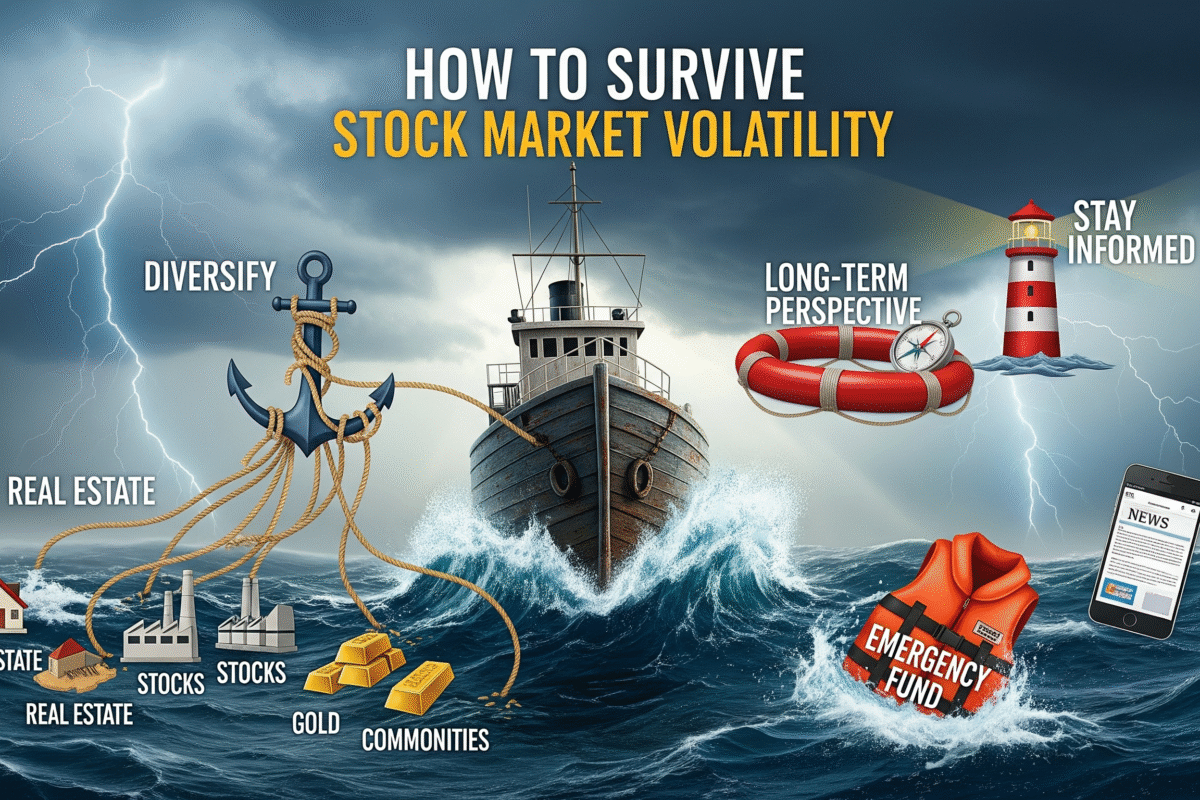
How to Survive Stock Market Volatility?
How to Survive Stock Market Volatility?
Stock markets are known for their unpredictable ups and downs, but 2025 has already tested the nerves of both seasoned and beginner investors. With interest rate shifts, geopolitical tensions, inflationary concerns, and unexpected global events, volatility has become the new normal.
For many, market turbulence feels like walking on a financial tightrope. One moment, stock prices soar; the next, they plummet. If you’re asking yourself how to survive stock market volatility, you’re not alone. Investors across the United States and worldwide are seeking ways to protect their wealth, minimize risks, and still capture growth opportunities.
This guide explores practical strategies, expert insights, and time-tested approaches that will help you survive — and even thrive — during turbulent stock market conditions.
HSBC Cashback Credit Card 2025 – Benefits, Rewards & How to Apply?

What is volatility in the stock market?
The fast and erratic price fluctuations of stocks or indexes are referred to as stock market volatility. It is often measured using the VIX (Volatility Index), also called the “fear gauge.” High volatility typically reflects uncertainty among investors, while low volatility suggests stability.
- High volatility = High risk, high opportunity
- Low volatility = Stability, slower growth
Volatility is not inherently negative. In fact, many investors capitalize on it through smart strategies. However, without preparation, it can destroy portfolios and confidence.
Why is the Market So Volatile in 2025?
Several factors are fueling volatility this year:
- Federal Reserve Policy: Interest rate adjustments affect borrowing costs, corporate profits, and consumer spending.
- Global Conflicts: Ongoing geopolitical tensions add uncertainty to energy and commodity markets.
- Tech Disruptions: AI, blockchain, and green energy industries are reshaping markets with both growth potential and instability.
- Election Year in the U.S.: Political campaigns, regulatory proposals, and economic promises spark investor concerns.
- Inflation & Recession Fears: The lingering effects of inflation combined with fears of slowing growth create unpredictable trading behavior.
How to Survive Stock Market Volatility
Here are 12 strategies that can help you protect and grow your portfolio during uncertain times:
Stay Calm and Avoid Panic Selling
The worst mistake investors make during volatile times is selling at the bottom out of fear. History shows that markets recover. The S&P 500, for example, has rebounded from every major crash, including the Great Depression, the Dot-Com Bust, and the 2008 Financial Crisis.
Diversify Across Asset Classes
“Don’t put all your eggs in one basket” remains timeless advice. Spreading investments across different asset classes — stocks, bonds, real estate, and commodities — reduces the impact of volatility.
- Stocks → Growth potential
- Bonds → Stability and fixed income
- Real Estate → Inflation hedge
- Gold/Commodities → Safe-haven during crises
Build an Emergency Fund
Volatile markets can coincide with job losses or economic downturns. Having 3–6 months of living expenses in cash ensures you won’t be forced to liquidate investments at a loss.
Dollar-Cost Averaging (DCA)
Instead of trying to time the market, invest a fixed amount at regular intervals. This reduces the risk of buying everything at market peaks. Over time, DCA smooths out your cost basis.
Pay Attention to Reputable Businesses
Blue-chip equities and businesses with solid financial sheets typically fare better during tumultuous periods than speculative stocks. Seek out:
- Low ratio of debt to equity
- robust free cash flow
- A steady dividend history
Employ Limit and Stop-Loss Orders
Put stop-loss orders in place that will sell a stock automatically if its price drops below a predetermined threshold to safeguard your assets. This lets you keep investing while avoiding disastrous losses.
Examine Protective Domains
In times of uncertainty, some industries fare better:
- Healthcare ↑ Regardless of the state of the economy, people require medical treatment.
- Utilities: vital services that are in constant demand.
- Consumer staples: food, housing items, and necessities are still essential.
Rebalance Your Portfolio Regularly
Market swings may cause your portfolio allocation to drift. If stocks outperform, you may end up overexposed to risk. Rebalancing brings your portfolio back to your target allocation (e.g., 60% stocks, 40% bonds).
Invest for the Long Term
Volatility is scary in the short term, but zooming out tells a different story. The U.S. stock market has returned an average of 9–10% annually over the last century, despite recessions, wars, and crises.
Keep Learning and Following Reliable News
Not all news is helpful — some headlines are designed to spark fear. Follow credible financial sources and avoid making decisions based on social media panic.
Work with a Financial Advisor
If the market feels overwhelming, consider professional guidance. Advisors can help tailor investment strategies to your risk tolerance and goals.
Maintain Perspective
Volatility is part of investing. Without risk, there would be no reward. The key is discipline, patience, and preparation.
Lessons Learned from Historical Volatility
- 2008 Financial Crisis: Panic sellers locked in irreversible losses, whereas investors who hung onto their investments recovered in five years.
- The 2020 COVID-19 Crash: By the end of the year, markets had recovered to all-time highs after plunging over 34% in March.
- The Dot-Com Bubble of 2000 saw the downfall of overpriced tech companies, but long-term investors with diverse portfolios fared well.
What’s Next?
While no one can predict exact market movements, one truth remains constant: the stock market rewards patience. Short-term dips often pave the way for long-term gains.
Whether you’re a retiree protecting savings, a young investor building wealth, or a trader seeking opportunities, the path to surviving volatility is preparation, discipline, and informed decision-making.
Conclusion
Stock market volatility is not the enemy — fear and inaction are. By staying calm, diversifying, focusing on quality, and maintaining a long-term vision, investors can survive and thrive in turbulent times.
In 2025 and beyond, the winners will not be those who avoid volatility, but those who embrace it wisely.
Budgeting for Seasonal Expenses: Smart Money Strategies for Every Season in 2025
Budgeting for Seasonal Expenses: Smart Money Strategies for Every Season in 2025