 A K
A K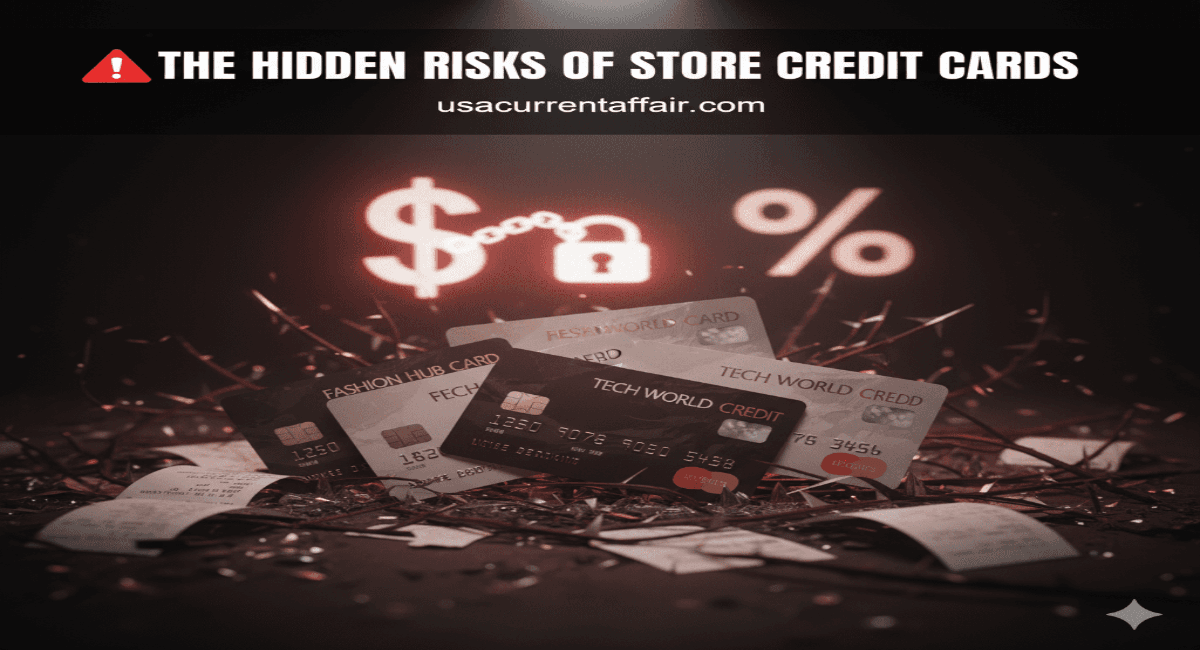
The Hidden Risks of Store Credit Cards:
The Hidden Risks of Store Credit Cards:
Customers are inundated with alluring offers at the register in today’s retail environment, such as “Would you like to save 20% today by opening a store credit card?” Who wouldn’t desire an immediate discount, special benefits, or points for future purchases? It seems innocent, even helpful.
Millions of gullible Americans have fallen victim to a financial trap that lies beneath the gleaming exterior. Store credit cards, which are frequently promoted as easy ways to save money, have unstated hazards that can result in debt accumulation, harm to one’s credit score, and long-term financial repercussions.
HSBC Cashback Credit Card 2025 – Benefits, Rewards & How to Apply?
Why Store Credit Cards Are Promoted by Retailers
Store credit cards are not being given away by retailers out of altruism. For large chains, these cards are actually one of the main sources of revenue.
- High Interest Revenue: The average annual percentage rate (APR) for store cards is between 25% and 30%, which is significantly higher than the national average for standard credit cards.
- Customer Loyalty: Customers are more likely to visit a store again after opening a store card, which creates an automatic sales funnel.
- Fee Income: For lenders and retail partners, late payment penalties, deferred interest schemes, and hidden fees bring in billions of dollars every year.
The Unspoken Risks of Retail Credit Cards
Despite the appealing presentation, retail credit cards include a number of unstated financial hazards.
Extremely high rates of interest
APR rates on the majority of retail cards are higher than 28%. Any money you save from sign-up incentives is swiftly consumed by interest fees if you don’t pay off your balance in full each month.
For instance:
- With a 20% sign-up discount, you may save $100 on a $500 purchase.
- However, you will pay an extra $56 in interest if you carry the remaining $400 balance for only six months at 28% APR.
- Your “savings” vanish in less than a year, and you can wind up paying more than the retail price.
Deferred Interest Traps
Many store cards advertise “0% interest if paid in full within 6 or 12 months.” What they don’t tell you clearly is that failing to pay the balance in full by the deadline triggers retroactive interest — meaning you’ll be charged interest on the entire original purchase amount, not just what remains.
Low Credit Limits and Utilization Damage
Store cards often come with low credit limits, sometimes just $500–$1,000. While that seems manageable, it increases the risk of high utilization ratios — a key factor in your credit score.
Adverse Effect on Credit Ratings
Several store card applications result in hard inquiries, which momentarily lowers your credit score. Even worse, there are harsh and permanent consequences for missing payments.
Your credit record may reflect past-due shop card payments for a maximum of seven years.
Restricted Use and Benefits
Unlike general-purpose credit cards, store cards are often restricted to a single retailer or brand family. Even while you might receive discounts or points, these are typically not as beneficial as the rewards programs that big credit card issuers offer.
Case Study: The Expensive Factor
Take the example of Maria, an Ohio teacher who is 32 years old. She opened three store cards to save money on gifts while she was shopping for the holidays.
- She was given a sign-up discount of $150.
- However, she was charged with $400 in interest and late fees after holding balances for a few months.
- Her heavy utilization caused her credit score to decline by 58 points.
Maria’s experience is not unusual; according to financial advisors, store cards are a major contributor to consumer debt problems, especially for younger and seasonal consumers.
Why Consumers Get Sucked Into the Trap
Despite the risks, store credit cards continue to thrive. Why?
- Immediate Gratification: Consumers are lured by instant discounts and rewards.
- Aggressive Sales Tactics: Cashiers are often pressured to pitch credit cards at checkout.
- Lack of Financial Literacy: Many shoppers don’t fully understand APR, deferred interest, or credit utilization.
- Holiday Shopping Pressure: During peak seasons, the temptation to save money is at its highest.
Retailers know this — and they strategically time their offers during major sales events like Black Friday and holiday promotions.
How to Protect Yourself If You Already Have a Store Card
Although you should exercise caution, you don’t necessarily need to freak out if you’ve already applied for a shop card.
- Pay in Full Monthly: Never carry a balance.
- Set Payment Reminders: Avoid late fees and penalties.
- Keep Utilization Low: Try to stay below 30% of your credit limit.
- Avoid Multiple Applications: Limit the number of store cards you open.
- Consider Closing Inactive Cards Carefully: While closing a card can reduce available credit, keeping it open with a zero balance is often better.
The Bottom Line
Although store credit cards might appear to be a quick way to save money, they can instead result in long-term debt, ruined credit, and stress related to money.
Before accepting these offers, customers should carefully read the fine print, consider their options, and proceed with caution.
Knowing the hidden dangers of store credit cards is important for consumer protection as well as personal finance, especially in light of the current economy’s growing demand for financial literacy.
Why Index Funds Often Outperform Professionals: A Deep Dive into Smarter Investing
Why Index Funds Often Outperform Professionals: A Deep Dive into Smarter Investing