 A K
A K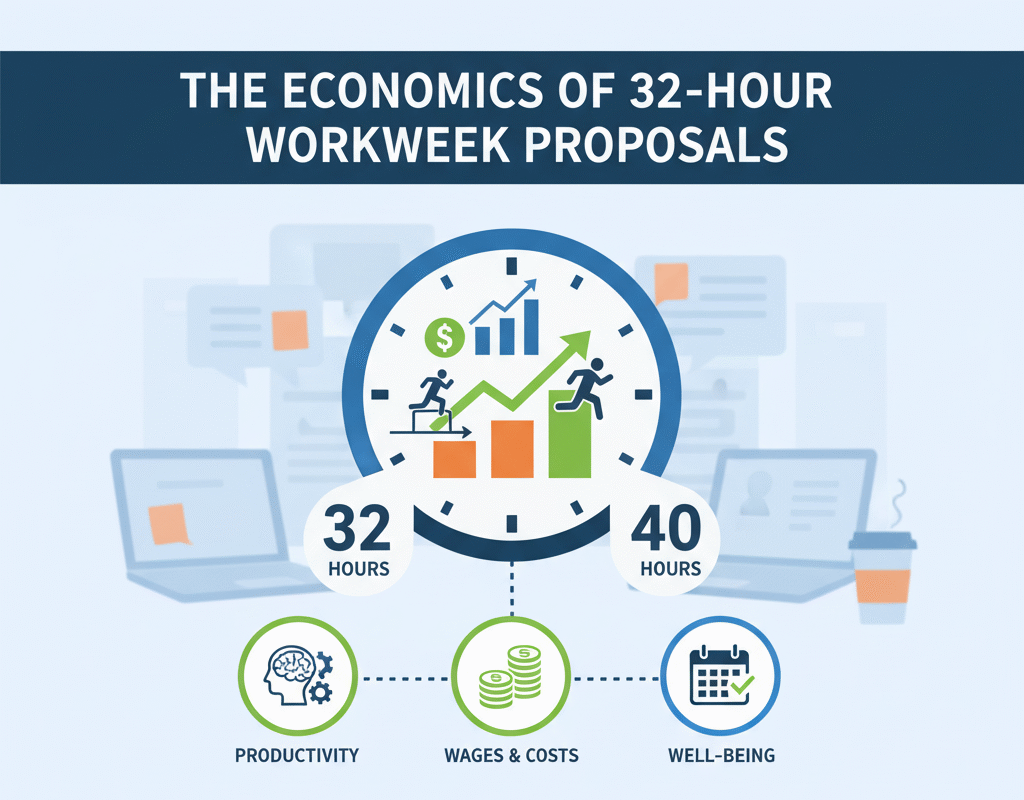
The Economics of a 32-Hour Workweek in the U.S.
The Economics of a 32-Hour Workweek in the U.S.
The concept of a 32-hour workweek has sparked considerable debate across the United States in recent years. Advocates argue that shorter workweeks could enhance productivity, improve employee well-being, and create more equitable labor conditions, while skeptics caution about potential costs to businesses and the broader economy. With the rising emphasis on work-life balance, mental health, and flexible work schedules, understanding the economic implications of such proposals is crucial for policymakers, business leaders, and employees alike.
HSBC Cashback Credit Card 2025 – Benefits, Rewards & How to Apply?

The History of Work Hours in the U.S.
The standard 40-hour workweek in the U.S. became widespread during the early 20th century, following labor movements that advocated for fair working conditions. Over time, however, productivity has risen substantially, but average work hours have remained largely unchanged. The question now arises: can modern workplaces maintain output while reducing hours? Some nations in Europe, such as Germany and the Netherlands, have experimented with shorter workweeks, providing valuable case studies for the U.S.
Economic Rationale for a 32-Hour Workweek
- Productivity Gains
The potential increase in productivity is one of the main justifications for a 32-hour workweek. Employees who get enough sleep and experience less stress may be able to maintain or even boost productivity in fewer hours, according to studies. Iceland, for example, tested shorter workweeks and found that production in a variety of industries, including public services and healthcare, was either unchanged or increased.
- Health and Well-Being of Workers
A 32-hour workweek has more financial advantages than just increased productivity. Employers and the economy as a whole will pay less for healthcare when workers are healthier. Mental health concerns, including stress and anxiety, are often exacerbated by long working hours. By reducing work hours, companies can foster a more sustainable workforce, potentially decreasing long-term medical expenditures.
Challenges for U.S. Businesses
- Labor Costs and Wage Implications
A critical concern is whether a 32-hour workweek would reduce wages or require employers to maintain salaries despite shorter hours. Many proposals suggest keeping pay unchanged to avoid financial strain on workers, which would effectively raise hourly labor costs. This could impact small businesses disproportionately and may require government incentives or tax breaks.
- Sector-Specific Feasibility
While office-based sectors might adapt relatively easily, industries like manufacturing, logistics, and healthcare face challenges. Continuous operations, shift work, and customer service demands may necessitate innovative scheduling solutions, automation, or increased staffing levels.
Potential Macroeconomic Impacts
- Consumer Spending and Economic Growth
Shorter workweeks could influence consumer behavior. Employees with more free time may spend more on leisure, travel, and services, potentially boosting sectors of the economy. Conversely, if labor costs rise and businesses pass costs to consumers, inflationary pressures could increase.
- Tax Revenue and Government Spending
The impact on tax revenue is complex. Higher productivity and employment could increase income tax receipts, but any wage compression or job substitution could reduce revenue. Additionally, government incentives to support transitions to a 32-hour workweek would need careful fiscal planning.
Policy Considerations in the U.S. Context
- Legislation and Regulation: Any transition to shorter workweeks would require federal and state-level policy support, including potential labor law amendments.
- Employer Incentives: Tax credits, grants, or subsidies could help small and medium enterprises manage the transition.
- Workforce Training: Upskilling employees for higher efficiency and productivity during reduced hours would be crucial.
- Flexible Implementation: Industry-specific guidelines and hybrid approaches may be necessary to avoid economic disruption.
In conclusion: The Economics of a 32-Hour Workweek in the U.S.
The proposal of a 32-hour workweek in the United States presents a complex mix of economic opportunities and challenges. While evidence from international case studies and research suggests potential gains in productivity, employee well-being, and job creation, significant hurdles remain, particularly in terms of labor costs, sectoral feasibility, and competitive pressures.
Policymakers, businesses, and labor organizations must weigh the benefits of shorter workweeks against economic realities, tailoring solutions that balance worker satisfaction with sustainable economic growth. As discussions continue, the U.S. stands at a crossroads in redefining what work, productivity, and economic well-being look like in the 21st century
The Economics of Sports Stadium Financing: Public Costs, Private Gains, and Economic Impact
The Economics of Sports Stadium Financing: Public Costs, Private Gains, and Economic Impact