 A K
A K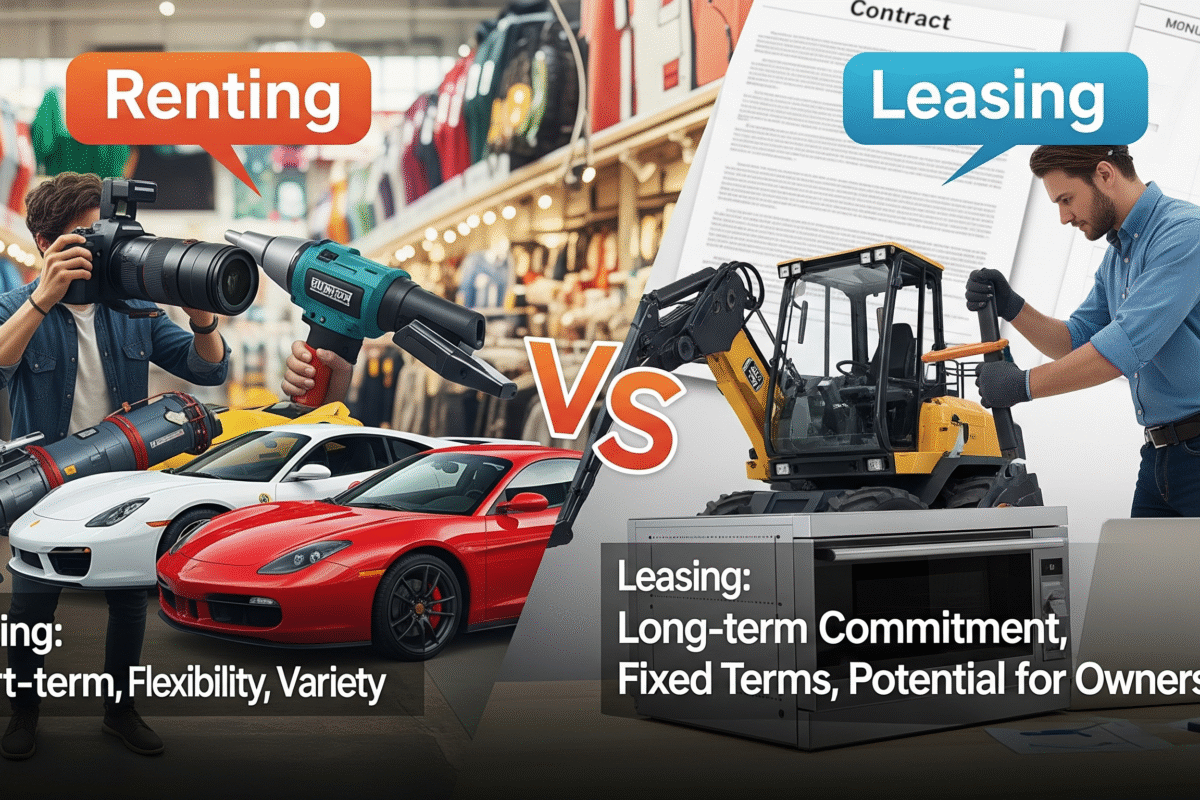
Renting vs Leasing Big-Ticket Items:
Renting vs Leasing Big-Ticket Items:
In today’s fast-changing economy, consumers and businesses often face a crucial decision: should they rent or lease big-ticket items? From cars and heavy machinery to home appliances and office furniture, the choice between renting and leasing can significantly impact costs, flexibility, and long-term financial planning.
This comprehensive guide will break down the key differences, benefits, drawbacks, and real-world examples of renting vs leasing, so you can make the right decision in 2025.
HSBC Cashback Credit Card 2025 – Benefits, Rewards & How to Apply?

The Essential Differences Between Leasing and Renting
Renting: What Is It?
When you rent anything, you pay to use it for a set amount of time, which could be days, weeks, or months. The provider retains ownership, and you are typically free to return the item whenever you choose without incurring any permanent obligations.
Leasing: What Is It?
Leasing is a long-term contractual agreement (often 1–5 years) that allows you to use an item while making fixed payments. Leasing typically comes with restrictions, such as mileage limits for vehicles or mandatory service contracts. Some leases may include an option to purchase at the end of the term.
Key Differences Between Renting and Leasing
| Feature | Renting | Leasing |
| Duration | Short-term (days to months) | Long-term (years) |
| Ownership | Never | Sometimes purchase option |
| Flexibility | High (can end quickly) | Low (binding contract) |
| Cost | Higher per unit time | Lower monthly cost over long term |
| Maintenance | Often included | May or may not be included |
| Use Case | Temporary needs | Long-term, predictable use |
Car Leasing vs. Renting
Cars are among the most frequent topics on which this argument is brought up.
- For vacations, short-term trips, or temporary vehicle replacement, renting a car is the best option. You avoid long-term commitments in exchange for a higher daily charge.
- For people who desire a new car every few years without making the commitment to buy, leasing is a good option. Although there are mileage restrictions and wear-and-tear costs, monthly lease payments are usually less than loan installments.
2025 Trend: As battery technology advances quickly and people are reluctant to commit to ownership, electric vehicle (EV) leases are growing in popularity.
Renting vs Leasing Equipment
For businesses and contractors, the decision is especially critical.
- Renting equipment like bulldozers, generators, or medical devices works best for short projects or seasonal needs.
- Leasing equipment is better for ongoing operations where constant access is required. Leasing also provides potential tax benefits as lease payments may be deductible.
Case Example: A construction company may rent a crane for a 2-week project but lease forklifts for a 3-year contract.
Renting versus Leasing Appliances and Furnishings
In their houses, consumers must also make the decision:
- Young professionals, college students, and short-term renters frequently rent furniture and appliances. In the United States, businesses such as Rent-A-Center let clients rent or rent-to-own.
- Although leasing furniture or equipment usually entails longer commitments, after regular payments, ownership may eventually be achieved.
2025 Consumer Behavior Insight: Millennials and Gen Z are increasingly renting home appliances due to increased housing mobility.
Benefits and Drawbacks of Renting
Renting Has Its Benefits
- High adaptability
- Absence of a long-term commitment
- Frequently, maintenance is included.
- Perfect for short-term requirements
The drawbacks of renting
- Increasing expenses throughout time
- No equity or ownership
- Limited availability of specific models
Benefits and Drawbacks of Leasing
Benefits of Leasing
- Cheaper monthly expenses than purchasing
- Access to more recent products and technology
- Option to buy at the end of the term
- Possible tax advantages for companies
The Drawbacks of Leasing
- Long-term commitment
- Early termination penalties
- Limitations (mileage, deterioration, and usage restrictions)
- No ownership of assets (unless the buyout option is exercised)
Example of Cost Comparison for Renting vs. Leasing
Let’s say you require a car for three years:
- For three years, renting a car every day would cost more than $30,000 to $50,000.
- A three-year car lease less a $350 monthly payment equals roughly $12,600.
- Leasing is obviously more cost-effective in the long run, but renting is only sensible in the short term.
Which Choice Benefits Customers More?
- For people with erratic schedules, brief visits, or transitory needs, renting is preferable.
- For those who desire fresh, dependable machinery or cars for years without complete ownership, leasing is preferable.
Which Choice Is Best for Companies?
- Renting may be more advantageous for startups and small enterprises since it provides flexibility and eliminates significant capital expenditures.
- Leasing may be more economical for well-established companies, particularly when cars or equipment are needed on a long-term basis.
Aspects of Law and Finance
- Simpler rental agreements often just address terms of payment and return.
- Legally binding lease agreements may contain provisions pertaining to insurance, maintenance, early termination fees, and purchase possibilities.
Businesses and consumers should always read the fine print and weigh the usage value against the total cost of ownership.
Future Trends in Renting vs Leasing (2025 and Beyond)
- Subscription Models: Companies like Tesla, Apple, and Rent the Runway are blurring the line between renting and leasing with monthly subscription plans.
- Green Economy: Renting and leasing are both becoming more sustainable, reducing waste and promoting circular economy practices.
- Digital Platforms: Online rental marketplaces are growing rapidly, making it easier to compare and book items.
In conclusion
The debate of renting vs leasing big-ticket items boils down to one key factor: time of use.
- Renting = best for short-term, flexible, unpredictable needs.
- Leasing = best for long-term, stable, cost-conscious use.
Whether you’re a consumer weighing car options or a business managing equipment costs, understanding the financial, legal, and practical implications of renting vs leasing is essential in 2025.
By carefully analyzing your needs, budget, and goals, you can make the choice that delivers the most value.
Behavioral Traps That Keep People in Debt: Breaking Free from Financial Struggles
Behavioral Traps That Keep People in Debt: Breaking Free from Financial Struggles