 A K
A K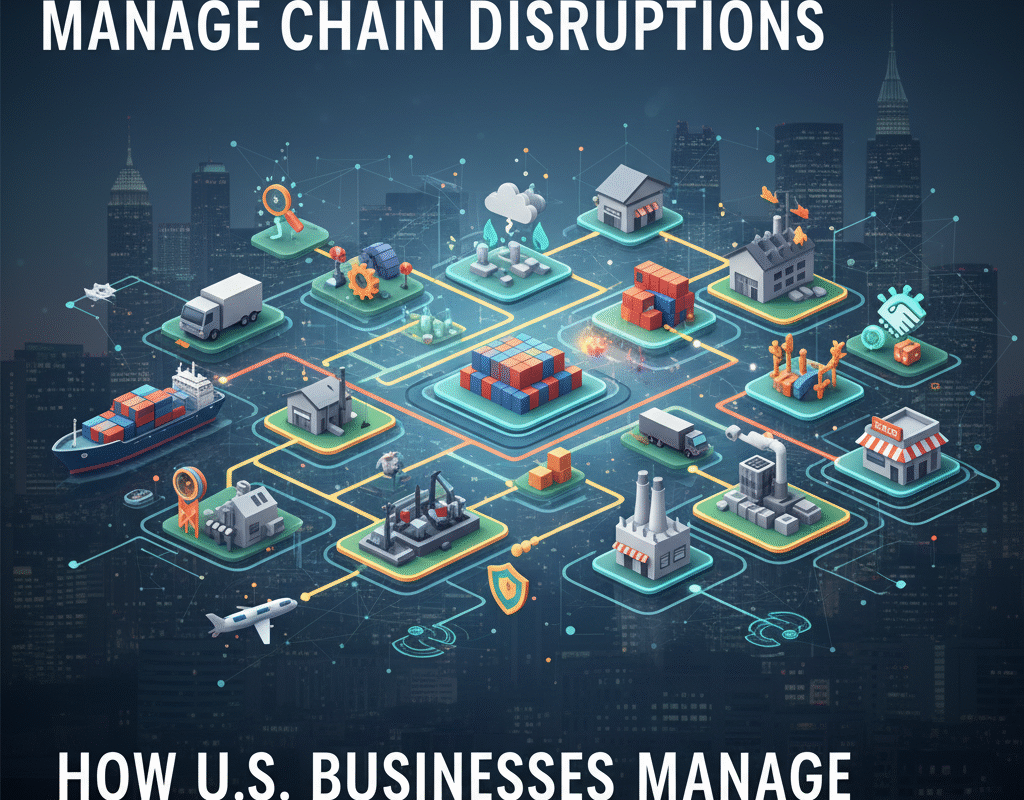
How U.S. Businesses Are Managing Modern Supply?
How U.S. Businesses Are Managing Modern Supply?
Supply chain disruptions have become a defining economic challenge for U.S. businesses in the post-pandemic era. What once appeared to be temporary snags in global logistics have evolved into persistent structural obstacles shaped by geopolitical tensions, fluctuating consumer demand, labor shortages, climate-related disasters, and technological transitions. Across nearly every industry—from automotive to retail to pharmaceuticals—companies have been forced to rethink how goods move from factory to consumer.
The turbulence of recent years has reshaped how corporate leaders understand supply chain visibility, risk, and long-term resilience. Rather than focusing solely on cost savings, businesses are now prioritizing agility, security, and adaptability. The result is a significant shift in strategy that experts say could redefine the next decade of American manufacturing and trade.
HSBC Cashback Credit Card 2025 – Benefits, Rewards & How to Apply?

The New Normal of Supply Chain Uncertainty
Before 2020, supply chains functioned largely behind the scenes—efficient, predictable, and rarely the subject of national news. However, the convergence of a global pandemic, port backlogs, international shipping delays, and rising geopolitical conflict highlighted just how fragile the world’s interconnected logistics system truly is.
Even as pandemic-related pressures subsided, new disruptions rose to take their place:
- Increased geopolitical risk involving China, Taiwan, and Eastern Europe
- Energy price volatility affecting transportation and production
- Extreme weather events impacting shipping routes and agricultural supply
- Cyberattacks targeting major logistics firms
- Labor shortages in trucking, warehousing, and manufacturing
- Rapidly changing consumer demand patterns
Diversifying Suppliers to Reduce Single-Point Failures
A major lesson from recent global disruptions is that relying heavily on a single supplier or region creates substantial risk. Many companies were blindsided when manufacturing hubs in China temporarily shut down during the pandemic.
Now, U.S. businesses are implementing multi-supplier strategies, distributing production across several countries or regions to insulate themselves from localized events.
This approach includes:
- Dual sourcing: splitting production between two suppliers
- Multi-region manufacturing: producing goods in geographically separated locations
- Backup vendors: maintaining approved secondary suppliers
- Strategic inventory buffers for critical components
Reinventing Inventory Strategy: From Just-in-Time to Just-in-Case
For decades, U.S. companies adopted the Just-in-Time (JIT) inventory model—keeping stock levels as lean as possible to reduce costs. While efficient, it left little room for error.
The disruptions of the past few years prompted many to shift toward a Just-in-Case (JIC) approach, building higher inventory buffers to maintain continuity.
Businesses are now balancing the two models, creating hybrid systems that maintain efficiency while improving resilience.
Responding to Geopolitical Tensions
Geopolitics now plays a central role in supply chain planning. U.S. businesses must navigate restrictions related to:
- U.S.–China trade relations
- Export controls for advanced technology
- Sanctions involving Russia and other regions
- National security considerations for critical materials
In response, companies are conducting geopolitical risk assessments and developing alternative sourcing strategies that prioritize stability.
Building Supply Chain Resilience as a Long-Term Strategy
Resilience has become the defining principle of modern supply chain management. American businesses are designing systems that can withstand disruptions without sacrificing customer satisfaction.
Key elements of resilience include:
- Scenario planning for multiple disruption types
- Cross-functional supply chain teams
- Investment in local and regional suppliers
- Stronger collaboration with vendors and partners
- Increased supply chain transparency
- Cybersecurity fortification
Labor Force Strategies: Solving Workforce Gaps
Lack of labor is still a problem. Companies are implementing:
- Higher wages and better benefits to retain workers
- Automation to reduce dependence on manual labor
- Upskilling programs to train workers in logistics technology
- Flexible work models for warehouse and driver positions
- Workforce stability is increasingly viewed as a crucial part of supply chain resilience.
Small Businesses Face Particular Difficulties as Well as New Possibilities
Small and medium-sized enterprises (SMEs) have been hit especially hard by disruptions due to limited financial resources and supplier reach. However, many are adapting in innovative ways:
- Joining cooperative buying groups to access better pricing
- Using digital supply chain platforms
- Investing in local suppliers to reduce risk
- Building stronger community partnerships
- While challenges remain, SMEs are proving remarkably adaptable.
The Road Ahead: What the Future Holds for U.S. Supply Chains
Experts predict that the next decade will be defined by:
- Continued reshoring and nearshoring
- Increased reliance on AI and advanced automation
- Greater emphasis on supply chain resilience over pure cost efficiency
- Expanded use of digital twins for scenario simulation
- Increased regulation tied to national security and sustainability
- Stronger collaboration across industries
The supply chain of the future will be more flexible, more technology-driven, and more regionally diversified than ever before.
In conclusion: How U.S. Businesses Are Managing Modern Supply?
Supply chain disruptions have reshaped the way U.S. businesses operate. What began as a sudden global crisis has evolved into a long-term strategic challenge—one that demands innovation, adaptation, and resilience. Companies across the country are rethinking logistics from the ground up, investing in technology, diversifying suppliers, strengthening domestic manufacturing, and building systems designed to weather the unpredictable.
As the global landscape continues to shift, one thing is clear: American businesses are not merely reacting—they are reinventing. The strategies being developed today will define the future of trade, industry, and economic stability in the United States.
How Inflation Impacts the Rental Market: Rising Costs and Challenges for Tenants and Landlords
How Inflation Impacts the Rental Market: Rising Costs and Challenges for Tenants and Landlords