 A K
A K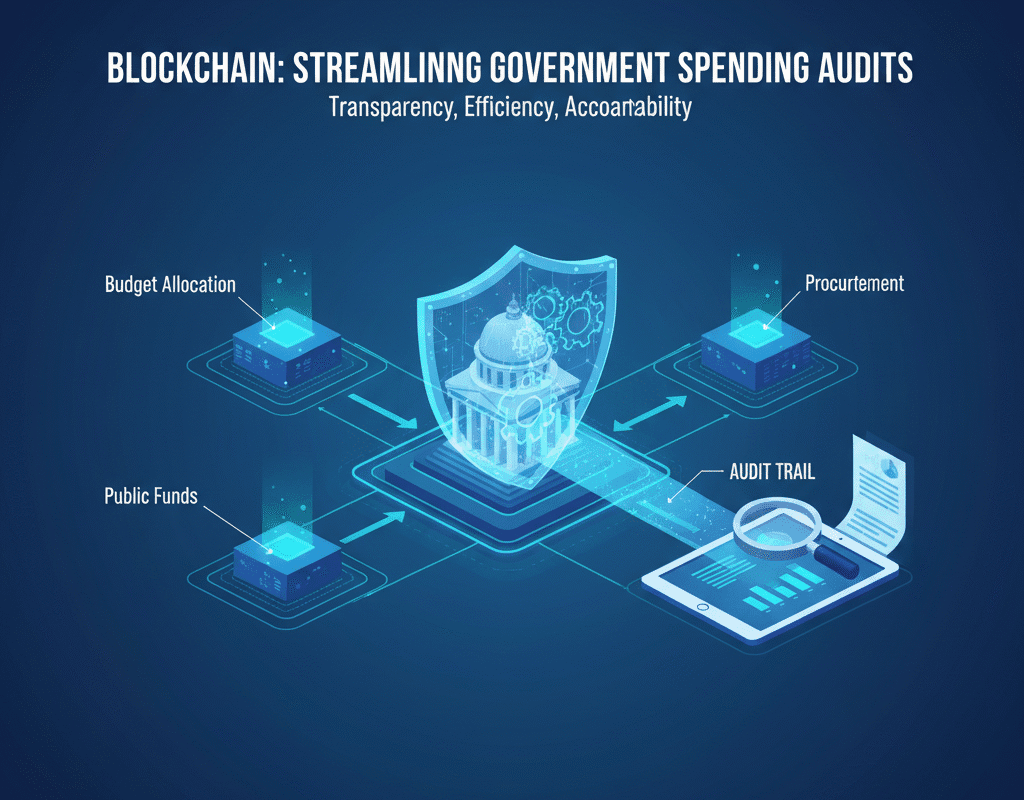
How Blockchain Could Revolutionize and Streamline Government?
How Blockchain Could Revolutionize and Streamline Government?
Government spending in the United States is enormous, complex, and often difficult for the public to track. From infrastructure projects and federal contracts to emergency funds and state grants, billions of taxpayer dollars move through systems that depend on legacy processes, fragmented databases, and manual oversight. Despite efforts to modernize, traditional auditing methods still involve time-consuming reviews, siloed records, and significant risks of human error or fraud.
The rise of blockchain technology—best known for powering cryptocurrencies—presents a fundamentally new approach to transparency and verification. Unlike traditional databases, blockchain creates immutable, time-stamped records that multiple parties can verify instantly.
HSBC Cashback Credit Card 2025 – Benefits, Rewards & How to Apply?

The Reasons Behind the Difficulties of Current Government Auditing Systems
In order to guarantee that federal and state money are used appropriately, government auditing organizations like the Government Accountability Office (GAO), Offices of Inspectors General (OIG), and state-level auditors are essential. However, systemic issues still plague these institutions:
Disjointed Databases Among Agencies
State and federal organizations frequently have disparate, incompatible systems. Auditors need to get information from several:
- Platforms for managing budgets
- Financial reporting systems
- Procurement tools
- Grant disbursement databases
- Contractor systems
This fragmentation slows down auditing and increases the likelihood of missing anomalies.
Heavy Dependence on Paper Trails and PDFs
Despite modernization efforts, many departments still rely on documents such as:
- Scanned invoices
- Paper bids
- Email-based approvals
- PDF receipts
These formats are hard to verify at scale and prone to manipulation.
Long Audit Cycles
Audits can take months or even years, especially for large federal programs. By the time irregularities are discovered, the money is often unrecoverable.
Limited Real-Time Oversight
Audits are typically retrospective. Oversight bodies identify issues after the money is spent — not while it is being spent.
The Benefits of Blockchain-Driven Auditing in the Public Sector
Reduced Fraud and Corruption
Immutable records make fraud far harder to commit and even harder to hide.
Faster, Cheaper Audits
Automated audit trails and standardized data formats could dramatically reduce the cost and duration of audits.
Higher Public Trust
Transparent spending data strengthens confidence in government decisions and discourages political misuse of funds.
Streamlined Compliance
Blockchain ensures spending and reporting align with federal and state regulations automatically.
Real-Time Monitoring
Auditors could identify irregular spending patterns early—preventing major losses.
Improved Interagency Collaboration
A shared ledger means agencies no longer need to manually exchange financial records.
Examples of Blockchain in Public Finance in the Real World
Blockchain has been tested for public finance management in a number of nations and localities:
- Estonia protects government data from manipulation by using blockchain technology for digitized public records.
- Dubai wants to switch entirely to blockchain-based government services.
- Blockchain is being tested for public procurement in Singapore and South Korea.
These preliminary tests show the potential benefits and drawbacks of using blockchain technology into open systems.
In conclusion: How Blockchain Could Revolutionize and Streamline Government?
Blockchain technology is a significant advancement for government audits in the future. Its capacity to automate compliance procedures and deliver unchangeable, real-time financial data has the potential to completely revolutionize public finance in the United States.
Blockchain provides a workable route toward quicker, more dependable monitoring for organizations overburdened with paperwork, fraud threats, and protracted audit cycles.
How U.S. Gig Worker Protections Differ Strongly Across States: A State-by-State Breakdown
How U.S. Gig Worker Protections Differ Strongly Across States: A State-by-State Breakdown