 A K
A K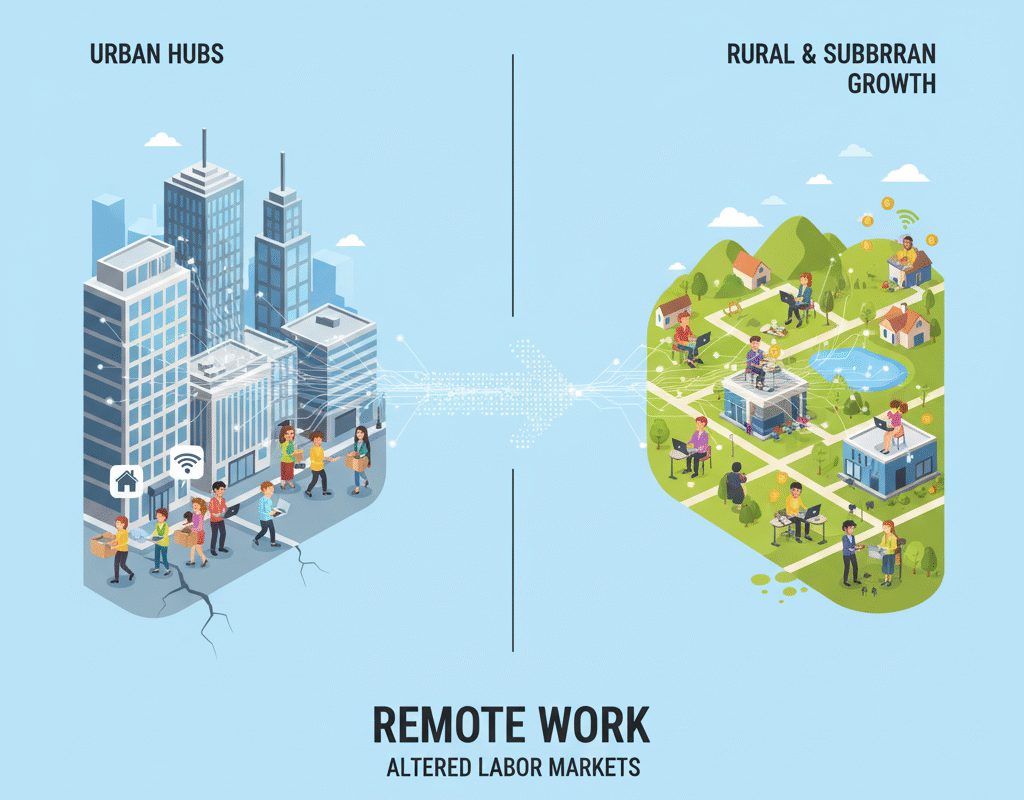
Why Remote Work is Reshaping Regional Labor Markets?
Why Remote Work is Reshaping Regional Labor Markets?
Remote work, once considered a fringe benefit or limited to tech companies, has now become a mainstream component of the U.S. labor market. The COVID-19 pandemic accelerated the adoption of telecommuting, forcing companies to rethink where employees work and how businesses operate. Beyond individual companies, this seismic shift is altering regional labor markets, influencing migration patterns, wage structures, and local economies.
As more workers gain the flexibility to work from anywhere, the implications for regional economies are profound. Cities and states are now competing not only for businesses but also for talent who may no longer be tied to a physical office. Understanding these changes is essential for policymakers, business leaders, and workers themselves.
HSBC Cashback Credit Card 2025 – Benefits, Rewards & How to Apply?

Remote Work: The Impetus for Transformation
By decreasing the spatial reliance of jobs, the growth of remote work has upended traditional labor markets. Historically, economic opportunities were concentrated in metropolitan areas, where high-paying industries like finance, tech, and media were clustered. In search of professional advancement, workers moved to these centers, propelling urbanization and influencing regional economies.
Remote work changes this dynamic. A software engineer in San Francisco, for example, can work full-time for a company in New York without relocating. Similarly, small towns and rural areas are now potential hubs for talent as employees seek lower costs of living and better quality of life.
Impact on Urban Centers
Major metropolitan areas like New York, Los Angeles, and San Francisco are seeing a transformation in labor demand. While these cities still host headquarters of major corporations, some sectors are experiencing workforce shrinkage or stagnation in growth due to remote work.
Key effects include:
- Real Estate Market Shifts: Reduced demand for commercial office space and rising vacancy rates in downtown areas.
- Service Industry Decline: Restaurants, gyms, and retail businesses in central business districts face declining foot traffic.
- Wage Polarization: High-skill remote jobs may pay market rates independent of location, potentially inflating salaries in traditionally lower-cost regions while stagnating growth in urban centers.
Possibilities for Rural and Smaller Cities
While urban areas may face slowdowns, smaller cities and rural regions are seeing economic revitalization. Remote work allows high-paying jobs to flow into areas previously limited to local employment opportunities.
Notable trends include:
- Increased Talent Influx: Places like Boise, Austin (outside tech hubs), and Chattanooga are attracting young professionals seeking affordable housing and a higher quality of life.
- Local Economic Growth: With remote workers spending locally, businesses such as cafes, coworking spaces, and services experience growth.
- Entrepreneurship Boost: Remote professionals may invest in startups or freelance ventures locally, fostering regional innovation ecosystems.
Sector-Specific Effects
Different industries have different experiences with remote work. Analyzing changes in the regional labor market requires an understanding of sectoral distinctions.
- Technology and Finance: Excellent compatibility with remote work, enabling workers to move without compromising output.
- Manufacturing and healthcare: These industries need to be physically present in order to preserve regional labor market characteristics.
- Hybrid models are gradually being adopted in education and government, with policy implications for local labor development.
In conclusion: Why Remote Work is Reshaping Regional Labor Markets?
The U.S. labor market has been irreversibly changed by remote work, which has changed wage structures, migration patterns, and regional economies. While smaller cities and rural areas benefit from growth potential, urban centers face issues as businesses decentralize. The picture is further complicated by wage dynamics, sector-specific effects, and policy issues.
For businesses, understanding these shifts is essential for talent acquisition and retention. For workers, the freedom to choose location empowers economic mobility and lifestyle decisions. Policymakers must anticipate these changes to ensure equitable growth and infrastructure readiness.
As remote work becomes a fixture of modern employment, regional labor markets will continue evolving—redrawing the economic map of the United States in profound and lasting ways.
How U.S. Tourism Is Powering Regional Economic Recovery in 2025
How U.S. Tourism Is Powering Regional Economic Recovery in 2025