 A K
A K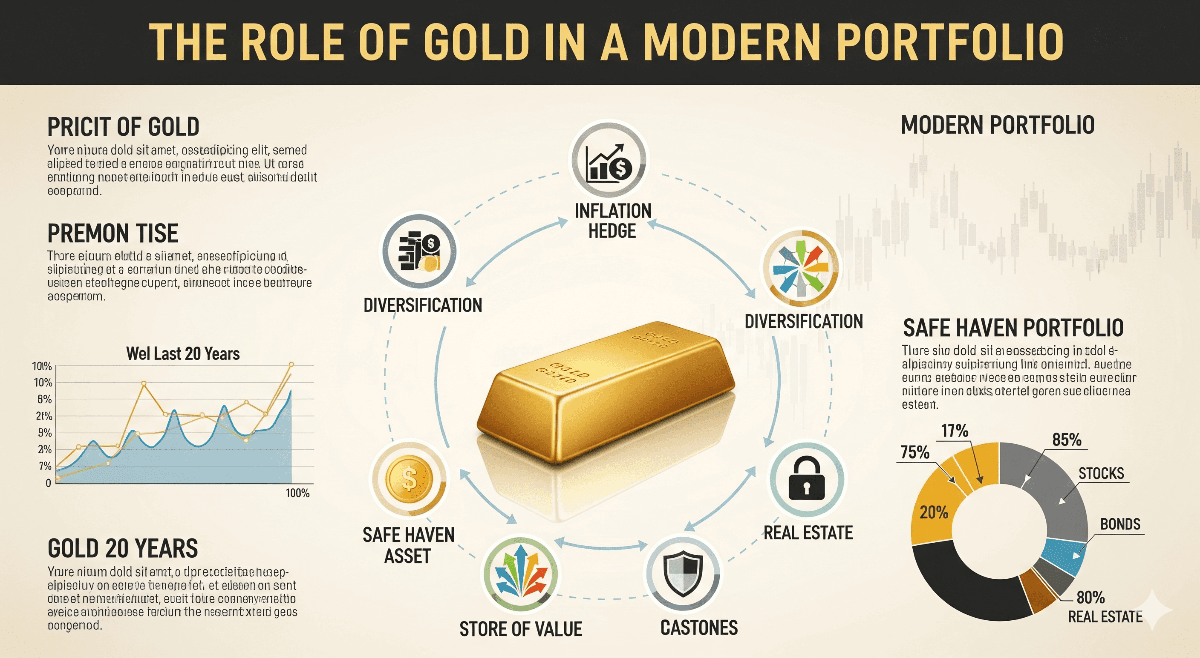
The Role of Gold in a Modern Portfolio:
The Role of Gold in a Modern Portfolio:
In the fast-changing world of finance, where investors are bombarded with new asset classes like cryptocurrencies, tech stocks, and alternative investments, gold continues to stand out as one of the most reliable and enduring assets. Despite being thousands of years old as a store of value, the role of gold in a modern portfolio is more relevant than ever.
This article dives deep into why gold is still a vital component of investment strategies, how much allocation experts recommend, and the different ways investors can gain exposure to gold in 2025 and beyond.
HSBC Cashback Credit Card 2025 – Benefits, Rewards & How to Apply?

Why Gold Has Maintained Its Value for Centuries
Gold has always been more than just a shiny metal. It has served as currency, a store of wealth, and a hedge against economic uncertainty for over 5,000 years. Unlike fiat currencies, which can be printed endlessly, gold’s scarcity gives it intrinsic value.
- Limited Supply: Annual mining output increases gold supply only marginally, making it less susceptible to inflationary pressures.
- Global Acceptance: Gold is universally recognized, making it a safe haven across nations and cultures.
- Tangible Asset: Unlike digital investments or fiat money, gold is physical and cannot vanish in a financial system collapse.
Gold as a Hedge Against Inflation
One of the most widely discussed roles of gold is its ability to hedge against inflation. When the purchasing power of the dollar declines, gold prices tend to rise.
- Historical Example: During the 1970s stagflation period, gold prices surged as inflation eroded currency value.
- Modern Times: With global governments running large fiscal deficits, central banks holding negative real interest rates, and rising geopolitical risks, gold continues to attract cautious investors.
In a time when inflation spikes or central banks devalue currencies, holding gold can act as a safeguard.
Diversification of Portfolios and Gold
The fundamental tenet of investing is diversification, or “don’t put all your eggs in one basket.” A key component of this method is gold.
- Low Correlation: Gold frequently fluctuates apart from bonds and stocks. Gold has typically done well in stock market crashes.
- Risk Reduction: By including gold in a well-balanced portfolio, overall volatility and drawdowns can be decreased.
- Crisis Protection: Gold frequently gains strength when conventional assets decline, whether due to war, geopolitical unrest, or a banking crisis.
For instance, gold’s role as a safe haven was demonstrated in 2008 when the world’s equity markets crashed during the financial crisis.
How Much Gold Should You Hold?
Financial advisors often recommend allocating 5–15% of a portfolio to gold depending on risk tolerance and investment goals.
- Conservative Investors: 10–15% to protect against downturns.
- Aggressive Investors: 5–7% for diversification without sacrificing growth potential.
- Retirement Portfolios: A slightly higher allocation (10–20%) can help safeguard retirement savings against inflation and currency risk.
Different Ways to Invest in Gold Today
Gold is no longer limited to buying jewelry or physical bars. Modern investors have multiple avenues:
Physical Gold
- Bars, coins, and jewelry.
- Tangible asset but requires storage and insurance.
Gold ETFs (Exchange-Traded Funds)
- Convenient and liquid.
- Tracks gold prices without requiring physical storage.
Gold Mining Stocks
- Exposure to companies extracting gold.
- Can outperform physical gold when prices rise but are more volatile.
Gold Futures & Options
- For experienced traders.
- Offers leverage but carries high risk.
Digital Gold & Gold-Backed Cryptos
- Modern way of owning gold digitally.
- Accessible, transparent, and easily tradable.
Gold vs Other Asset Classes
| Asset | Strengths | Weaknesses | Gold’s Edge |
| Stocks | High growth potential | Volatile, market risk | Gold balances volatility |
| Bonds | Stable income | Low returns in inflation | Gold outpaces inflation |
| Real Estate | Tangible asset | Illiquid, cyclical | Gold is more liquid |
| Crypto | High upside | Extreme volatility | Gold offers stability |
The Function of Gold in the 21st Century
Although investment has changed due to technology, gold is still timeless. Three main factors make it relevant in the digital age:
- Geopolitical Uncertainty: Tensions in international trade, wars, and conflicts increase demand for gold.
- Central Bank Policies: Central banks are purchasing record quantities of gold while governments print money.
- Digital Transformation: Including gold in a contemporary portfolio is now simpler than ever thanks to gold ETFs and digital gold platforms.
When it comes to retirement planning, gold
Retirement investors look for stability. Gold IRAs (Individual Retirement Accounts) in the U.S. allow investors to include physical gold in their tax-advantaged retirement accounts. This ensures protection against inflation and stock market downturns while diversifying long-term holdings.
In conclusion
The role of gold in a modern portfolio is as strong as ever. Whether you’re a cautious retiree, a risk-taking trader, or a long-term investor, gold remains a timeless asset that helps stabilize returns, diversify risks, and protect against inflation.
As the global financial system faces uncertainty, central banks continue to print money, and new risks like digital disruptions and geopolitical tensions emerge, gold’s importance in safeguarding wealth cannot be overstated.
In short, while modern portfolios may include tech stocks, bonds, real estate, and even crypto, gold is the anchor that ensures stability when everything else fluctuates.
Understanding Health Insurance Plans in the U.S. (2025 Guide) – Coverage, Costs, and Benefits
Understanding Health Insurance Plans in the U.S. (2025 Guide) – Coverage, Costs, and Benefits