 A K
A K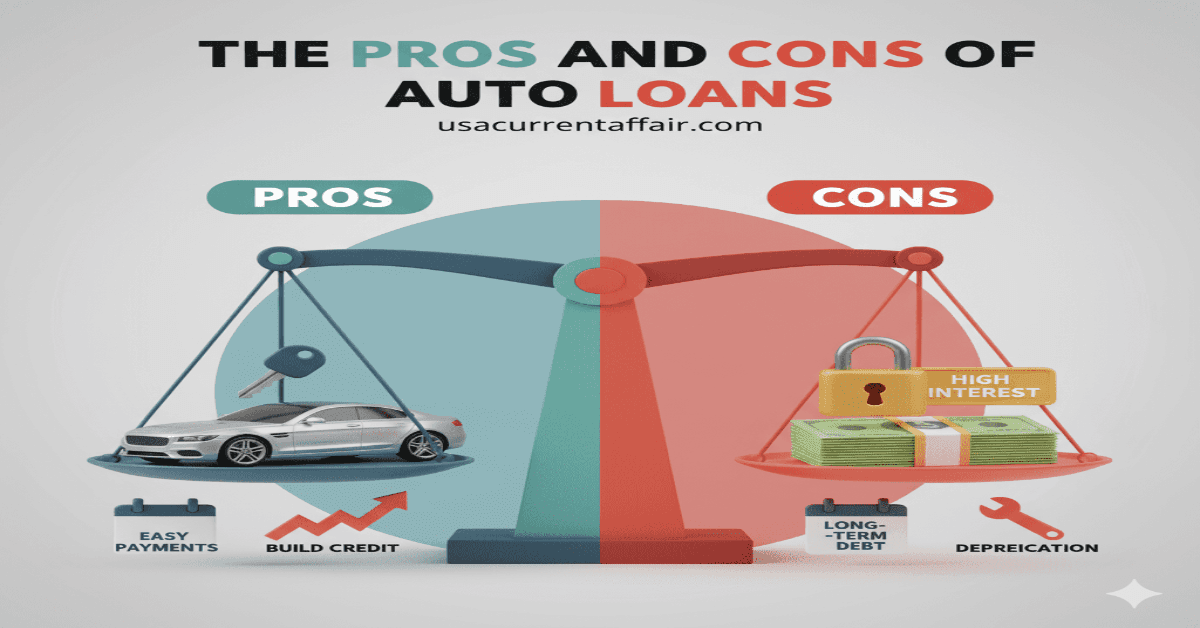
The Pros and Cons of Auto Loans in 2025:
The Pros and Cons of Auto Loans in 2025:
After buying a home, the majority of Americans frequently make one of their most important financial decisions: buying a car. An increasing number of consumers are using auto loans as a convenient means of financing their ideal cars due to the growing cost of automobiles. According to Experian’s State of the Automotive Finance Market, over 80% of new car purchases in the U.S. are financed through loans. But while auto loans make car ownership more accessible, they also come with risks.
In this detailed guide, we’ll explore the pros and cons of auto loans in 2025, breaking down the benefits, drawbacks, and expert tips to help you make an informed decision.
HSBC Cashback Credit Card 2025 – Benefits, Rewards & How to Apply?

Auto Loan: What Is It?
You can get finance for the purchase of a car by taking out an auto loan from a bank, credit union, or internet lender. You make monthly payments that cover the principal and interest until the loan is paid off in full, rather than paying the entire amount up front.
- Term of Loan: Usually falls between 36 and 84 months.
- Interest rates vary depending on the type of vehicle, lender, down payment, and credit score.
- Secured Loan: If payments are not made, the lender may take back the car since it serves as collateral.
The Pros of Auto Loans
Affordable Monthly Payments
Auto loans spread the cost of a car over several years, making it easier to buy a vehicle without draining your savings. Instead of paying $40,000 upfront, you could pay $600–$800 per month depending on your loan terms.
Access to Newer, Safer Cars
Financing lets you afford vehicles you otherwise couldn’t pay for in cash. This often means newer models with better safety features, fuel efficiency, and technology.
Credit Score Building
Consistently making on-time auto loan payments helps you build and improve your credit history, making it easier to qualify for mortgages or other loans later.
Flexibility in Vehicle Choice
Whether you want a new SUV, electric vehicle, or used car, auto loans give you flexibility in choosing the right vehicle for your lifestyle and budget.
Special Financing Deals
Many dealerships and manufacturers offer low APR promotions (sometimes as low as 0% for qualified buyers). This can save thousands in interest payments over the life of the loan.
Preserves Savings
Instead of depleting your emergency fund, you can keep your cash reserves intact and use financing to buy the car.
The Cons of Auto Loans
Interest Expenses Mount Up
Borrowing money isn’t free, even when the interest rate is competitive. You can wind up spending thousands more in interest over the course of a five-year loan.
For instance, $4,799 in total interest is paid on a $30,000 auto loan with 6% interest spread over 60 months.
Risks of Depreciation
Cars lose value quickly—some by 20% in the first year alone. This creates a situation called negative equity or being “upside down,” where you owe more on the loan than the car’s current value.
Monthly Financial Burden
While loans spread out payments, they also create long-term debt obligations. Missing payments can lead to repossession, late fees, and credit damage.
Costs of Insurance
On borrowed vehicles, lenders usually demand full coverage insurance, which raises your monthly costs in comparison to liability-only coverage.
Challenges with Loan Approval
The ability to purchase a car may be restricted for those with bad or limited credit due to excessive interest rates or even loan refusal.
Extended Loan Term = Increased Risk
Longer periods lower monthly payments, but they also lock you into debt for up to seven years and increase the overall amount of interest paid.
Trends in Auto Loans for 2025
- Increasing Interest Rates: Depending on credit score, average new auto loan rates are predicted to stay between 6 and 8%.
- Longer Loan Terms: In an effort to make pricey cars more affordable, more consumers are choosing 72- or 84-month loans.
- Increase in Used Car Loans: As the cost of new cars rises, more Americans are choosing to finance approved pre-owned cars.
- Financing for Electric Vehicles: Although EVs are eligible for special incentives, loan conditions may vary because of the higher initial expenditures.
Tips for Getting the Best Auto Loan
- Check Your Credit Score before applying. A higher score means lower rates.
- Shop Around with banks, credit unions, and online lenders before accepting dealer financing.
- Make a Larger Down Payment (ideally 20%) to reduce monthly payments and avoid negative equity.
- Choose a Shorter Loan Term (36–48 months) to save on interest.
- Consider Pre-Approval for negotiating power at the dealership.
- Avoid Add-Ons like extended warranties or extras bundled into the loan.
- Read the Fine Print to avoid hidden fees or early repayment penalties.
Alternatives to Auto Loans
- Leasing a Car: You don’t own the car, but your monthly payments are lower.
- Paying with cash takes a large upfront investment but eliminates debt.
- Personal loans are a possibility, although they often have higher interest rates than auto loans.
- A new trend that provides flexibility without ownership is car subscription services.
Should You Finance a Car in 2025?
Whether an auto loan is a smart financial move depends on your situation:
- If you value newer cars, low upfront costs, and building credit, auto loans can be beneficial.
- If you want to avoid debt, minimize costs, and drive older cars, paying cash may be better.
Final Thoughts
Auto loans continue to play a vital role in helping Americans own cars in 2025. While they provide accessibility, convenience, and financial flexibility, they also carry risks like interest costs, long-term debt, and depreciation.
The key is to weigh the pros and cons carefully, shop around for the best rates, and ensure your loan fits comfortably into your budget. With the right strategy, auto loans can be a helpful tool rather than a financial burden.
The Rule of 72 Explained: How Fast Will Your Money Double in 2025?
The Rule of 72 Explained: How Fast Will Your Money Double in 2025?