 A K
A K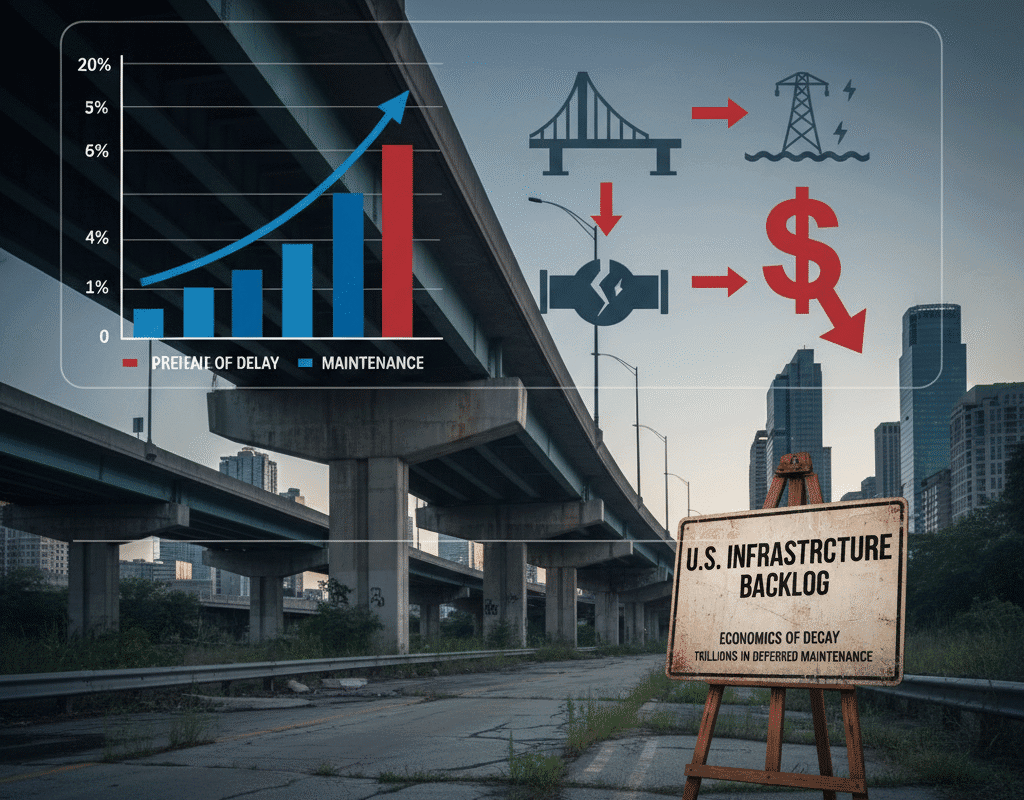
The Economics of U.S. Infrastructure Maintenance Backlogs
The Economics of U.S. Infrastructure Maintenance Backlogs
For a considerable amount of time, policymakers, economists, and the general public have been closely examining the condition of infrastructure in the United States. The nation’s maintenance backlogs, which range from decaying highways and bridges to outdated water infrastructure and underfunded public transportation, pose serious financial difficulties.
Understanding the economics of these backlogs is critical, as they not only affect public safety and quality of life but also influence long-term economic growth and global competitiveness.
HSBC Cashback Credit Card 2025 – Benefits, Rewards & How to Apply?

The Infrastructure Situation in the United States Today
In its most recent report card, the American Society of Civil Engineers (ASCE) gave the country’s infrastructure a C-, signifying average conditions requiring significant improvement. The main cause of the strain on roads, bridges, airports, water systems, and public transportation networks is decades of neglected maintenance.
For instance, bridges have come to represent the country’s infrastructural issues. The Federal Highway Administration (FHWA) reports that approximately 46,000 bridges are classified as structurally deficient. While this does not mean they are unsafe, it signals that urgent maintenance or replacement is necessary. Meanwhile, the average age of U.S. bridges is over 40 years, reflecting years of underinvestment.
National and Local Impacts
The economic impact of infrastructure maintenance backlogs is not uniform across the country. Urban centers face traffic congestion and public transit delays, while rural areas may suffer from poorly maintained bridges and unpaved roads. States with older infrastructure, such as those in the Midwest and Northeast, typically face higher costs than newer regions.
For example, New York and California report the largest cumulative infrastructure repair needs, while smaller states like Iowa or West Virginia face critical bridge and water system backlogs. The ripple effects include lost productivity, higher logistics costs, and lower economic growth.
Policy Solutions and Investment Strategies
Addressing infrastructure maintenance backlogs requires both funding and strategic planning. Policymakers have explored a variety of solutions:
Increased Federal Investment
The federal government plays a key role in funding state and local infrastructure. Recent legislation, such as the Infrastructure Investment and Jobs Act (IIJA), has allocated $1.2 trillion toward roads, bridges, transit, water, and broadband. While this represents a historic increase, economists caution that sustained annual funding is necessary to keep pace with ongoing maintenance needs.
Public-Private Partnerships (PPPs)
Public-private partnerships offer a way to use private funding for infrastructure upkeep and modernization. PPPs can speed up repairs and guarantee that projects are finished effectively by sharing risks and profits. Bridge rebuilding projects, airport improvements, and toll highways are examples of successful initiatives.
Setting priorities and managing assets
Governments can identify essential infrastructure that is at risk and prioritize repairs based on cost-benefit analysis thanks to advanced asset management systems. Agencies can maximize maintenance investment and lower long-term economic costs by concentrating on high-risk or high-impact projects.
Novel Approaches to Financing
States are exploring alternative financing mechanisms, such as infrastructure banks, dedicated gas taxes, and user fees. These mechanisms provide stable revenue streams for routine maintenance, reducing reliance on inconsistent budget allocations.
Long-Term Financial Gains from Infrastructure Investment
Investing in infrastructure upkeep and modernization is an economic driver as well as a cost. Research consistently shows that each dollar spent on infrastructure generates $1.50 to $2 in economic output, due to job creation, increased productivity, and improved efficiency.
For instance:
- Transportation Infrastructure: Improved highways and transit reduce travel time, fuel consumption, and freight delays, boosting commerce and labor productivity.
- Water and Energy Systems: Modernized water treatment facilities and electric grids prevent costly outages, health crises, and environmental damages.
- Digital Infrastructure: Expanding broadband access supports innovation, remote work, and equitable economic growth.
In conclusion: The Economics of U.S. Infrastructure Maintenance Backlogs
The economics of backlogs in U.S. infrastructure maintenance highlight an urgent issue with significant consequences. In addition to raising immediate repair costs, postponed maintenance compromises public safety, economic competitiveness, and productivity. Aging infrastructure, insufficient funding, bureaucratic hurdles, and rising material costs compound the problem, creating a growing backlog with long-term economic implications.
Addressing these challenges requires a comprehensive strategy, including federal investment, public-private partnerships, advanced asset management, innovative financing, and a focus on resilience. By prioritizing maintenance alongside new construction, the United States can reduce long-term costs, improve safety, and strengthen economic growth.
How Rising Childcare Costs Are Limiting U.S. Workforce Participation
How Rising Childcare Costs Are Limiting U.S. Workforce Participation