 A K
A K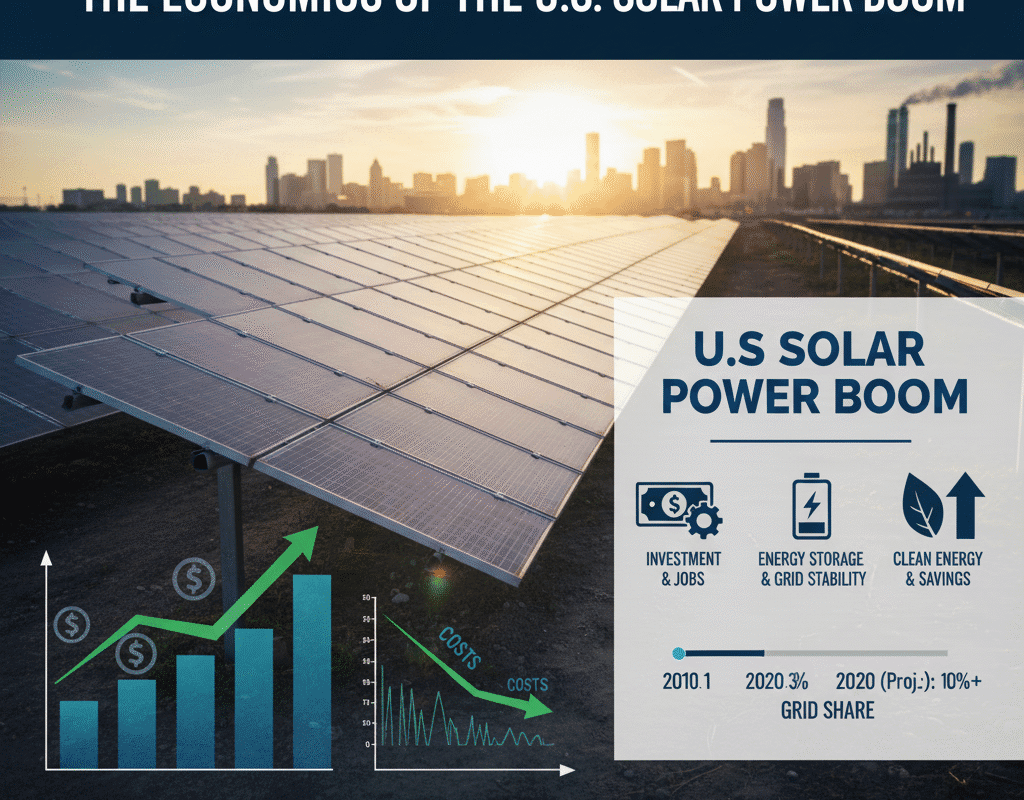
The Economics of the U.S. Solar Power Boom
The Economics of the U.S. Solar Power Boom
The United States is experiencing a transformative surge in solar energy adoption, a boom that is reshaping the nation’s energy landscape, economy, and labor market. Driven by declining technology costs, supportive government policies, and growing environmental concerns, the solar industry has become a central component of America’s clean energy transition.
This article delves into the economic forces driving the U.S. solar power boom, the benefits it brings, and the challenges that lie ahead.
HSBC Cashback Credit Card 2025 – Benefits, Rewards & How to Apply?

The Rise of Solar Power in the U.S.
Over the past ten years, solar energy, which was formerly thought to be a niche sector of the energy market, has expanded quickly. The United States installed a record-breaking 26.9 gigawatts of solar capacity in 2022 alone, enough to power almost 5 million homes, according to the Solar Energy Industries Association (SEIA).
Due to this increase, the United States is now the world’s top producer of solar energy, second only to China in terms of total installed capacity.
- Falling Costs: Since 2010, the price of solar panels has decreased by almost 70%. Solar energy is becoming more competitive with conventional fossil fuels thanks to developments in photovoltaic technology, economies of scale in production, and increased efficiency.
- Government Incentives: Both residential and commercial solar adoption has been boosted by federal and state-level incentives, such as the Investment Tax Credit (ITC). Businesses and families can deduct a sizable amount of the cost of solar installation from their taxes thanks to the ITC alone.
- Corporate Commitments: To meet sustainability targets and cut operating expenses, big businesses like Amazon, Apple, and Walmart are investing in solar energy, which is having a knock-on effect on the market.
The Solar Boom’s Economic Benefits
There are major economic ramifications to the U.S. solar energy industry’s explosive growth.
- Creation of Jobs
Growth in employment is one of the solar boom’s most obvious economic effects. In the United States, the solar sector directly employs more than 250,000 people in manufacture, installation, sales, and maintenance. Job growth in solar has outpaced the overall U.S. economy, with opportunities particularly strong in installation and project development.
- Reduction of Energy Costs
Solar energy contributes to reducing electricity costs for both consumers and businesses. Utility-scale solar projects have achieved some of the lowest electricity prices in history, often undercutting natural gas and coal-fired generation. For residential users, rooftop solar installations provide a hedge against rising utility rates, offering predictable and long-term savings.
Challenges Facing the U.S. Solar Economy
Despite impressive growth, the U.S. solar sector faces several challenges that could affect long-term economic sustainability.
- Grid Integration
As solar adoption increases, integrating variable solar generation into the electricity grid becomes more complex. Solar power is intermittent—producing energy only when the sun shines—which can strain grid reliability. Investment in energy storage, demand response, and smart grid technology is essential to balance supply and demand.
- Supply Chain Vulnerabilities
Heavy reliance on imported solar panels and components exposes the U.S. market to global supply chain disruptions. Trade disputes, geopolitical tensions, and logistical bottlenecks can increase costs and slow deployment. Building resilient domestic supply chains remains a key priority for sustainable growth.
The Future of U.S. Solar Economics
Despite these challenges, the long-term outlook for the U.S. solar economy is positive. Experts project that solar could supply over 40% of U.S. electricity by 2050, driven by continued cost reductions, technological innovation, and supportive policy frameworks. Key trends shaping the future include:
- Advances in Solar Technology: Higher efficiency panels, bifacial solar modules, and building-integrated photovoltaics will enhance energy output and reduce costs.
- Energy Storage Integration: Battery storage systems will mitigate intermittency issues, enabling solar energy to become a reliable base-load power source.
- Electrification of Transportation: As electric vehicles become mainstream, solar power will play a crucial role in meeting rising electricity demand sustainably.
In conclusion: The Economics of the U.S. Solar Power Boom
The U.S. solar power boom is more than a renewable energy success story; it is an economic engine reshaping the nation’s workforce, energy costs, and investment landscape. By creating jobs, reducing electricity prices, and attracting investment, solar energy is delivering tangible economic benefits while supporting environmental goals. However, sustaining this growth requires strategic investments in grid infrastructure, domestic manufacturing, and policy stability.
As the U.S. continues its transition toward a clean energy future, the economics of solar power will remain a critical driver of innovation, economic opportunity, and climate action. For businesses, policymakers, and consumers alike, understanding the financial and strategic implications of the solar boom is essential to harnessing its full potential.
Why Deposit Flight Happens During Bank Crises: Causes, Impacts, and Solutions
Why Deposit Flight Happens During Bank Crises: Causes, Impacts, and Solutions