 A K
A K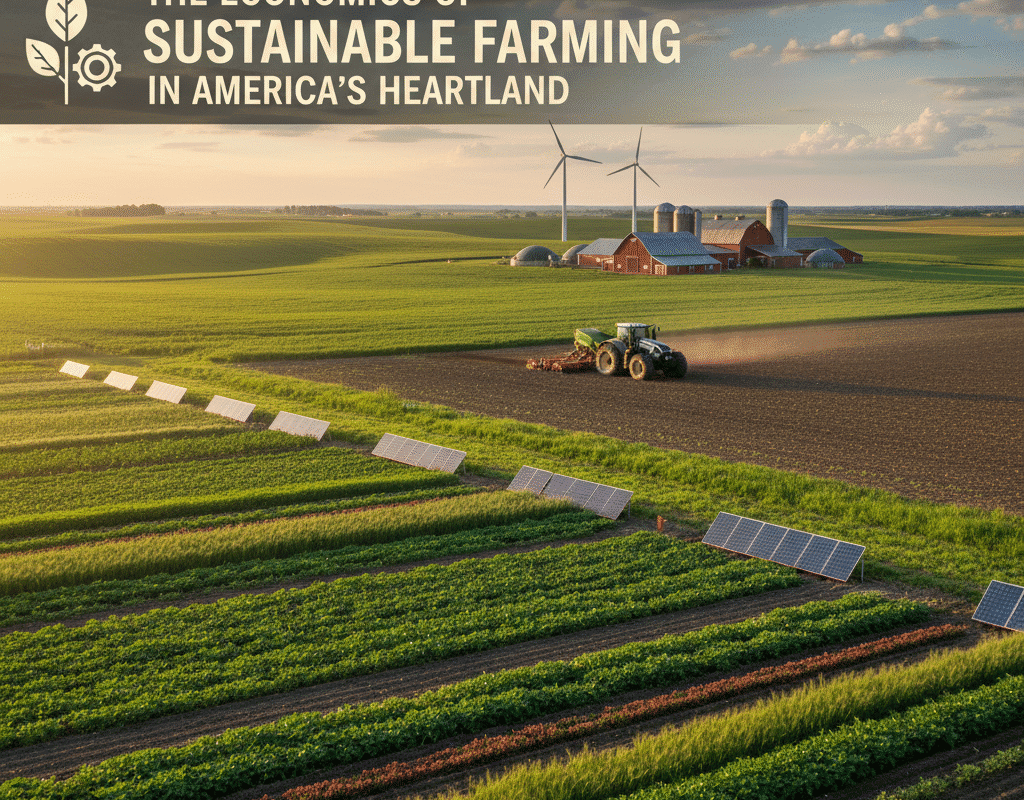
The Economics of Sustainable Farming in America’s
The Economics of Sustainable Farming in America’s
America’s heartland, covering states like Iowa, Nebraska, Kansas, and Missouri, is frequently considered the nation’s agricultural backbone. These regions have long relied on large-scale, conventional farming practices focused on optimizing productivity and efficiency. However, in recent years, a trend towards sustainable agricultural practices has occurred, driven by environmental concerns, consumer demand for organic products, and long-term economic sustainability.
Sustainable farming is not simply about growing crops; it blends environmental care, social responsibility, and economic profitability. As farmers transition from traditional monoculture systems to more diversified, regenerative practices, the economic implications are profound. This article delves into the economics of sustainable farming in America’s heartland, examining the costs, benefits, challenges, and future outlook for farmers and the broader agricultural sector.
HSBC Cashback Credit Card 2025 – Benefits, Rewards & How to Apply?

The Rise of Sustainable Farming in the Heartland
Sustainable farming, often called regenerative agriculture, emphasizes practices that restore soil health, conserve water, reduce chemical inputs, and enhance biodiversity. Practices include cover cropping, crop rotation, integrated pest management, reduced tillage, and organic fertilizers.
According to recent USDA reports, there has been a steady increase in farms adopting sustainable methods, especially in the Midwest. Farmers are realizing that sustainable practices not only benefit the environment but also enhance long-term farm profitability by reducing input costs, mitigating risks, and tapping into premium markets for organic and locally sourced products.
Economic Challenges of Sustainable Farming
- High Initial Investment
While long-term costs may decrease, adopting sustainable practices often requires significant upfront investment. Farmers may need to purchase new equipment for reduced tillage, cover crop seeds, or invest in soil testing and monitoring technologies. For small-scale farmers, these costs can be prohibitive without external support or subsidies.
- Yield Uncertainty
Transitioning to sustainable methods can result in short-term yield reductions. For instance, during the first few years of organic or regenerative practices, soil and crop adjustments may lead to lower outputs compared to conventional monoculture farming. This yield uncertainty can affect cash flow, making financial planning crucial for farmers during the transition period.
Eco-Friendly Methods Promoting Economic Stability
- Crop Rotation and Diversification
Rotating crops in a variety of ways spreads economic risk, increases soil fertility, and lessens insect burden. Farmers are less susceptible to price volatility from a single crop when they cultivate many crops. For instance, substituting cover crops like clover or rye for corn and soybeans not only raises soil nitrogen levels but also creates potential for specialty grains or feedstock for nearby animal operations.
- Management of Soil Health
In addition to being more robust to droughts and other extreme weather, healthy soils are more productive. Soil organic matter, water retention, and microbial activity are all enhanced by techniques like no-till farming, composting, and applying green manure. From an economic perspective, this means lower reliance for costly chemical inputs and more consistent outputs.
Effects on the Regional Economy
Regional economy are also impacted by sustainable farming in the heartland. Increased demand for soil supplements, organic seeds, and farm equipment designed for regenerative methods benefits local supply chains. Communities see job creation in agribusiness, distribution, and food processing sectors.
Moreover, sustainable farms contribute to ecosystem services, including clean water, carbon sequestration, and biodiversity preservation. While these benefits are harder to quantify in dollars, they represent significant economic value in terms of reduced environmental remediation costs and climate change mitigation.
In conclusion: The Economics of Sustainable Farming in America’s
Profitability and environmental stewardship may coexist, as demonstrated by the economics of sustainable farming in the American heartland. Long-term financial, ecological, and social benefits are significant, even though the shift necessitates upfront investment, meticulous planning, and adaptation to new market conditions. By adopting regenerative approaches, farmers are protecting not just their own financial future but also the health of the environment in the heartland and the resilience of the larger agricultural industry.
America’s heartland has the potential to become a global model for economically successful, environmentally sensitive agriculture as sustainable farming develops, demonstrating that what’s good for the environment can also be good for the bottom line.
How Zoning Laws Shape Housing Inequality in the United States: A Deep Analysis
How Zoning Laws Shape Housing Inequality in the United States: A Deep Analysis