 A K
A K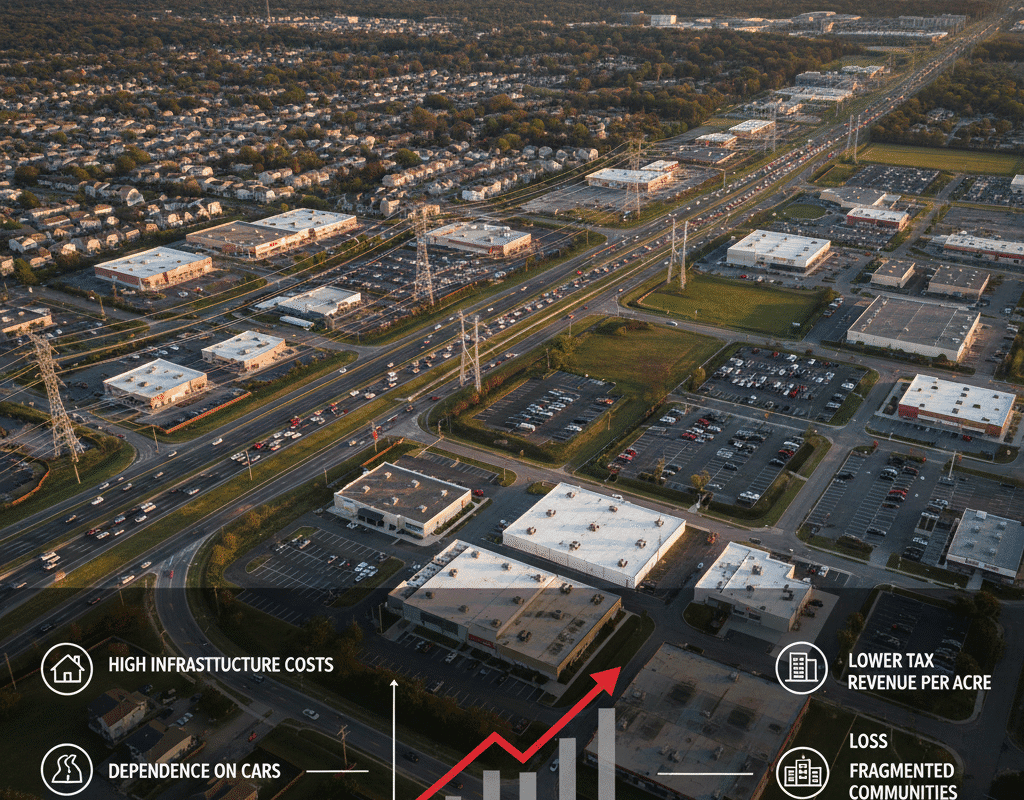
The Economics of Suburban Sprawl in the U.S.
The Economics of Suburban Sprawl in the U.S.
American urban growth has traditionally been characterized by suburban sprawl. Characterized by low-density residential housing, heavy reliance on automobiles, and a separation of residential, commercial, and industrial zones, suburban sprawl has shaped the economic, social, and environmental landscape of the United States.
While suburbs offer the promise of space, safety, and affordability, the economic consequences of sprawl are complex and far-reaching. This article explores the costs, benefits, and implications of suburban sprawl in the U.S., examining the economic forces driving expansion, the hidden financial burdens, and the policy responses that could shape a more sustainable future.
HSBC Cashback Credit Card 2025 – Benefits, Rewards & How to Apply?

Comprehending Suburban Sprawl
Suburban sprawl refers to the spread of urban development into rural or undeveloped areas beyond city centers. Unlike compact urban growth, sprawl tends to feature single-family homes, strip malls, and office parks, often accompanied by wide roads and extensive parking lots. The key characteristics include:
- Low population density
- Car dependency
- Segregated land uses (residential, commercial, industrial)
- Limited public transit options
Historically, suburban sprawl accelerated after World War II, fueled by the availability of affordable housing, the rise of automobile culture, and government policies like the GI Bill and highway construction programs. This growth has shaped the economic and social structure of many American metropolitan areas, from Atlanta to Los Angeles.
Sprawl’s Environmental Economics
Suburban sprawl has direct economic repercussions due to its environmental costs:
- Increased Carbon Emissions: Reliance on automobiles increases greenhouse gas emissions, which exacerbate climate change and increase health expenses.
- Increased Energy need: Low-density houses need more energy for transportation, heating, and cooling.
- Flooding and Stormwater Costs: Impermeable surfaces in suburbs increase flood risks, requiring costly drainage and stormwater management systems.
Economists often attempt to quantify these environmental costs in monetary terms, considering public health expenses, energy consumption, and long-term ecological damage.
Suburban Sprawl and Real Estate Markets
- Housing Affordability and Demand
Sprawl can temporarily reduce housing costs by increasing supply in suburban areas. However, as demand grows, suburban property values rise, sometimes pricing out the very residents who initially fueled the growth.
- Commercial Real Estate Trends
Shopping malls, business parks, and industrial warehouses often follow residential sprawl, reshaping commercial real estate markets. These developments increase property tax bases but may also encourage car-centric shopping, reducing urban foot traffic.
- Speculative Development Risks
Rapid suburban expansion sometimes leads to overbuilding, creating “boom and bust” cycles. Developers may leave unfinished subdivisions or empty commercial spaces if market demand falters, creating financial losses.
Suburban Sprawl Economics Case Studies
- Atlanta, Georgia
Atlanta is often cited as a prime example of suburban sprawl. Low-density development and car dependency have led to high transportation costs, traffic congestion, and significant municipal infrastructure expenditures. The metropolitan area’s economic footprint is vast, but many neighborhoods face uneven access to public services.
- Phoenix, Arizona
Phoenix has expanded rapidly due to affordable land and favorable climate. However, sprawl has increased energy demands, water usage, and transportation costs, creating economic stress for local governments and residents.
- Portland, Oregon
Portland has implemented an urban growth boundary to control sprawl, encouraging denser, mixed-use development. This approach has helped reduce infrastructure costs and environmental impacts while maintaining economic growth within the city core.
In conclusion: The Economics of Suburban Sprawl in the U.S.
Suburban sprawl in the U.S. reflects both the aspirations and contradictions of American urban development. While suburbs provide affordable housing, space, and lifestyle benefits, they come with significant economic, social, and environmental costs.
Understanding the economics of sprawl is critical for policymakers, urban planners, and residents seeking to create more sustainable, equitable, and financially viable communities. Addressing the hidden costs of sprawl—through smart growth, urban redevelopment, and sustainable planning—can help ensure that American suburbs remain economically resilient and environmentally responsible for decades to come.