 A K
A K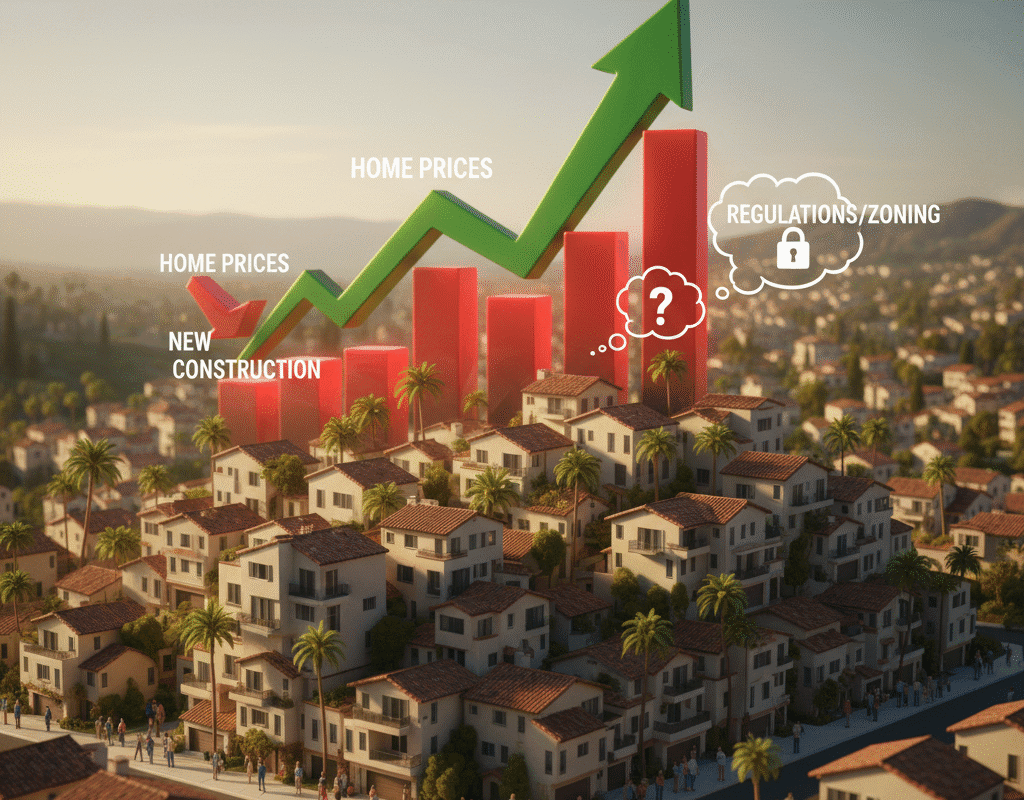
The Economics of California’s Housing Shortage
The Economics of California’s Housing Shortage
The housing shortage in California is now one of the state’s most important economic problems rather than merely a policy problem. From low-income suburbs to affluent coastal communities, from Los Angeles to San Jose, the disparity between housing supply and demand has widened into a major affordability catastrophe.
Economists have long warned that California’s housing shortage, which is estimated to be between 2 and 3.5 million units depending on the methodology, will drive up prices, increase inequality, and drive people out of the state. These forecasts have come to pass today. California currently has the highest rate of homelessness in the country, median home prices are significantly higher than the national average, and rents are increasing more quickly than salaries.
HSBC Cashback Credit Card 2025 – Benefits, Rewards & How to Apply?

The primary cause of the crisis is the imbalance between supply and demand.
The fundamental problem with California’s housing scarcity is that supply cannot keep up with demand. It has taken decades to create this mismatch.
- Strong Job Growth, Limited Housing: California’s booming economy has created a huge number of jobs, particularly in tech hubs like the Bay Area and Los Angeles. Housing development hasn’t kept up with this rate, though. Data shows that the state added about one new housing unit for every five new residents between 2011 and 2016.
- Underbuilding vs. Need: California has a massive housing backlog, according to a thorough McKinsey assessment. Even with further development, the state might be short 2.5 million units by 2025 compared to current trends.
Affordability: An Increasing Economic Risk
Naturally, the lack of supply causes problems with affordability, and owning a home has become more and more unattainable for many Californians.
- Historical Low Affordability: The California Association of REALTORS® (C.A.R.) reports that the cost of housing has drastically decreased. Just 17% of households could afford a single-family home at the median price in the beginning of 2025.
- Lock-in Effect: When mortgage rates are favorable or increasing, many homeowners are hesitant to sell. This “lock-in effect” further reduces supply and restricts home turnover.
- Income vs. Housing Costs: The California Chamber of Commerce notes that mid-tier homes in California (around the 35th–65th income percentile) are more than twice as expensive as comparable homes elsewhere in the U.S., making ownership very difficult even for middle-income families.
The State’s Economic Cost
A lack of housing has serious economic repercussions in addition to social ones.
- Billions in Annual Losses: According to a private research, California’s housing crisis costs the state over $40 billion a year. This comprises corporate expenses, personnel out-migration, and productivity losses.
- Investment Opportunities and Risks: The shortfall also represents an enormous investment opportunity — but it requires the right frameworks. McKinsey estimates the state’s affordability gap at $50–60 billion per year, a massive burden on public and private actors alike.
- Impact on Growth and Migration: High housing costs deter workers and companies. Startup workers, in particular, may be priced out, limiting innovation and economic dynamism.
Regulatory Barriers and Policy Challenges
Why is supply so constrained, even when the need is obvious? A key part of the problem is regulatory and bureaucratic friction.
- CEQA Reform: In 2025, Governor Gavin Newsom signed a major overhaul of the California Environmental Quality Act (CEQA) to speed up housing construction. The law historically imposed lengthy reviews and litigation, which delayed or killed many housing projects.
- Legislative Action: The California Senate fact sheet shows that for years, housing production has lagged significantly behind the state’s goals. Legislative reforms aim to close that gap by planning for 2.5 million homes over the next eight years, including substantial allocations for low-income units.
Why It Matters: Wider Economic Consequences
The housing crisis has significant ramifications for California’s future and is not merely a localized real estate issue.
- Workforce Retention: The state’s high housing costs discourage workers from relocating, particularly younger professionals and those in vital sectors like technology, healthcare, and education.
- Economic Competitiveness: If talent cannot afford housing, businesses may be reluctant to grow or move to California, which would make the state less competitive internationally.
In conclusion: The Economics of California’s Housing Shortage
California’s housing shortage is more than just a market distortion — it’s a systemic economic challenge with deep social, financial, and political implications. The imbalance between supply and demand, regulatory barriers, and affordability constraints are not just pushing up prices, but threatening the state’s long-term economic viability.
Addressing the crisis will require bold policy, private-sector innovation, and a clear vision for equitable and sustainable growth. As California charts its future, how it solves its housing crisis could serve as a model for other regions wrestling with similar challenges.
The Hidden Price Tag: How Much U.S. Small Businesses Pay for Tax Compliance
The Hidden Price Tag: How Much U.S. Small Businesses Pay for Tax Compliance