 A K
A K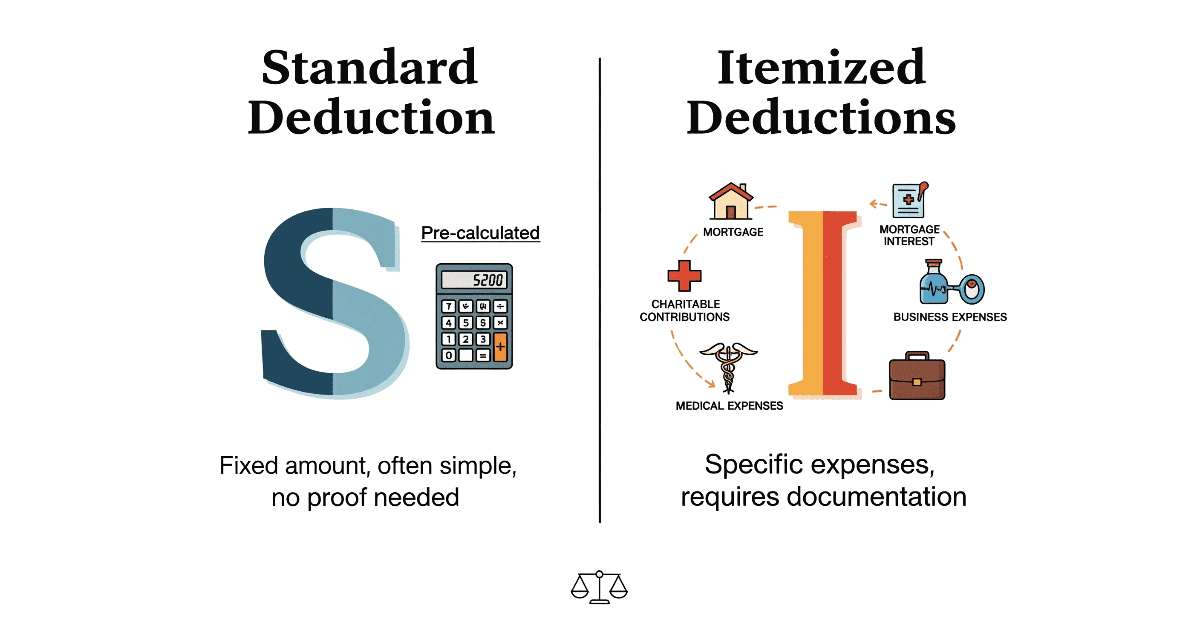
Standard Deduction vs Itemized Deductions Explained:
Standard Deduction vs Itemized Deductions Explained: Overview
Every tax season, millions of Americans face the same question: Should I take the standard deduction or itemize my deductions? This choice can have a major impact on how much tax you owe—or how much you get back as a refund.
With constant changes in IRS rules, updated deduction limits, and evolving tax laws, it’s crucial to understand the difference between the standard deduction and itemized deductions. Making the right choice could mean thousands of dollars in savings.
In this in-depth guide, we’ll break down everything you need to know about standard deduction vs itemized deductions in 2025, including IRS limits, eligibility rules, examples, pros and cons, and strategies to maximize your tax benefits.
HSBC Cashback Credit Card 2025 – Benefits, Rewards & How to Apply?

The Standard Deduction: What is it?
Your taxable income is decreased by the standard deduction, a set sum of money determined by the IRS. It’s the most straightforward and popular method for taxpayers to reduce their tax liability.
You can just claim this fixed amount, which varies based on your filing status, rather than maintaining a record of your expenses and receipts.
IRS-Projected Standard Deduction Amounts for 2025
- $14,600 single filers
- Joint filing by a married couple: $29,200
- Household head: $21,900
(Note: These numbers are updated for inflation every year. Prior to filing, always check with the IRS.)
The Standard Deduction Benefits Who?
- Few deductible expenses for taxpayers
- Those seeking a more expedient and straightforward filing procedure
- Those without dwellings or with significant medical or charitable costs
Itemized deductions: what are they?
Listing particular qualified expenses enables you to lower your taxable income through itemized deductions. If your deductible expenses are greater than the standard deduction, this strategy can result in larger savings, but it also requires more work.
Frequently Made Itemized Deductions Permitted by the IRS
- Dental and medical costs (more than 7.5 percent of adjusted gross income)
- $10,000 is the maximum amount for state and local sales and income taxes (SALT).
- Property taxes on real estate
- Interest on a home mortgage
- Donations to charities
- Losses from theft and injuries (in places designated as disasters by the federal government)
- Various other deductions (with limitations)
For whom are itemized deductions advantageous?
- homeowners that pay high property taxes and mortgage interest
- Individuals who incur high medical costs
- High-income individuals in tax-heavy states
- Large donations from charitable donors
Standard Deduction vs Itemized Deductions: Key Differences
| Feature | Standard Deduction | Itemized Deductions |
| Simplicity | Easy, no receipts required | Complex, requires documentation |
| IRS Limit | Fixed by filing status | Depends on actual eligible expenses |
| Best for | Most taxpayers | Those with high deductible expenses |
| Audit Risk | Lower | Higher (due to documentation) |
| Flexibility | Same for everyone | Varies based on personal spending |
IRS Regulations You Need to Understand
- You can’t claim both – It’s either standard deduction OR itemized.
- Some taxpayers must itemize, including:
- Married individuals filing separately if one spouse itemizes
- Nonresident aliens
- Individuals filing for less than 12 months due to accounting changes
Recordkeeping is essential for itemized deductions—keep receipts, bank statements, and IRS-approved documents.
Tax Planning Tips: How to Choose Wisely
- Estimate both options before filing – use tax software or IRS worksheets.
- Consider bunching deductions – For example, make two years’ worth of charitable contributions in one year to exceed the standard deduction.
- Track medical expenses – If you expect high medical bills, itemizing might be worthwhile.
- Use mortgage interest strategically – Homeownership can tip the scale toward itemizing.
- Review annually – The choice may change every year based on your financial situation.
Standard Deduction vs Itemized in 2025: What Most Americans Choose
According to IRS data, more than 85% of taxpayers take the standard deduction. This number has increased since the Tax Cuts and Jobs Act (TCJA) of 2017, which nearly doubled the standard deduction and limited SALT deductions.
Still, high earners, homeowners, and large donors continue to benefit from itemizing.
Concluding remarks
The decision between itemized and basic deductions depends on your individual financial circumstances. While itemized deductions can optimize savings for individuals with substantial expenses, the standard deduction provides speed, ease of use, and security.
Always compare the two approaches before filing. To make the most tax-efficient choice, use IRS spreadsheets, internet calculators, or seek advice from a tax expert.
Retirement Planning Mistakes to Avoid in 2025: Expert Tips for a Secure Future
Retirement Planning Mistakes to Avoid in 2025: Expert Tips for a Secure Future