 A K
A K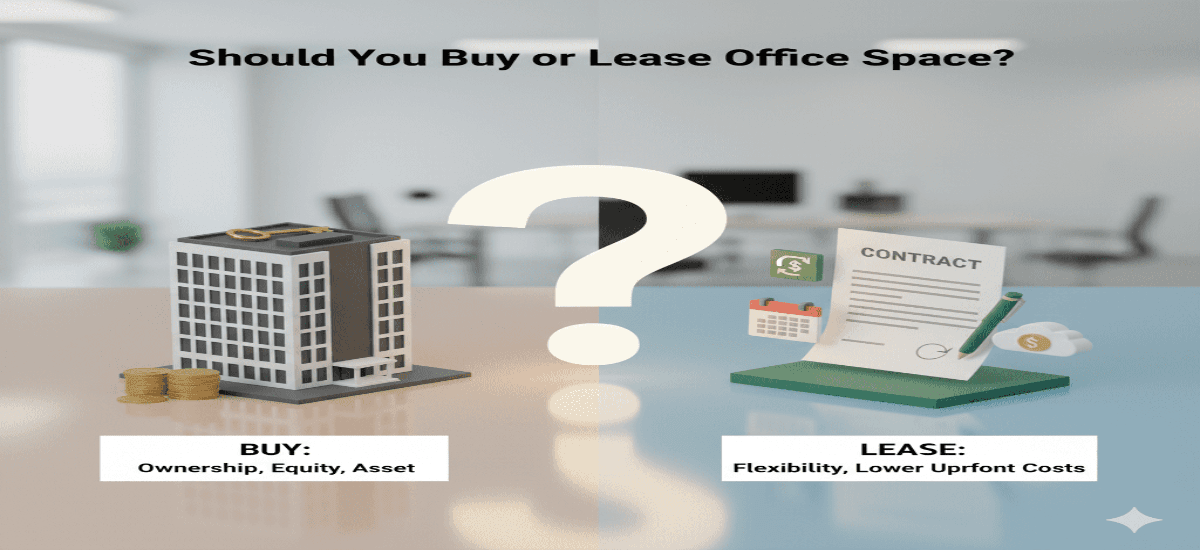
Should You Buy or Lease Office Space?
Should You Buy or Lease Office Space?
One of the most important financial decisions made by business owners is whether to purchase or rent office space. Whether you are a startup preparing to scale or an established company considering expansion, the right workspace affects your cash flow, flexibility, brand image, employee satisfaction, and long-term financial stability.
The decision of whether to buy or lease office space has never been more important in 2025 due to changing real estate trends, hybrid work practices, and fluctuating interest rates. This article explores both options in depth, weighing pros, cons, costs, risks, and strategic advantages to help you make an informed decision.
HSBC Cashback Credit Card 2025 – Benefits, Rewards & How to Apply?

The Significance of This Choice in 2025
There have been notable changes in the commercial real estate market in the United States:
- Interest Rate Volatility: The affordability of purchasing office space has been directly impacted by changes in borrowing prices.
- Remote and Hybrid Work: Since many businesses require less space, leasing is more alluring for flexibility.
- Tax Law Updates: Business owners can access different deductions depending on ownership vs. leasing.
- Market Uncertainty: Office vacancies in major cities remain high, which can mean attractive leasing opportunities but uncertain resale values for buyers.
For business owners, the decision isn’t just about space—it’s about aligning financial strategy with long-term goals.
Office Space Leasing: Prioritize Flexibility
The most popular option for small to mid-sized enterprises, particularly startups, is leasing.
Benefits of Office Space Leasing
- Reduced Upfront Costs: You pay rent each month rather than a large down payment.
- Flexibility: It’s simpler to scale up or down in response to shifting company requirements.
- Prime Locations: Leasing gives you access to popular commercial areas without having to pay for them up front.
- Upkeep and Repairs Covered: A lot of leases cover upkeep, which lowers unforeseen costs.
The Drawbacks of Office Space Leasing
- No Equity Building: Ownership value is not increased by rent payments.
- Rental Increases: Generally speaking, lease prices increase in tandem with market conditions or inflation.
- Limited Control: The landlord may impose restrictions on customization.
- Long-Term Cost: Leasing is frequently more expensive than buying over a ten- to twenty-year period.
Purchasing Office Space: Investment & Stability
Buying office space is a long-term investment that is best suited for well-established companies that are expanding steadily.
The Benefits of Purchasing Office Space
- Building Equity and Assets: Contributions help people acquire real estate.
- Potential for Appreciation: The value of the property may increase, generating income for the company.
- Fixed Costs: Unlike growing rents, mortgage payments are predictable.
- Tax Benefits: Depreciation, property taxes, and mortgage interest may all be deductible.
The drawbacks of purchasing office space
- High Upfront Investment: 10% to 25% is the usual range for down payments.
- Market Risk: In erratic markets, real estate values could fall or remain unchanged.
- Maintenance Responsibilities: The owner is responsible for all maintenance and repair expenses.
- Decreased Flexibility: If business demands change, it might be challenging to relocate or downsize.
Comparing Leasing and Purchasing Financially
Let’s use a 5,000 square foot office building in a mid-sized American city in 2025 as an example:
Renting:
- The average annual rent is $25 per square foot.
- Rent total for the year is $125,000.
- Cost over five years (not including increases) = $625,000
Purchasing:
- The purchase price was $1.5 million.
- $300,000 paid front with a 20% down payment
- 20-year mortgage with 6% interest: around $8,600 per month ($103,200 annually)
- Annual property taxes plus upkeep: about $35,000.
- The annual cost is about $138,200, which is a little more than the initial leasing cost.
- However, you have a valuable asset once the loan is paid off.
This demonstrates that while buying becomes more cost-effective over time, leasing is frequently less expensive in the short term.
Implications for Taxation
Advantages of Leasing:
- As a business expense, rent is completely deductible.
- basic accounting that does not include property depreciation.
Benefits of Purchasing:
- Depreciation, property taxes, and mortgage interest are all deductible.
- possible long-term financial rewards from the property’s sale.
Consulting a tax expert is essential because tax tactics differ depending on the location and size of the organization.
Considerations Particular to the Industry
- Startups and tech companies: Because of their quick expansion and erratic space requirements, they frequently favor leasing.
- Law firms and medical practices have a tendency to purchase because their clientele value stability and status.
- Manufacturing & Warehousing: For specialized facilities, purchasing could be preferable.
- Retail Businesses: Leasing is frequently more sensible for businesses with flexible locations.
Important Things to Think About Before Making a Choice
- Business Growth Forecasts: Will your organization soon grow or shrink?
- Financial Stability: Can you make a down payment without negatively impacting your cash flow?
- Market Conditions: Will real estate values in your area increase or decrease?
- Length of Stay – Leasing is better for short-term (under 5 years); buying suits long-term (10+ years).
2025 Real Estate Trends That Could Affect Your Decision
- Hybrid Work Reducing Office Needs: Many firms only require part-time workspaces.
- Suburban Shift: Companies are moving from expensive downtowns to more affordable suburban offices.
- Flexible Leasing Options: Short-term leases and co-working spaces are becoming mainstream.
Professional Opinions
- According to real estate agents, leasing makes more sense for businesses that value adaptability.
- Purchasing is an asset play that ensures long-term wealth, according to financial advisors.
- Business consultants emphasize that your company’s strategic plan is more important in making decisions than real estate.
Hybrid Options: Lease-to-Own and Co-Ownership
Some businesses choose middle-ground solutions:
- Lease-to-Own Agreements: Part of rent goes toward eventual purchase.
- Co-Ownership with Other Businesses: Shared costs and ownership.
- Sale-Leaseback Deals: Companies sell property but lease it back to free up capital.
Conclusion: Is It Better to Buy or Lease?
Your company’s size, stage of growth, cash flow, and long-term goals all influence the response.
Select Leasing if
- You’re a new business or expanding quickly.
- Priorities are cheap upfront costs and flexibility.
- You don’t know the long-term location.
Select Purchasing If:
- Your business is stable with predictable growth.
- You want to build equity and benefit from tax advantages.
- You see real estate as a strategic investment.
In 2025, many small businesses are leaning toward leasing to remain flexible, while larger, established firms continue to buy for stability and wealth-building.
In Conclusion
There is no one-size-fits-all solution when it comes to leasing or purchasing office space. While purchasing delivers long-term financial rewards and ownership, leasing offers flexibility and financial breathing room. The best decision aligns with your company’s financial health, future growth, and industry needs.
Before committing, analyze your business plan, review financial forecasts, consult with real estate and tax professionals, and always weigh short-term convenience against long-term strategy.
How to Get Out of Debt Without Bankruptcy: Proven Strategies for Financial Freedom
How to Get Out of Debt Without Bankruptcy: Proven Strategies for Financial Freedom