 A K
A K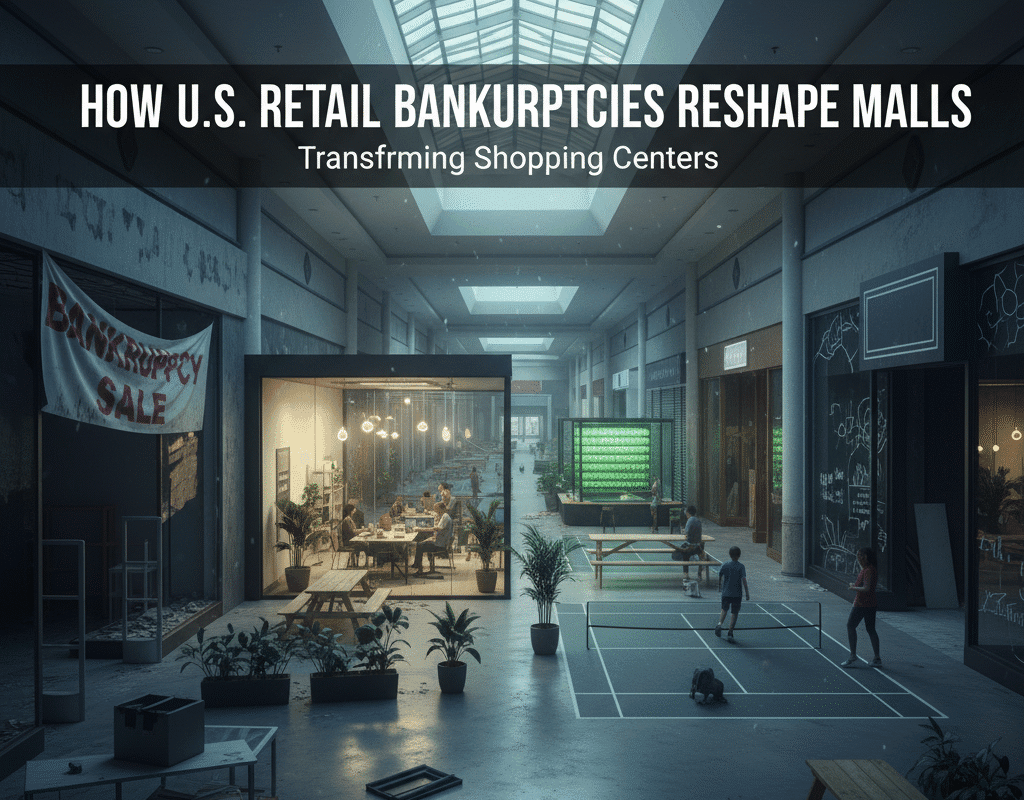
How U.S. Retail Bankruptcies Are Reshaping Malls?
How U.S. Retail Bankruptcies Are Reshaping Malls?
Over the past few years, a wave of retail bankruptcies has shaken the U.S. commercial real estate sector, triggering a profound transformation in malls and shopping centers. Once considered cornerstones of American consumer culture, many of these properties are now grappling with vacant anchor stores, declining foot traffic, and the urgent need to reinvent themselves.
As retail giants collapse or retrench, landlords, developers, and local communities are being forced to rethink the future of physical retail. This article explores how bankruptcies are reshaping malls across America — the risks, the opportunities, and what’s next.
HSBC Cashback Credit Card 2025 – Benefits, Rewards & How to Apply?

The Reasons for Retailers’ Failure: The Catalysts
Debt and overstretching
Overexpansion, which is frequently spurred by leveraged buyouts and private equity, is one of the root reasons of recent retail bankruptcies. Due to their heavy debt loads, many shops are at risk in a tightening economic environment. Private equity-backed stores accounted for a sizable portion of U.S. retail bankruptcies, according to a thorough bankruptcy analysis by financial advice firm BDO.
The Danger of E-Commerce
One ongoing disruptor has been the growth of e-commerce. Brick-and-mortar businesses are under great pressure from fast-fashion e-tailers like Shein and Temu, as well as retail giants like Amazon, who provide extremely competitive pricing and convenience.
The Effect on Shopping Centers: A Structural Reorganization
Declining Anchor Stores and Increasing Vacancy Rates
Mall occupancy is declining as more stores close or go bankrupt. Malls have some of the highest vacancy rates of any form of retail property in the United States, according to Retail Dive.
A decline in customary purchasing practices
Due to shifting demographics, economic challenges, and e-commerce preferences, consumer behavior has drastically changed. Malls are no longer only places to shop; traditional retail establishments are no longer the main attraction, and less people use them as weekend hangouts.
Dangers and Difficulties Ahead
Although there are many opportunities, there are many hazards involved in moving forward.
Execution Risk
Redeveloping malls is capital-intensive and complex. Repurposing requires not just developers, but cooperation from lenders, municipalities, and local communities. Many mall owners are locked into legacy debt, and navigating restructuring — particularly in distressed markets — is difficult.
Market Saturation & Demand Uncertainty
There’s no one-size-fits-all model. While some malls may thrive as mixed-use hubs, others in less affluent or declining markets may struggle to attract sufficient demand. The cost of renovation, zoning challenges, and competition from other real estate markets could all limit the upside for certain properties.
Key Examples & Case Studies
To illustrate how these dynamics are playing out, consider a few real-world cases:
- San Francisco Centre: Once a high-profile mall, its occupancy dropped significantly after major anchor closures. At one point, occupancy fell to 55%, and there were discussions about alternative reuse, including entertainment, food halls, or even recreational facilities.
- Burnsville Center (Minnesota): This mall has seen anchor store exits, foreclosure, and a shift in ownership. The future likely lies in redevelopment or repurposing.
- Rego Center (Queens, NY): The mall has lost several department store tenants (such as Century 21 and Bed Bath & Beyond). Yet, parts of the property are being re-leased to other operators, including smaller retailers and possibly non-traditional tenants, highlighting the adaptive reuse model.
Stakeholder Responses
- Mall Owners & Developers: Many are increasing negotiations with tenants, offering aggressive rent cuts and flexible lease terms. They are also partnering with developers to reimagine anchor spaces.
- Retailers: Struggling retailers are either downsizing, going digital-only, or renegotiating leases. Some are prioritizing smaller-format stores in high-traffic suburban or strip center locations (vs. big mall stores).
- Small Businesses: Local and niche entrepreneurs are seizing the moment. Vacant space is being re-leased to small, independent retailers or concept stores at more favorable terms.
- Communities & Municipalities: Local governments are increasingly part of the conversation. Redevelopment discussions are underway in cities where mall declines risk becoming urban blight.
In conclusion: How U.S. Retail Bankruptcies Are Reshaping Malls?
The ongoing wave of U.S. retail bankruptcies is more than just a business crisis — it’s a catalyst for reinvention. Once the centers of consumerism, malls are currently at a turning point. As tenants falter, foot traffic slows, and loan defaults rise, property owners are being pushed to rethink their playbooks.
Yet, amid the uncertainty lies opportunity. The decline of traditional retail is opening doors for small businesses, experiential concepts, and mixed-use transformation. If landlords and communities can execute bold reinvention strategies, some malls may not just survive — they could emerge stronger and more relevant for the future.
How the Volcker Rule Transformed Wall Street Trading: A Deep Dive into Its Impact on Modern Finance
How the Volcker Rule Transformed Wall Street Trading: A Deep Dive into Its Impact on Modern Finance