 A K
A K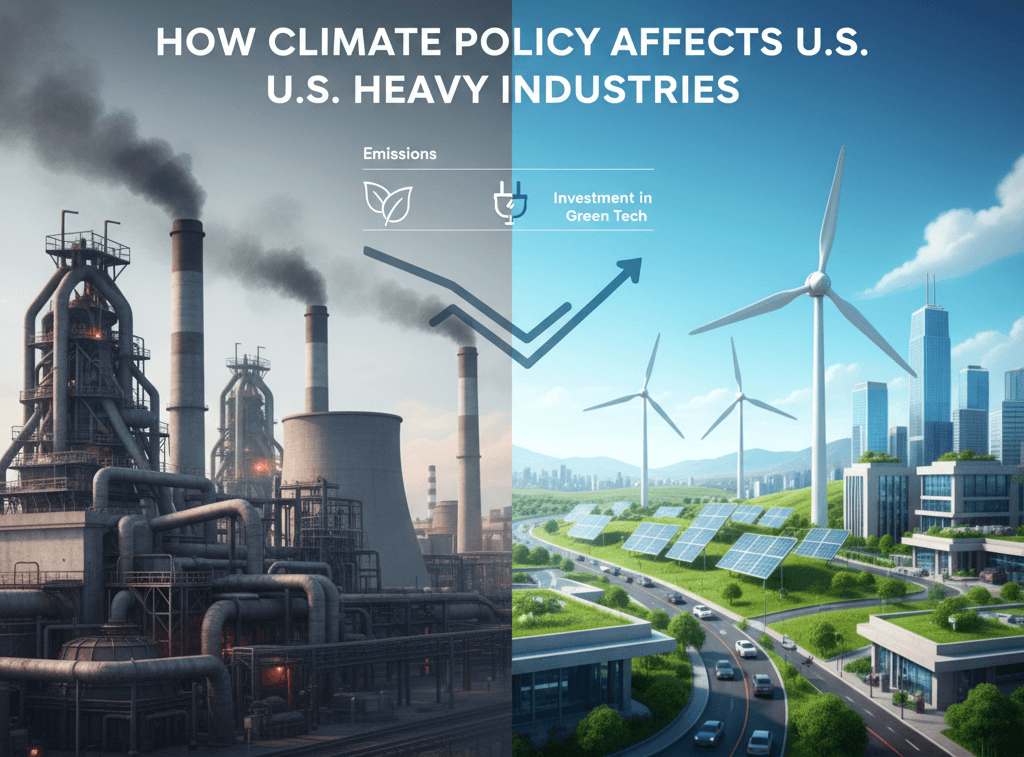
How U.S. Climate Policy is Shaping the Future?
How U.S. Climate Policy is Shaping the Future?
The intersection of climate policy and heavy industry in the United States has emerged as one of the most critical debates in modern economic and environmental discourse. As the U.S. government intensifies efforts to reduce greenhouse gas emissions, industries such as steel, cement, chemical manufacturing, and energy-intensive production face a complex landscape of challenges and opportunities. These sectors, historically central to America’s economic growth, are now navigating a world where regulatory compliance, environmental sustainability, and competitiveness converge.
HSBC Cashback Credit Card 2025 – Benefits, Rewards & How to Apply?

The Current Landscape of U.S. Heavy Industries
Heavy industries encompass large-scale manufacturing operations that consume significant energy and resources. The steel, cement, aluminum, and chemical sectors alone account for a substantial share of industrial emissions in the U.S. According to the Environmental Protection Agency (EPA), industrial processes contribute roughly 22% of the nation’s greenhouse gas emissions, with heavy industries responsible for a large portion of that total.
Traditionally, these industries have relied on fossil fuels for energy, which results in high carbon intensity per unit of production. This reliance on energy-dense fuels and high-temperature processes makes decarbonization a technical and financial challenge.
Impact on Major Industrial Sectors
- Steel Industry
Steel production is among the most carbon-intensive industrial processes. Traditional blast furnaces rely heavily on coal, resulting in substantial CO2 emissions. U.S. climate policies are pushing the steel sector toward low-carbon solutions, including electric arc furnaces powered by renewable energy and hydrogen-based steelmaking.
- Cement and Construction Materials
Cement production accounts for nearly 8% of global CO2 emissions. In the U.S., climate policy encourages the adoption of alternative materials, carbon capture technologies, and energy-efficient kilns. The push toward sustainable construction also impacts downstream industries, influencing urban planning and building practices nationwide.
Economic Consequences
The economy as a whole is impacted when heavy industries adopt climate policies.
- Job Market Transformation: While some traditional jobs in fossil fuel-dependent operations may decline, new opportunities emerge in clean technology, renewable energy infrastructure, and sustainable manufacturing.
- Competitiveness and Trade: Companies that adapt early to climate policies may gain a competitive edge in international markets increasingly favoring low-carbon products.
- Investment and Innovation: Climate policy drives industrial innovation, attracting investment in research, infrastructure modernization, and energy efficiency.
Obstacles and Reactions
Despite potential benefits, climate policies face pushback from industry stakeholders concerned about cost increases, competitiveness, and regulatory uncertainty. Critics argue that stringent policies could lead to job losses in traditional sectors, higher production costs, and relocation of industries to countries with less strict environmental standards—a phenomenon known as “carbon leakage.”
In conclusion: How U.S. Climate Policy is Shaping the Future?
Unquestionably, U.S. climate policy is changing heavy industries, bringing with it both opportunity and problems. The transition to low-carbon operations offers a route to sustainable industrial growth, innovation, and global competitiveness, notwithstanding potential upfront costs and adaption challenges.
Navigating this crucial period in American industrial history requires legislators, business executives, and laborers to comprehend the subtleties of climate policy’s impact on heavy industries.
The future of American heavy industries will depend on utilizing technology, encouraging cross-sector cooperation, and striking a balance between economic resiliency and environmental responsibility.
Industries that adopt sustainable practices are likely to take the lead in defining the industrial landscape of the twenty-first century as the country moves closer to its ambitious climate targets.
How Tokenized U.S. Treasuries Could Revolutionize Global Investing
How Tokenized U.S. Treasuries Could Revolutionize Global Investing