 A K
A K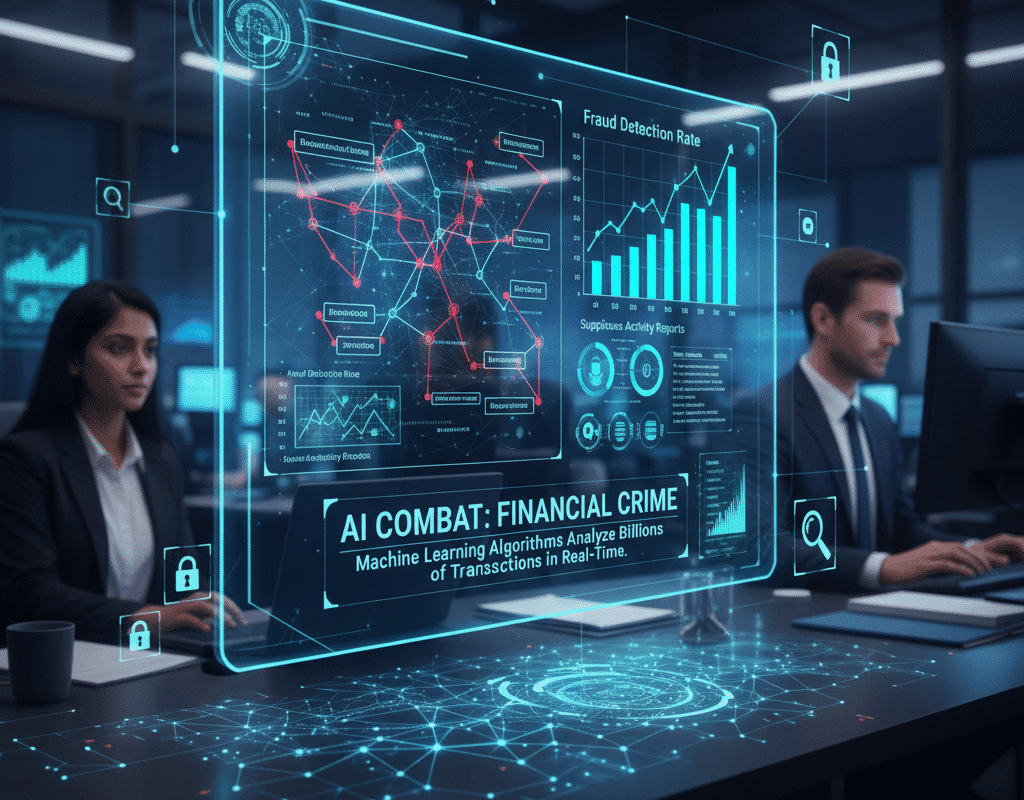
How U.S. Banks Use Artificial Intelligence?
How U.S. Banks Use Artificial Intelligence?
One of the most important instruments in contemporary banking is artificial intelligence, which is revolutionizing how American banks prevent money laundering, fight fraud, and protect client accounts. Traditional manual monitoring can no longer keep up with the rise in digital transactions and the more complex techniques used by thieves. In 2025, America’s largest banks—and an increasing number of regional institutions—are turning to AI-driven systems to identify suspicious behavior faster, with greater accuracy, and at massive scale.
HSBC Cashback Credit Card 2025 – Benefits, Rewards & How to Apply?

Why AI Has Become Essential for American Banks
As criminals take advantage of online banking, mobile payments, cryptocurrency platforms, and quick transfer methods, fraud and money laundering have increased. U.S. institutions are mandated by law to use regulatory frameworks like these to identify and report suspicious activity.
- The Bank Secrecy Act (BSA)
- AML (anti-money laundering) laws
- Rules for Know Your Customer (KYC)
- The United States Patriot Act
- FinCEN reporting specifications
Conventional fraud detection, which relies on rule-based warnings, manual inspection, and after-the-fact investigations, has grown excessively sluggish and ineffective.
Banks Are Being Pressured by Regulations to Use AI
In order to increase AML efficacy, U.S. regulators, particularly FinCEN and the Office of the Comptroller of the Currency (OCC), have pushed banks to implement cutting-edge technologies.
Current developments in regulations include:
- More stringent SAR reporting
- Requests for quicker detection times
- Increased examination of high-risk sectors
- A greater focus on online payment systems
- Increased fines for AML violations
In light of these demands, banks view AI as both a competitive advantage and a must for compliance.
Examples of AI Tools Used by U.S. Banks
While each bank uses its own proprietary systems, common AI-driven tools include:
- Transaction monitoring platforms
- KYC and identity verification systems
- Behavioral analytics engines
- Fraud scoring algorithms
- Network visualization tools
- Document intelligence solutions
- Real-time risk alert systems
Large institutions often build hybrid models, combining internal development with external vendors.
Benefits of AI in Fraud and AML Detection
- Faster Detection
AI analyzes billions of data points in seconds, enabling real-time decisions instead of delayed investigations.
- Reduced False Positives
By understanding real customer behavior, AI reduces the number of unnecessary alerts—saving banks millions in labor.
- High Scalability
AI handles enormous transaction volumes, essential as digital banking continues to grow.
- Improved Accuracy
Dynamic learning ensures accuracy improves over time, adapting to new threats.
- Lower Operational Costs
Banks spend billions annually on compliance. AI significantly reduces manual labor, document review, and repetitive investigation tasks.
Challenges U.S. Banks Face When Implementing AI
- Data Privacy and Security Concerns
Banks must comply with federal privacy laws to ensure AI systems do not misuse customer information.
- Model Transparency
Regulators require banks to explain how AI decisions are made. “Black-box” models can be problematic.
- Integration with Legacy Systems
Many banks still rely on decades-old infrastructure that doesn’t easily connect with modern AI platforms.
- High Implementation Costs
Building secure, compliant AI systems requires major investment in technology and talent.
- Risk of Algorithmic Bias
Poorly trained models may unfairly target certain customers or businesses if not monitored closely.
Conclusion: How U.S. Banks Use Artificial Intelligence?
In 2025, artificial intelligence is no longer optional for U.S. banks—it is essential. As fraudsters use advanced technology, deepfakes, and global networks, banks must match them with intelligent systems capable of real-time detection and analysis.
AI allows financial institutions to:
- Reduce fraud losses
- Strengthen AML compliance
- Improve customer trust
- Cut operational costs
Why U.S. Tax Breaks for Corporations Spark Political Controversy
Why U.S. Tax Breaks for Corporations Spark Political Controversy