 A K
A K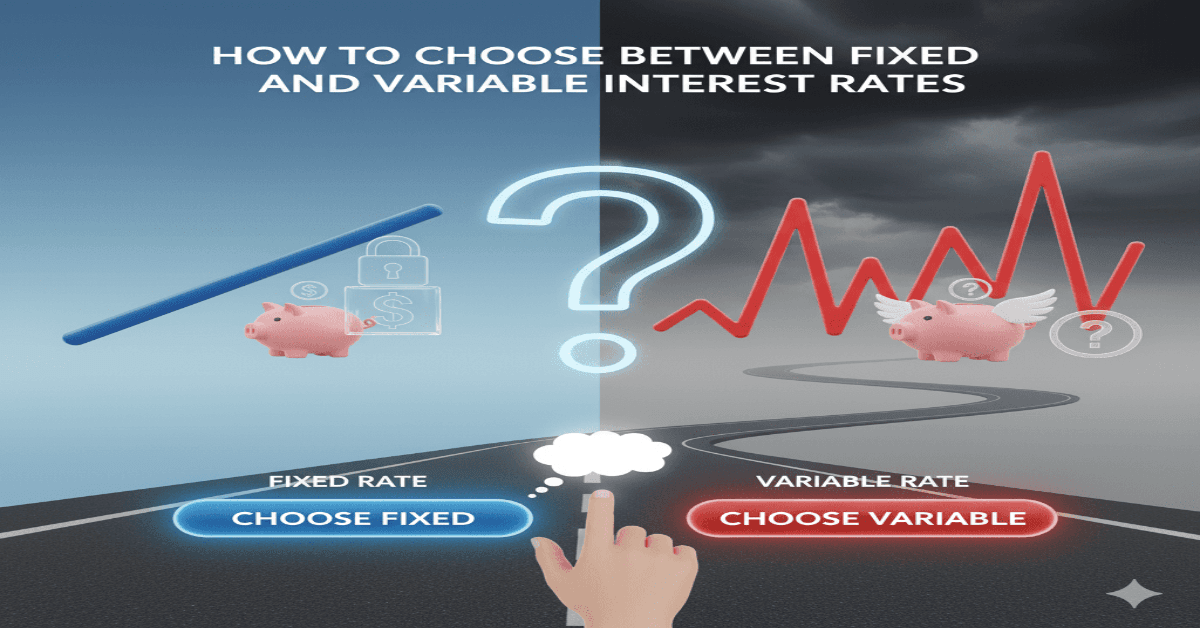
How to Choose Between Fixed and Variable Interest Rates:
How to Choose Between Fixed and Variable Interest Rates:
When applying for a loan or mortgage in the United States, one of the most important financial decisions you will make is whether to choose a fixed interest rate or a variable interest rate. This choice can have a long-lasting impact on your monthly payments, financial stability, and overall borrowing cost.
In today’s volatile economic environment—marked by inflation concerns, Federal Reserve rate hikes, and uncertainty in the housing market—understanding how these two types of interest rates work is crucial. Borrowers often face confusion when deciding which option suits their financial goals. Should you lock in stability with a fixed rate, or take advantage of potentially lower payments with a variable rate?
HSBC Cashback Credit Card 2025 – Benefits, Rewards & How to Apply?

A Fixed Interest Rate: What Is It?
A fixed interest rate doesn’t change over the course of the loan. This implies that regardless of shifts in the overall economy or the benchmark interest rate set by the Federal Reserve, your monthly payments will remain constant.
Example: Even if market rates increase to 8% or decrease to 4%, your interest rate and monthly payment will stay the same for thirty years if you take out a 30-year fixed-rate mortgage at a rate of 6.5%.
Fixed Interest Rate Benefits
- Predictability: Budgeting is made simpler by the steady monthly payments.
- Protection Against Inflation: Your loan will be unaffected by rising interest rates, which is advantageous during unpredictable economic times.
- Long-Term Stability: Ideal for borrowers who intend to hold onto a loan or remain in a home for an extended period of time.
Fixed interest rates have drawbacks.
- Greater Starting Rates: Generally speaking, fixed rates are greater than initial variable rates.
- Less Flexibility: If market rates fall sharply, you can lose out on savings.
- Refinancing Costs: Refinancing, which entails extra expenses, can be required to benefit from lower rates.
A Variable Interest Rate: What Is It?
Variable interest rates, also known as adjustable rates, fluctuate on a regular basis in accordance with a benchmark index, such as the prime rate or the Secured Overnight Financing Rate (SOFR). In order to determine your overall rate, lenders usually add a margin to the index.
Variable Interest Rate Benefits
- Reduced Initial Payments: In contrast to fixed loans, they frequently begin with a reduced interest rate.
- Possible Savings: Your payments may go down if market rates decline.
- Short-Term Affordability: Perfect for borrowers who want to refinance before interest rates rise or who intend to pay off loans quickly.
Variable interest rates’ drawbacks
- Uncertainty: If interest rates increase, monthly payments may increase without warning.
- Budgeting Difficulties: Financial planning is made more difficult by fluctuating payments.
- Risk of Payment Shock: Large rate increases may put a burden on household spending plans.
Considerations for Selecting Between Variable and Fixed Rates
The state of the economy today
Interest rate choices ought to be in line with the state of the economy as a whole. The United States has seen high inflation and aggressive rate hikes by the Federal Reserve in 2024 and 2025. For long-term security in this setting, fixed rates are more alluring.
Your Budgetary Objectives
- Fixed rates offer comfort if you want to remain in a property or hold a loan for a long time.
- A variable rate could save you money if you anticipate selling your house soon, refinancing, or paying off debt rapidly.
Tolerance for Risk
While some borrowers would rather have financial stability, others are more at ease with volatility. A fixed rate is the better choice if you are risk averse.
Type of Loan
- Mortgages: For house loans with terms of 15 or 30 years, fixed rates are common. Initial rates for adjustable-rate mortgages (ARMs) are frequently low, but they may increase over time.
- Student Loans: While private lenders could provide variable alternatives, federal loans are usually fixed.
- Credit cards and personal loans frequently include variable rates that are based on the prime rate.
When to Select a Fixed Rate of Interest
- You anticipate that rates will increase soon.
- You intend to stay in the house you are buying for a long time.
- You want payments that are steady and regular.
- You place more importance on financial stability than possible immediate savings.
When to Select a Variable Rate of Interest
- You believe interest rates may decline.
- Within a few years, you intend to pay off the debt, move, or refinance.
- You want lower initial payments to manage short-term affordability.
- You are comfortable with potential fluctuations.
Pros and Cons Comparison Table
| Feature | Fixed Interest Rate | Variable Interest Rate |
| Stability | High | Low |
| Initial Cost | Higher | Lower |
| Risk Level | Low | High |
| Best For | Long-term borrowers, risk-averse individuals | Short-term borrowers, risk-tolerant individuals |
In Conclusion
Your own financial objectives, risk tolerance, and the length of time you intend to hold the loan will all play a role in your decision between a fixed and variable interest rate. Fixed rates offer stability and peace of mind during unpredictable economic times. However, for borrowers who don’t mind taking on more risk, variable rates may provide short-term savings.
By carefully weighing the advantages and disadvantages, borrowers can make informed decisions that align with their financial future. Whether buying a home, paying off student loans, or financing a major purchase, understanding your interest rate options is the first step toward long-term financial health.
How to Use a Brokerage Account Wisely in 2025: A Complete Guide for Smart Investors
How to Use a Brokerage Account Wisely in 2025: A Complete Guide for Smart Investors