 A K
A K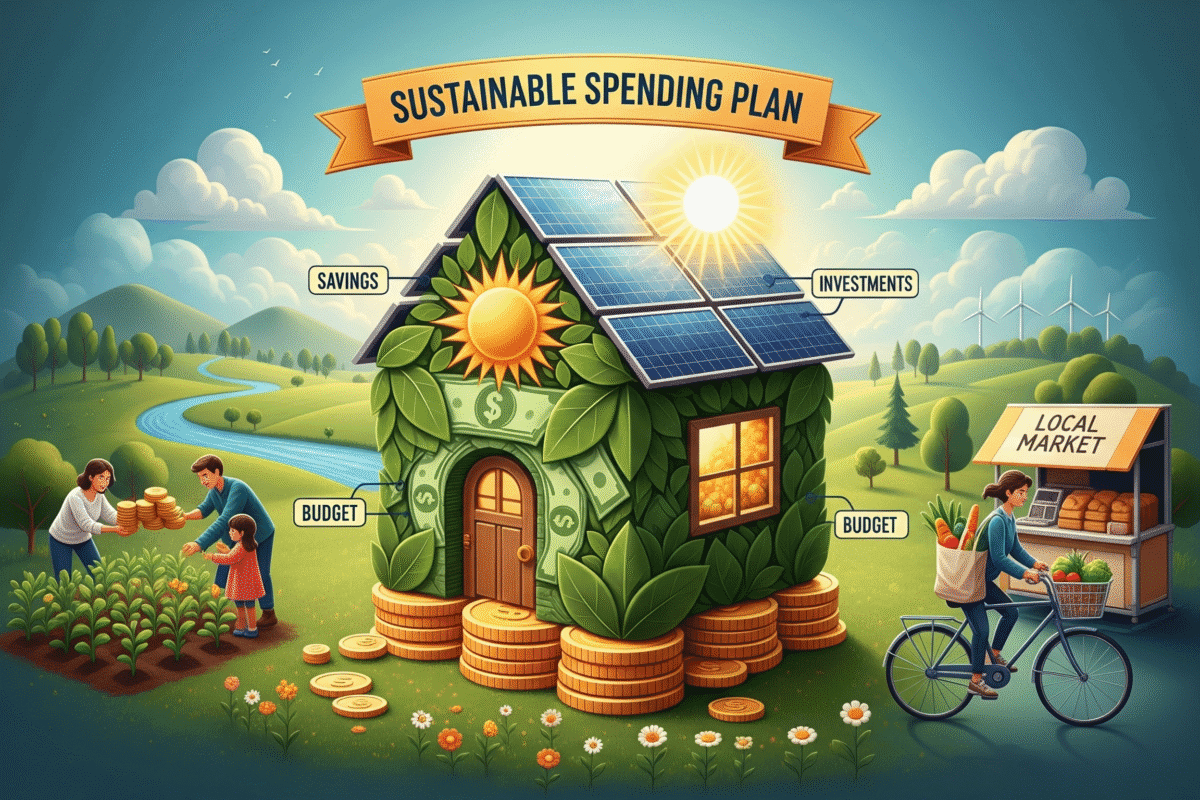
How to Build a Sustainable Spending Plan?
How to Build a Sustainable Spending Plan?
In today’s economy, where inflation, rising interest rates, and job market uncertainty weigh heavily on households, building a sustainable spending plan has become more important than ever. Unlike traditional budgeting methods that often focus on strict restrictions, a sustainable spending plan is about balance—allowing you to cover necessities, prepare for emergencies, save for the future, and still enjoy your life.
HSBC Cashback Credit Card 2025 – Benefits, Rewards & How to Apply?

Why a Sustainable Spending Plan Matters
According to a recent Bankrate survey, 57% of Americans cannot cover a $1,000 emergency expense without borrowing money. At the same time, credit card debt in the U.S. has surpassed $1 trillion, marking a historic high. These numbers show why many traditional budgeting methods fail—they’re often too rigid or unrealistic.
A sustainable plan goes beyond cutting lattes and emphasizes:
- Long-term financial health over short-term sacrifices.
- Flexible adjustments based on life changes and economic conditions.
- Alignment with personal values so spending feels purposeful, not restrictive.
In short, it’s about creating a money management system you can stick to—not just for a few months, but for life.
Step 1: Assess Your Current Financial Situation
You need to be aware of your financial situation before creating a spending strategy. Begin by:
Calculate Your Net Income
- Include salary, freelance income, rental properties, and investments.
- Exclude taxes, retirement contributions, and other deductions.
Track Your Expenses
- Use tools like Mint, YNAB (You Need a Budget), or a simple spreadsheet.
- Categorize spending into fixed (rent, utilities, insurance) and variable (dining out, shopping, entertainment).
Review Debt & Liabilities
- List credit cards, student loans, mortgages, and personal loans.
- Note interest rates and payment schedules.
Check Your Assets
- Savings accounts, investments, real estate, retirement accounts.
- This baseline provides the foundation for smarter, sustainable planning.
Step 2: Establish Specific, Reachable Financial Objectives
Without objectives, a spending plan is like a map without a destination. Goals give your money purpose.
Short-Term Goals (6–12 months):
- Build a $1,000 emergency fund.
- Pay off high-interest credit card debt.
- Stick to a monthly budget for 3 consecutive months.
Medium-Term Goals (1–5 years):
- Save for a down payment on a home.
- Pay off student loans.
- Grow an emergency fund to cover 6 months of expenses.
Long-Term Goals (5+ years):
- Invest for retirement.
- Build generational wealth.
- Fund children’s education
Step 3: Create a Balanced Budgeting Framework
A sustainable budget should not feel like punishment. Instead, it should give you freedom with boundaries. Consider these proven models:
The 50/30/20 Rule
- 50% Needs: Rent, utilities, food, transportation, healthcare.
- 30% Wants: Travel, hobbies, dining out, entertainment.
- 20% Savings & Debt Repayment: Emergency fund, investments, extra loan payments.
The Zero-Based Budget
- Every dollar has a job. At the end of the month, income minus expenses = zero. Great for disciplined spenders.
The 70/20/10 Plan
- 70% Living Expenses
- 20% Savings/Investments
- 10% Debt Repayment or Charity
Pick the model that best fits your lifestyle and adjust as needed
Step 4: Build an Emergency Fund
Three to six months’ worth of living expenses should be saved in an accessible savings account, according to financial experts.
- Start with a $500–$1,000 micro-goal.
- Transfer money to a high-yield savings account automatically.
- Consider it a bill that cannot be negotiated.
When unforeseen costs like auto repairs or medical bills arise, this safety net helps you avoid credit card debt.
Step 5: Strategically Manage and Reduce Debt
The largest barrier to sustainability is frequently debt. There are two tried-and-true ways to repay:
- Debt Snowball: For immediate gains, pay off the smallest obligations first.
- Debt Avalanche: Pay off debts with the highest interest rates first to save money long-term.
Consistency is the essential, regardless of the approach you take. Consider refinancing or consolidating if interest rates are too high.
Step 6: Automate Savings and Payments
Automation removes willpower from the equation. Configuration:
- Direct deposit to savings accounts.
- Automatic bill pay to avoid late fees.
- Automatic investment contributions (401(k), IRA, brokerage).
Automation creates financial discipline without constant effort.
Step 7: Spend in Alignment with Your Values
A sustainable plan allows for spending on what matters most. For example:
- A fitness enthusiast may budget more for gym memberships and less for dining out.
- A travel lover may cut back on shopping but save aggressively for vacations.
When your spending reflects your priorities, budgeting feels less like deprivation and more like financial empowerment.
Step 8: Review and Adjust Regularly
Life changes—your spending plan should too.
- Monthly: Check spending categories, overspending, and progress.
- Quarterly: Revisit goals, adjust savings rates.
- Yearly: Review insurance, investments, and long-term strategy.
Think of your spending plan as a living document, not a static rulebook.
Tools & Resources for Building a Spending Plan
- Apps: Mint, YNAB, EveryDollar, Personal Capital.
- Books: Your Money or Your Life by Vicki Robin, The Total Money Makeover by Dave Ramsey.
- Podcasts: The Ramsey Show, Afford Anything, ChooseFI.
These resources can help you stay motivated and informed.
The Bigger Picture: Building Long-Term Wealth
A sustainable spending plan is the first step toward wealth-building. Once you’ve mastered spending, you can:
- Invest in retirement accounts (401(k), IRA).
- Explore real estate or stock market opportunities.
- Build multiple streams of income.
The ultimate goal is financial freedom—the ability to make choices without money being the limiting factor.
Concluding Remarks
Creating a sustainable spending plan isn’t about perfection—it’s about progress. With the right framework, you can balance today’s enjoyment with tomorrow’s security.
In a world of rising costs and financial uncertainty, a sustainable spending plan is more than just a budget—it’s a blueprint for stability, resilience, and long-term success.
The Role of Willpower in Financial Success: How Self-Discipline Shapes Wealth in America
The Role of Willpower in Financial Success: How Self-Discipline Shapes Wealth in America