 A K
A K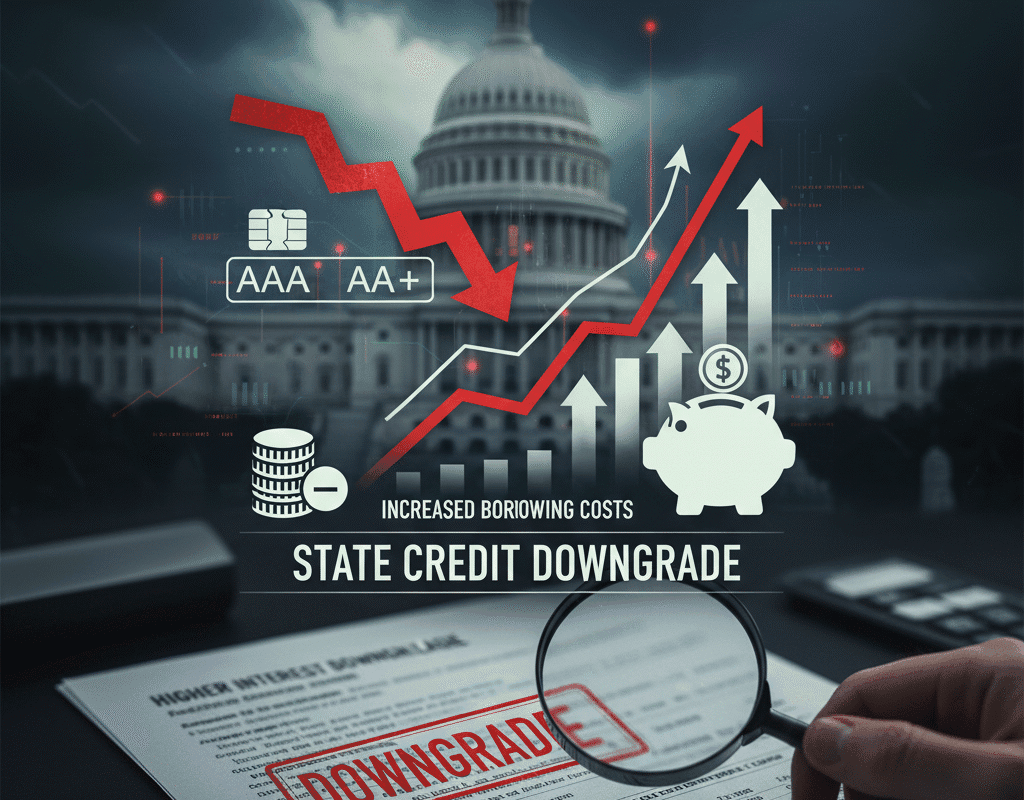
How State Credit Downgrades Increase Borrowing Costs?
How State Credit Downgrades Increase Borrowing Costs?
State credit downgrades are becoming a headline issue in America’s economic landscape. As states grapple with budget deficits, declining tax revenues, pension liabilities, and political gridlock, credit rating agencies have begun issuing warnings and, in some cases, lowering state credit ratings. While a downgrade might appear to be a technical matter, the real-world consequences are far-reaching. It affects the cost of public borrowing, slows infrastructure development, burdens taxpayers, and shapes long-term economic growth.
HSBC Cashback Credit Card 2025 – Benefits, Rewards & How to Apply?

What Is a State Credit Downgrade?
A state credit downgrade occurs when major rating agencies—such as Moody’s, S&P Global, or Fitch—lower the credit score they assign to a state government. These agencies evaluate a state’s financial strength, debt-management practices, and overall ability to repay borrowed funds.
A downgrade signals increased financial risk, suggesting the state is less capable of meeting future obligations. Credit ratings typically range from high-grade (AAA, AA, A) down to speculative or “junk” territory.
Examples of How Higher Borrowing Costs Impact State Budgets
Higher interest payments tighten state budgets, often leaving lawmakers with difficult choices:
- Cut public services
- Increase taxes
- Delay infrastructure projects
- Reduce pension contributions
- Borrow even more at higher costs
The strain can become a cycle: financial problems trigger a downgrade, which increases borrowing costs, which worsens the budget, which triggers further credit pressure.
Effects on Taxpayers
Although credit downgrades affect state governments directly, taxpayers ultimately feel the impact.
- Higher Taxes
States may raise income, sales, or property taxes to offset rising interest expenses.
- Reduced Public Services
Education funding, transportation, healthcare programs, and public safety budgets may face cuts.
- Delayed Infrastructure Repairs
Projects like roads, bridges, schools, and water systems can be postponed—sometimes for years.
- Increased Local Borrowing Costs
Cities and counties within a downgraded state may also face higher borrowing rates.
- Higher Utility and Transit Costs
Public utilities and transportation systems financed through state bonds may increase fares, tolls, or service fees.
How Infrastructure Projects Are Affected
State governments rely heavily on municipal bonds to finance infrastructure. When borrowing costs rise, project timelines and budgets shift.
- Project Delays
A downgrade may cause the state to postpone new projects until borrowing conditions improve.
- Higher construction costs
If projects proceed despite higher bond yields, taxpayers may pay millions more over the life of the loan.
- Reduced project size
States may scale down or cancel major developments.
- Competitive disadvantages
States with downgraded ratings may lose out on federal grants requiring matching funds.
The Role of Credit Rating Agencies
Credit rating agencies evaluate several core categories:
- Economic Strength – job growth, income levels, GDP
- Financial Performance – revenue stability, budgeting discipline
- Debt Profile – outstanding liabilities, debt-to-income ratios
- Management Practices – governance, long-term planning
- Institutional Framework – legal limits on debt and taxation
Historical Patterns: When States Were Downgraded
Several U.S. states have experienced credit downgrades over the past decade due to pension liabilities, political deadlock, or budget crises. While some have since recovered, others continue to operate under tighter financial conditions.
Common Trends Among Downgraded States
- Reliance on economic sectors prone to volatility
- Chronic budget shortfalls
- Heavy pension and retiree healthcare obligations
- Political struggles that delay financial planning
- Use of short-term or one-time revenue fixes
In conclusion: How State Credit Downgrades Increase Borrowing Costs?
State credit downgrades are more than symbolic—they carry major financial and economic consequences. They increase borrowing costs, strain budgets, limit infrastructure investment, and ultimately affect citizens through higher taxes, reduced services, and slower economic growth.
Understanding how credit ratings work and why they matter is essential for policymakers, financial professionals, and everyday taxpayers. As states navigate economic uncertainty, maintaining financial discipline will be critical to avoiding costly downgrades and securing long-term prosperity.
Why Remote Work Is Reshaping the Office Leasing Market in 2025 | Economic Trends & Analysis
Why Remote Work Is Reshaping the Office Leasing Market in 2025 | Economic Trends & Analysis