 A K
A K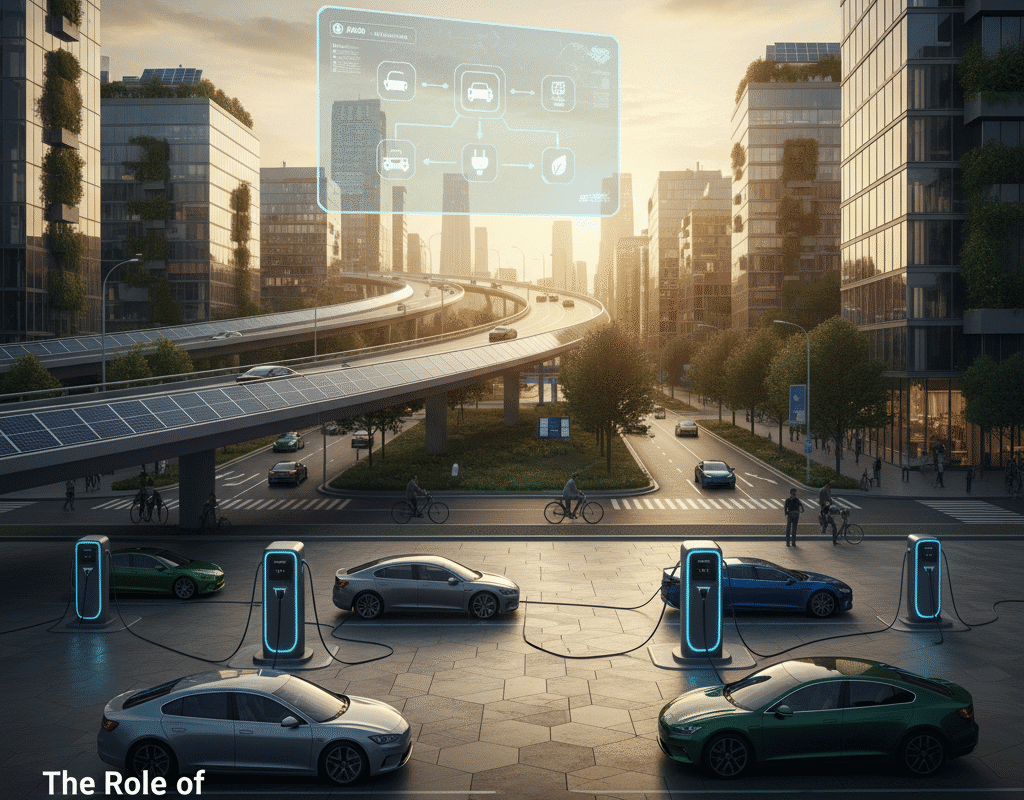
How EV Infrastructure Is Transforming Urban Planning?
How EV Infrastructure Is Transforming Urban Planning?
In the US, electric vehicles (EVs) are now an essential component of the country’s transportation and climate policy, not a futuristic curiosity. American cities are facing a huge challenge: building an urban environment that can accommodate millions of electric vehicles as automakers change their production, federal incentives increase, and states strive toward zero-emission targets.
There is more to this shift than just putting additional charging stations on street corners. It entails completely rethinking urban planning, including rewriting zoning regulations, revamping structures, upgrading the electrical infrastructure, changing public transportation, and creating new economic patterns inside cities.
HSBC Cashback Credit Card 2025 – Benefits, Rewards & How to Apply?

A National Acceleration Toward Electric Mobility
Over the past five years, EV adoption rates have surged, fueled by falling battery prices, expanded vehicle options, and federal investment. The Biden administration set ambitious goals for zero-emission vehicles, including building a national charging network and pushing automakers toward low-carbon technologies.
Cities that acted early—such as Los Angeles, New York, Seattle, and Austin—are currently reaping the benefits: stronger charging networks, more private investment, and clearer development patterns.
How Large American Cities Are Including EV Infrastructure in Their Planning
Leading the National Buildout in Los Angeles
To achieve its climate goals, Los Angeles, one of the biggest car-dependent areas in the country, is aggressively installing EV chargers. The city possesses:
There are thousands of public chargers.
- Streetlight-integrated curbside infrastructure
- EV-ready parking requirements for new construction
- Incentives for businesses installing fast chargers
Urban planners in LA view EVs as part of a broader sustainable mobility plan that includes public transit, cycling, and pedestrian improvements.
New York City: Tackling the Multi-Unit Housing Challenge
In dense cities like New York, home charging is rare. The city responded by:
- Installing curbside chargers on residential blocks
- Launching fast-charging hubs in parking garages
- Creating tax incentives for developers adding chargers
- Planning for borough-wide charging zones
NYC’s approach is often seen as a model for other dense U.S. metros.
Austin and Houston: Integrating EVs With Renewable Energy
Texas cities are emerging as surprising EV leaders. Austin’s municipal utility supports EV charging powered by solar energy, while Houston—the nation’s energy capital—is investing heavily in EV infrastructure as the oil industry pivots toward clean energy.
Miami, Atlanta, and Chicago: Increasing Fair Charging
Access to charging stations in underprivileged areas is a serious problem facing many American communities. Adoption of EVs has the risk of increasing economic inequality in the absence of fair access.
Cities are responding by:
- Prioritizing chargers in lower-income areas
- Offering rebates for residents without garages
- Partnering with community organizations
- Deploying chargers in public and affordable housing complexes
- Equity-focused planning is becoming a national trend.
The Grid Challenge: Can Cities Handle Millions of EVs?
EVs significantly increase electricity demand, especially in dense cities. Utilities and planners must coordinate long-term investments.
Grid upgrades needed include:
- Substation expansions
- New distribution lines
- Smart transformers
Cities like San Diego and Denver are already mapping EV hotspots to guide upgrades.
Smart Charging Technologies: The Future of Urban EV Management
Technology will play a central role in balancing supply and demand.
Smart chargers
These devices automatically adjust charging speeds based on:
- Energy prices
- Grid stress
- Time-of-day demand
This helps cities avoid blackouts during peak usage.
Vehicle-to-grid (V2G)
Future infrastructure will allow EVs to discharge power back to the grid, turning vehicles into mobile batteries.
Automated charging
Robotic chargers and wireless charging pads are being tested in select U.S. cities, reducing curbside clutter.
Conclusion: How EV Infrastructure Is Transforming Urban Planning?
Electric vehicles are reshaping the blueprint of American cities. What began as a niche technology is now driving major changes in zoning, architecture, transportation systems, and energy networks.
Urban planners increasingly view EV infrastructure not as an optional amenity but as a core component of a modern, sustainable city. The coming decade will determine how effectively the United States handles this transition—and which cities emerge as leaders in electric mobility.
Why Unpaid Internships Distort U.S. Labor Markets: Economic and Social Impacts
Why Unpaid Internships Distort U.S. Labor Markets: Economic and Social Impacts