 A K
A K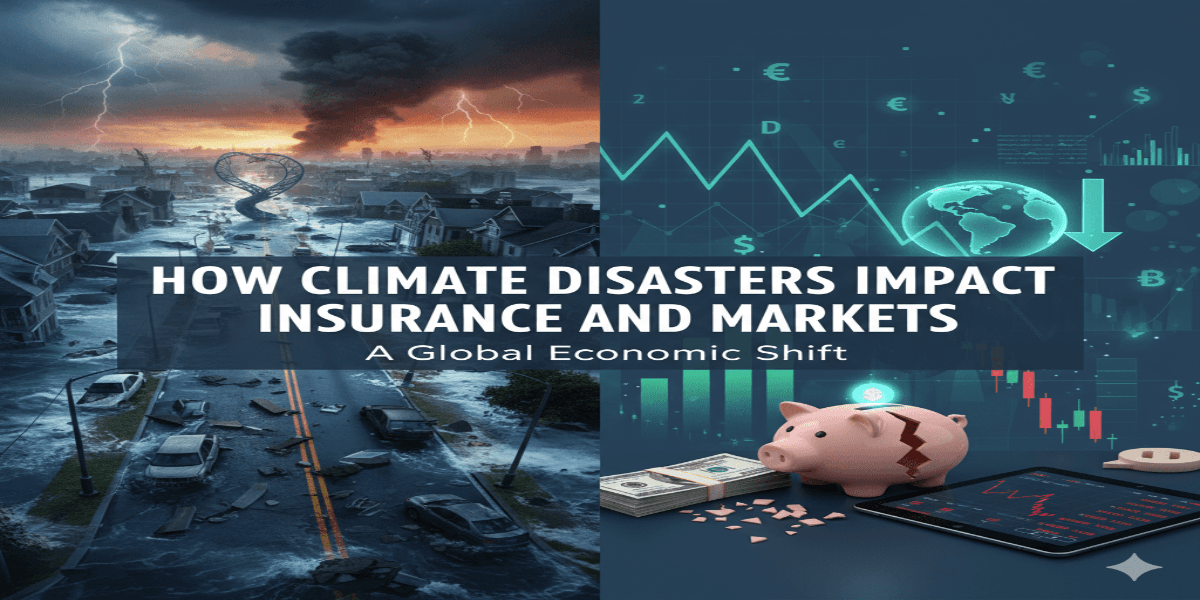
How Climate Disasters Impact Insurance?
How Climate Disasters Impact Insurance?
Climate disasters are becoming frequent interruptions rather than isolated occurrences in the United States. The financial ramifications of the Atlantic coast’s record-breaking hurricanes, the West’s wildfires, and the Midwest’s disastrous floods are becoming unavoidable.
These catastrophes have an impact on insurance firms, financial markets, and the whole economy in addition to the immediate devastation of homes, businesses, and infrastructure. The way Americans live, work, and make plans for the future is changing as a result of rising insurance rates, stretched reinsurance markets, and rising investment risks.
HSBC Cashback Credit Card 2025 – Benefits, Rewards & How to Apply?

The Growing Incidence of Natural Disasters
Over the past ten years, billion-dollar climate disasters have sharply increased, according to the National Oceanic and Atmospheric Administration (NOAA). These kinds of incidents happened roughly three times a year on average during the 1980s. Today, over 20 occur each year in the United States.
Important Trends Fueling the Increase:
- Warmer ocean waters are making hurricanes stronger.
- Heatwaves and drought are causing wildfires to burn for longer periods of time.
- As rainfall increases and sea levels rise, flooding is becoming more frequent.
- Heatwaves are pushing infrastructure and health systems to the limit.
The financial cost is enormous. In 2023 alone, climate disasters caused damages exceeding $90 billion, according to government estimates. These rising costs directly influence insurance claims, reinsurance losses, and ultimately market stability.
Pressure on Insurance Markets
When it comes to climate risk, insurance companies are at the forefront. They deal with crippling claims that can amount to billions when disasters occur. The industry as a whole has seen fundamental changes as a result.
Policy Withdrawals and Increasing Premiums
Insurance rates are soaring for homeowners in high-risk areas like Florida, Louisiana, and California. In certain regions, insurers are just leaving the market due to uncontrollable risks.
The Function of Reinsurance
The pressure is also being felt by reinsurance companies, which give insurers financial support. As climate risks mount, reinsurers are charging higher rates to cover potential payouts. This drives primary insurers to pass costs onto consumers, escalating premiums nationwide.
Investor Concerns and Market Volatility
Climate catastrophes have an impact on international financial markets in addition to the insurance sector.
The Effects of Disasters on Markets:
- Stock Market Volatility: Short-term market drops are frequently caused by disasters that upset local economies, supply systems, and consumer confidence.
- Bond Market Risks: As governments grapple with the expense of reconstruction, municipal bonds associated with disaster-prone regions are more vulnerable.
- Real estate pressures: Housing markets become unstable as a result of property values falling in coastal areas, flood zones, and wildfire routes.
- Investor Scrutiny: Asset managers are increasingly analyzing companies based on climate resilience, sustainability, and exposure to climate risks.
As a demonstration of its increasing awareness of its potential to influence markets, the Federal Reserve designated climate change as a “material risk” to financial stability in 2022.
The Increasing Underinsurance Issue
Underinsurance, or policyholders not having enough coverage to rebuild after a disaster, is a hidden problem in disaster recovery.
Under insurance Contributing Factors:
- Homeowners are choosing little coverage due to rising premiums.
- Not having flood insurance outside of areas approved by FEMA.
- gaps in earthquake and wildfire protection.
In impacted localities, underinsurance causes a slower rate of economic recovery. Savings are frequently depleted by families, and taxable property values decline in local economies. This makes disasters more financially taxing.
Reactions from the Government and Policies
State and federal governments are taking over as commercial insurers avoid high-risk regions.
Important Developments:
- As commercial insurers pull out, state-backed insurance pools, like Florida’s Citizens Property Insurance Corporation, have grown quickly.
- Recurrent catastrophic losses have caused problems with the solvency of federal flood insurance schemes.
- Stronger building rules and moving away from high-risk areas are two ways that climate resilience policies are being discussed to promote risk reduction.
In view of growing climate threats, these measures underscore the difficulty of striking a balance between affordability and sustainability.
Beyond Insurance, Economic Ripple Effects
Climate catastrophes have financial repercussions that extend far beyond the insurance sector.
Impact on the Housing Market
- In disaster-prone locations, home values frequently drop, trapping owners with deteriorating assets.
- Higher risks for mortgage lenders result in more stringent lending requirements in areas that are more susceptible.
Infrastructure and Energy
- Energy supplies are regularly disrupted by disasters, which causes price volatility in the markets for electricity, gas, and oil.
- State and federal finances are put under pressure as billions of dollars are spent on fixing damaged infrastructure.
Work and Output
- Long recovery times, staff displacement, and downtime are problems for businesses.
- Droughts, floods, and other extreme weather events are causing agriculture to lose more and more, which has an impact on commodities prices and food markets.
The Global Challenges of the Reinsurance Industry
The reinsurance sector is often described as the “insurer of last resort” for the global economy. As climate disasters multiply, reinsurers are grappling with unprecedented levels of claims.
Global reinsurers like Swiss Re and Munich Re have warned of escalating risks, prompting them to raise premiums worldwide. This not only affects U.S. insurers but also reshapes global insurance markets, increasing costs for consumers across continents.
Disclosure of Climate Risk and Investor Shifts
Investors are calling on businesses and financial institutions to be more open about their exposure to climate risk.
Important Investment Trends:
- Environmental, social, and governance, or ESG, investing: Businesses with effective climate resilience plans are becoming more and more popular with investors.
- Exit from High-Risk Assets: Real estate funds are avoiding markets that are prone to fire and flooding.
- Capital markets are changing due to the rise of sustainable investment products like green bonds and climate-resilient assets.
Stricter climate risk disclosures are being pushed by the Securities and Exchange Commission (SEC) to give investors more information about how businesses are handling environmental risks.
Long-Term Hazards: The Systemic Threat of Climate Change
One systemic financial risk that impacts all economic sectors is climate change.
Among the systemic threats are:
- Banking Risks: Loans secured by properties that are prone to natural disasters may not be repaid.
- Coverage Insolvency: Insurers may become insolvent as a result of repeated catastrophic losses.
- National Debt: Government recovery and catastrophe assistance initiatives increase federal spending by billions, which raises debt loads.
- Global Spillover: International trade and global financial systems are impacted when U.S. market disruptions occur.
Central banks, regulators, and financial institutions are urging integrated solutions to address climate-related vulnerabilities as these risks increase.
Moving Forward: Creating Markets That Are Climate-Resilient
Proactive measures are needed to address the insurance dilemma and market volatility brought on by climate disasters.
Techniques for Increasing Resilience:
- More stringent building codes: Promoting climate-resilient building practices lowers long-term losses.
- Better Risk Assessment Tools: Investors and insurers can more accurately price risks by utilizing satellite data and predictive analytics.
- Public-Private Partnerships: Funding for disaster recovery is ensured by combining public and private resources.
- Transitioning to a Low-Carbon Economy: Reducing emissions can slow the progression of climate change, stabilizing long-term risks.
- Consumer Education: Homeowners and businesses must be aware of coverage gaps and risk exposure.
Conclusion: How Climate Disasters Impact Insurance?
Climate catastrophes are no longer isolated tragedies; rather, they are economic occurrences that are changing public policy, financial systems, and insurance markets. A stressed system is reflected in rising premiums, underinsurance, and market volatility.
Governments, insurers, investors, and consumers must work together to create resilience in the face of an uncertain climate future. The stakes are high: without decisive action, the costs of climate change will continue to destabilize insurance and markets, affecting every corner of the U.S. economy.
How to Handle Late-Paying Clients: Effective Strategies for Small Businesses
How to Handle Late-Paying Clients: Effective Strategies for Small Businesses