 A K
A K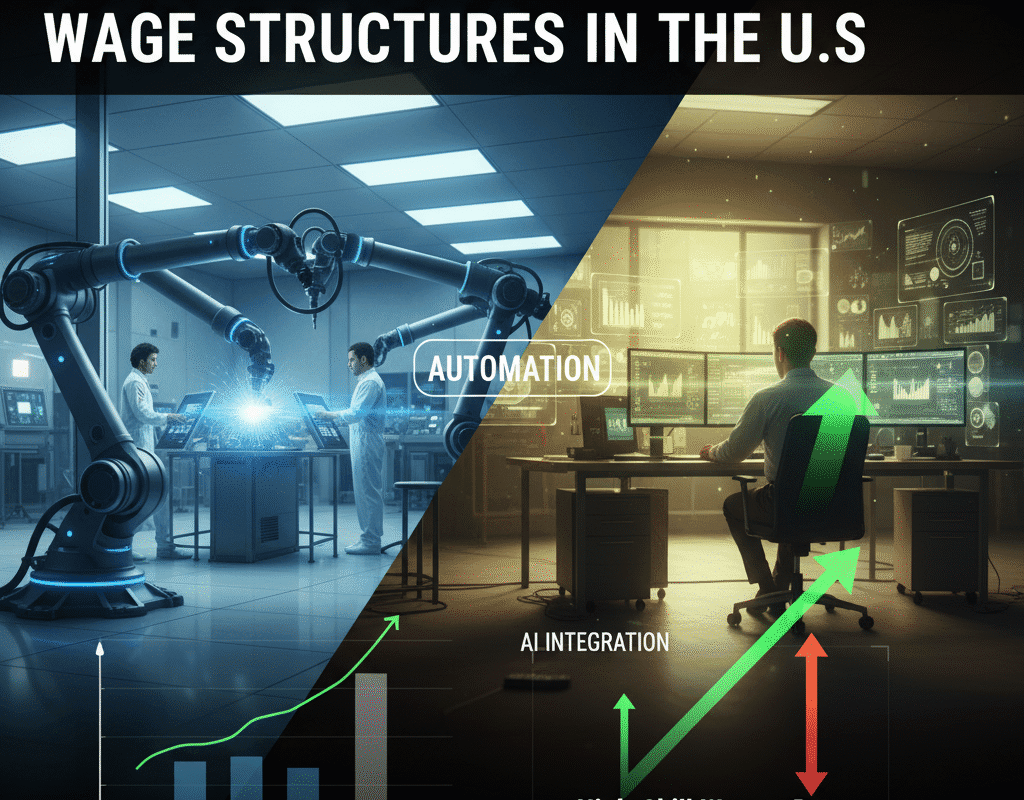
How Automation Is Transforming Wage Structures?
How Automation Is Transforming Wage Structures?
Automation has been altering the economic landscape of the United States for decades, but the pace of change in the last five years has upended long-standing assumptions about work, wages, and economic opportunity. From advanced robotics in manufacturing to artificial intelligence in finance, health care, and customer service, the U.S. labor market is undergoing historic restructuring.
These developments are not only shifting which jobs exist—they are reshaping the wage structure that determines how workers across industries earn, compete, and adapt.
As businesses embrace automation to increase productivity and reduce costs, the consequences for workers vary widely. Some employees are experiencing rising wages due to increased demand for high-skill digital competencies, while others face stagnant pay or job displacement as routine tasks become automated.
HSBC Cashback Credit Card 2025 – Benefits, Rewards & How to Apply?

The declining middle class due to wage polarization
Growing polarization is a result of automation’s impact on wage distribution: middle-skill jobs are declining, low-paid occupations are growing slowly, and high-income jobs are expanding quickly.
The Reasons for the Decline of Middle-Skill Jobs
Because they depend on repetitive tasks that AI and robotics may easily automate, middle-class jobs like data entry clerks, bookkeepers, administrative assistants, and many assembly-line workers are vulnerable.
- Effect on Wages
- High-skill pay: Rise
- Low-skill pay: sluggish expansion
- Middle-skill pay: Decline or stagnation
For millions of American workers, this structural change modifies wage expectations and undermines the conventional route to upward mobility.
Demographic and Generational Effects on Wages
Automation does not affect all workers equally.
- Younger Workers
Younger generations—Gen Z and Millennials—benefit from greater exposure to technology. They adapt more easily to automation and are more likely to pursue tech-forward career paths, which come with higher wages.
- Older Workers
Older workers face greater displacement risk, especially in manufacturing, retail, and administrative roles. Retraining challenges and limited mobility contribute to slower wage growth or early retirement.
- Women and Automation
Women are disproportionately represented in administrative, clerical, and customer service roles—areas heavily automated. However, the expansion of healthcare and education offers alternative paths to stable wages.
The Impact of Policy Reactions on Wages
In an increasingly computerized economy, government policy has a significant impact on wage results.
- Federal Policies
Workforce Innovation and Opportunity Act (WIOA) expansions support retraining
- AI regulation frameworks encourage responsible adoption
- Tax incentives for training programs reward companies for upskilling workers
- State-Level Initiatives
Some states subsidize technical education, offer grants for displaced workers, or develop innovation hubs to attract higher-wage tech jobs.
- Minimum Wage Debates
As automation replaces low-wage labor, minimum wage discussions accelerate. Some economists argue that automation could push states toward higher minimum wage thresholds to maintain livable earnings.
The Future of U.S. Wage Structures: What to Expect
Looking forward, automation will not merely affect existing wage structures—it will define entirely new ones.
- Wages Will Be Increasingly Tied to Technology
Workers who adapt will benefit from wage growth; those unable to transition may face stagnation.
- More Hybrid Jobs Will Emerge
Roles combining human judgment with AI tools—such as AI-assisted healthcare providers, automated logistics coordinators, and augmented manufacturing operators—will become standard.
- Continuous Learning Will Become Essential
Career-long training will be the norm, influencing wage progression throughout workers’ lives.
In conclusion: How Automation Is Transforming Wage Structures?
In the US, automation is drastically changing wage structures in a variety of ways. High-skill workers in technology-intensive roles enjoy rising wages, while middle-skill workers face downward pressure as routine tasks become automated. Low-skill roles persist, but wage growth remains modest. Meanwhile, regional and demographic variations create a complex and evolving wage landscape.
The challenge for policymakers, employers, and educational institutions is ensuring that workers can adapt to these changes—through training, innovation, and equitable economic strategies. Automation may not eliminate the human workforce, but it will fundamentally transform how Americans earn, learn, and compete in the decades ahead.