 A K
A K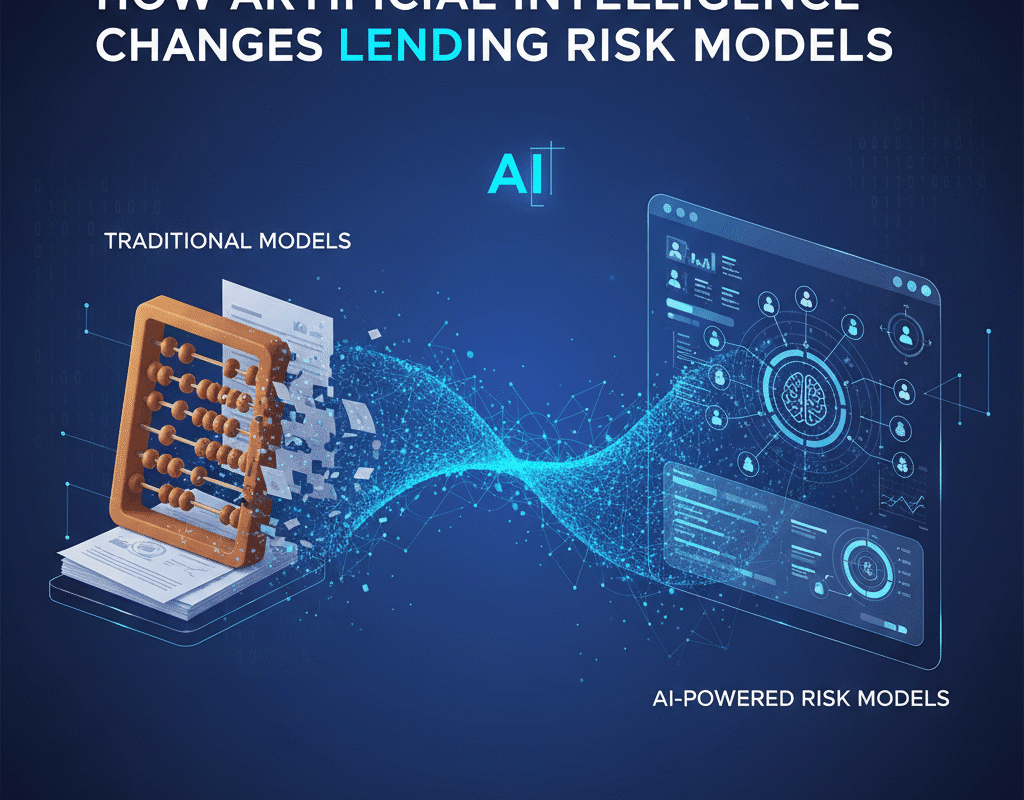
How Artificial Intelligence is Revolutionizing Lending Risk?
How Artificial Intelligence is Revolutionizing Lending Risk?
Artificial intelligence (AI) is transforming industries worldwide, and finance is no exception. One of the most significant areas of impact is lending risk management. Traditional risk models have long relied on historical data, human judgment, and linear statistical methods to determine borrowers’ creditworthiness.
However, these models have limitations, often failing to adapt to evolving market conditions and diverse borrower profiles. Today, AI-driven technologies are reshaping lending risk models, making them faster, more accurate, and more inclusive.
HSBC Cashback Credit Card 2025 – Benefits, Rewards & How to Apply?

AI in Credit Scoring and Loan Approval
Credit scoring is one of the most visible applications of AI in lending. Machine learning models assess borrower risk by analyzing millions of data points in seconds. Some benefits include:
- Higher Accuracy: AI models can achieve higher predictive accuracy compared to traditional credit scoring models.
- Faster Processing: Automated credit decisions reduce human intervention and operational costs.
- Fraud Detection: AI can detect anomalies in loan applications, flagging potential fraud in real-time.
For example, alternative credit scoring powered by AI can evaluate freelancers, gig workers, or self-employed individuals who may lack traditional financial documentation. This allows lenders to expand their customer base while maintaining a controlled risk profile.
Challenges and Risks of AI in Lending
While AI brings immense opportunities, it also presents challenges:
- Data Privacy Concerns: AI models require access to large amounts of personal and financial data, raising privacy and security issues.
- Algorithmic Bias: Poorly designed AI models can perpetuate biases if the training data reflects historical discrimination.
- Regulatory Compliance: Financial institutions must navigate complex regulations governing lending and data usage.
- Transparency: AI models, especially deep learning systems, can act as “black boxes,” making it difficult for lenders to explain decisions to customers and regulators.
Balancing AI innovation with ethical and regulatory considerations is essential to ensure fair and responsible lending practices.
Case Studies of AI’s Impact on Lending
FinTech firms and digital banks
AI-driven credit risk models are used by FinTech firms like Upstart and LendingClub to accept loans more quickly and to a wider audience. They are able to provide loans to clients that are typically regarded as high-risk by traditional banks while maintaining low default rates by utilizing machine learning.
Big Banks Using AI
In order to improve risk assessment, expedite approvals, and identify fraud, a number of major banks have included AI into their lending procedures. For example:
AI algorithms are used by JPMorgan Chase to examine transactional data and enhance creditworthiness assessment.
Machine learning technologies have been put in place by Wells Fargo to detect possible loan defaults early.
These initiatives demonstrate that AI is not just for start-ups but also critical for traditional banking institutions seeking to maintain competitiveness.
AI’s Potential in Lending Risk Models
The influence of AI on lending risk models is just getting started. The future promises several advancements:
- Explainable AI: Increasing focus on interpretable models that satisfy regulatory requirements and foster customer trust.
- Integration with Blockchain: AI and blockchain together could create transparent, tamper-proof lending ecosystems.
- Personalized Lending: AI could enable lenders to tailor loan products based on individual financial behavior, improving customer experience.
- Global Financial Inclusion: AI-driven risk models could help provide credit access to millions of people in emerging markets, supporting economic growth.
As AI continues to evolve, it is likely to redefine how credit risk is assessed, how loans are approved, and how financial institutions operate.
In conclusion: How Artificial Intelligence is Revolutionizing Lending Risk?
Artificial intelligence is reshaping the lending landscape by transforming how risk is evaluated. From enhanced data analysis and predictive analytics to real-time decisions and improved financial inclusion, AI is addressing the limitations of traditional risk models. While challenges like data privacy, bias, and regulatory compliance remain, the potential benefits of AI in lending are substantial. Financial institutions that successfully integrate AI into their risk models stand to gain a competitive edge, reduce defaults, and better serve a diverse customer base.
The rise of AI in lending is more than a technological shift; it is a revolution in how financial institutions understand risk, make decisions, and foster inclusive economic growth.
Why Cities Issue Municipal Bonds for Housing Projects: Financing Affordable Homes in America
Why Cities Issue Municipal Bonds for Housing Projects: Financing Affordable Homes in America