 A K
A K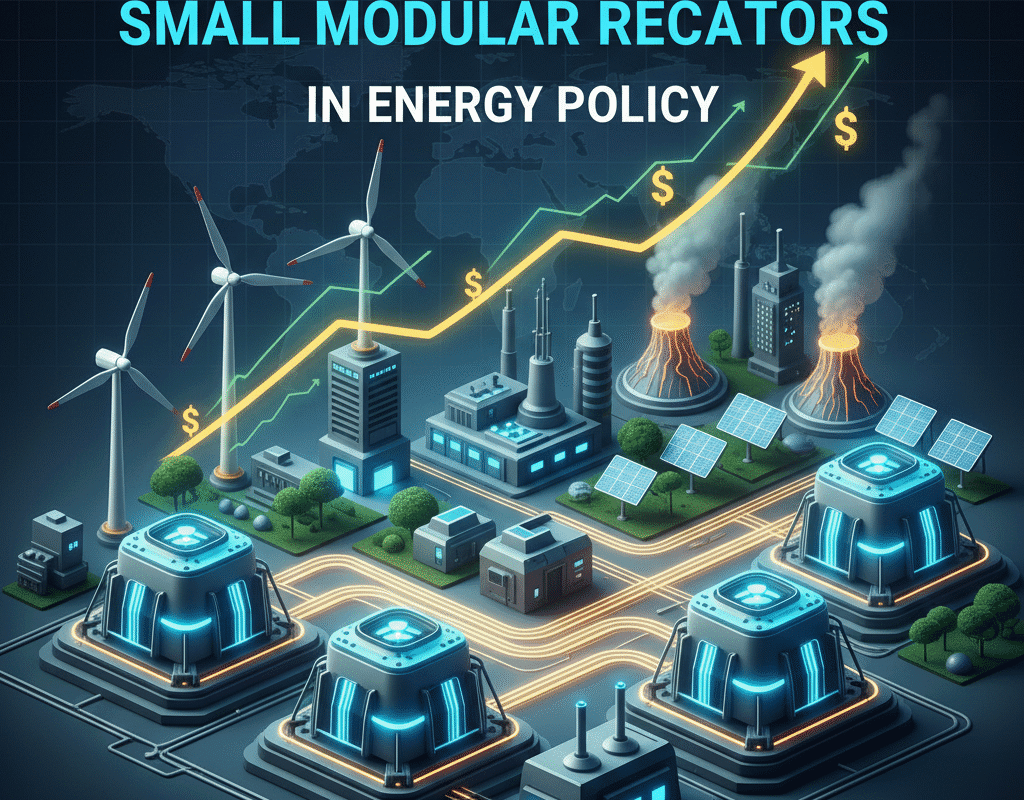
The Economics of Small Modular Reactors
The Economics of Small Modular Reactors
The United States has long struggled to reduce carbon emissions and fulfill growing energy demands. Despite having a minimal carbon footprint, traditional large-scale nuclear reactors have challenges such high upfront costs, lengthy building schedules, and complicated regulatory requirements. Small modular reactors (SMRs) have become a viable substitute in recent years. These small, manufactured nuclear reactors have the potential to completely transform American energy policy and power generation economics.
Small modular reactors are appealing for both urban and rural locations because of their scalability, affordability, and adaptability. SMRs may be produced in factories and moved, in contrast to traditional reactors, which might take ten years or longer to construct.
HSBC Cashback Credit Card 2025 – Benefits, Rewards & How to Apply?

Comprehending Small Modular Reactors
Unlike conventional nuclear plants, which generate more than 1,000 megawatts of power per unit, SMRs are a class of nuclear reactors that typically generate fewer than 300 megawatts. Depending on the amount of energy required, several units can function independently or in tandem thanks to their modular architecture. Because utilities may gradually increase capacity without having to commit to the enormous capital investment of a full-sized reactor, this scalability is crucial in lowering financial risk.
Advanced safety measures including passive cooling systems and reduced fuel loads are also incorporated into SMRs. In addition to increasing safety, these design advancements lessen the possibility of expensive mishaps, which have historically damaged public opinions of nuclear energy. Additionally, the lower size makes regulatory compliance easier, which further minimizes construction delays and overspending.
Economic Advantages of SMRs
Lower Capital Costs
Traditional nuclear reactors often require $6–9 billion in upfront investment, with construction periods spanning 7–12 years. SMRs, by contrast, have estimated construction costs of $1–3 billion per unit and can be completed in as little as 3–5 years. This lower barrier to entry makes SMRs more appealing to private investors and regional utilities, enabling quicker deployment and faster returns on investment.
Modular Production and Reduced Risk
SMRs are manufactured in controlled factory settings rather than on-site, which reduces exposure to weather delays, labor shortages, and other construction risks. Mass production of standardized reactor modules can also drive economies of scale, reducing unit costs over time.
Cost Challenges and Considerations
Despite their economic advantages, SMRs face several cost-related challenges that policymakers and investors must address.
- Licensing and Regulatory Costs: While SMRs benefit from simplified designs, nuclear licensing remains a lengthy and expensive process. Each reactor requires rigorous safety reviews, environmental assessments, and approvals from the Nuclear Regulatory Commission (NRC).
- Fuel and Operational Costs: Although smaller reactors require less fuel than traditional plants, nuclear fuel costs can fluctuate and impact long-term operational budgets. Additionally, decommissioning costs must be considered, even though SMRs are designed for easier dismantling.
Policy Implications for the United States
Supporting Innovation in Nuclear Technology
Federal and state policies can incentivize SMR deployment through research funding, tax credits, and streamlined licensing. Agencies such as the Department of Energy (DOE) have already begun investing in advanced reactor designs, recognizing the role of nuclear power in achieving carbon neutrality.
Integrating SMRs into National Energy Strategy
SMRs could complement renewable energy sources by providing reliable baseload power without greenhouse gas emissions. Incorporating SMRs into U.S. energy policy can help meet climate targets, reduce dependence on fossil fuels, and enhance national energy security.
SMRs’ Future in the American Energy Mix
SMRs present a strong financial and strategic option as the United States moves toward a low-carbon energy future. They are a flexible instrument for energy policy because of their modular design, lower capital costs, and compatibility with renewable energy sources.
However, industry, government, and regulatory agencies must work together to ensure widespread adoption. To make sure SMRs are both politically and commercially feasible, investments in workforce development, supply chain infrastructure, and research are essential.
In conclusion: The Economics of Small Modular Reactors
A major advancement in nuclear energy technology, small modular reactors combine environmental responsibility and economic efficiency. They are a promising tool in U.S. energy policy because of their capacity to cut expenses, lessen financial risk, and easily integrate with renewable energy sources. Even though there are still obstacles to overcome, especially with regard to financing, licensing, and public opinion, SMRs are expected to be crucial to the nation’s shift to sustainable, carbon-free energy.
Although SMRs have a strong economic justification, their success will require careful legislative backing, innovative technology, and calculated investment. The United States may attain a more robust, economical, and ecologically conscious energy future by adopting this modular approach to nuclear power.
The Economics of California’s Housing Shortage: Understanding the Crisis and Its Impact
The Economics of California’s Housing Shortage: Understanding the Crisis and Its Impact