 A K
A K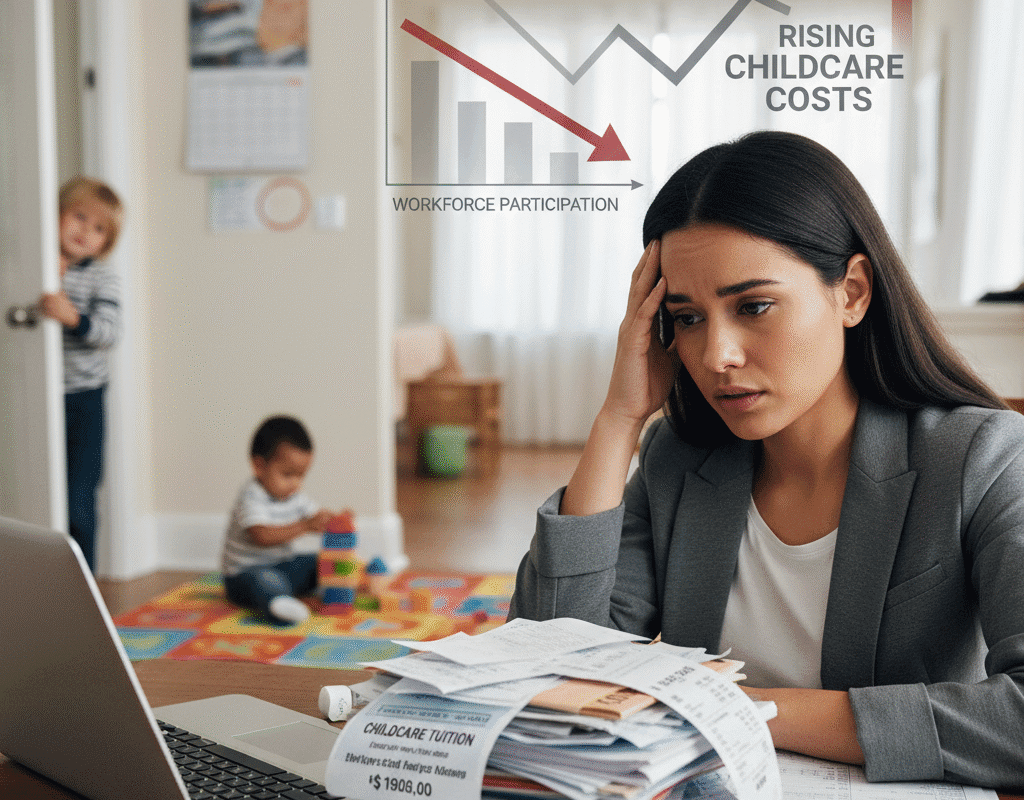
How Rising Childcare Costs Are Limiting?
How Rising Childcare Costs Are Limiting?
The rising cost of childcare in the United States has emerged as a critical barrier to workforce participation, particularly for parents of young children. In recent years, families have faced unprecedented increases in daycare fees, pre-kindergarten programs, and after-school care, creating financial pressures that directly influence employment decisions. For millions of working parents, especially mothers, the high cost of childcare is not just a financial burden—it’s a career-limiting obstacle.
HSBC Cashback Credit Card 2025 – Benefits, Rewards & How to Apply?

The Growing Burden of Childcare Costs
Over the past 20 years, childcare costs have been gradually increasing in the United States. According to data from the U.S. Department of Health and Human Services, the average annual cost of full-time center-based care for an infant can exceed $12,000, and preschool-aged children cost around $10,000 per year on average. These figures can vary dramatically depending on geographic location, with major metropolitan areas such as New York, San Francisco, and Washington, D.C., reporting costs that surpass $20,000 per year for infants.
For many families, these expenses represent a significant portion of their income. In some cases, childcare costs can exceed 20-30% of a family’s earnings, a proportion that experts consider “unaffordable” by federal guidelines.
Impact on Workforce Participation
Childcare affordability directly affects labor force participation, particularly among women. Studies from the Brookings Institution and the U.S. Bureau of Labor Statistics show that women with young children are far more likely to leave or reduce participation in the workforce when childcare costs are prohibitively high. The COVID-19 pandemic highlighted this issue dramatically, as millions of women exited the workforce due to school and daycare closures.
For parents of infants and toddlers, the decision is especially acute. Without access to reliable and affordable childcare, employment options are limited. Single parents face even greater challenges, often needing to balance full-time work with caregiving responsibilities without the support of a partner.
Economic Consequences
The economic impact of high childcare costs extends beyond individual families. When parents, particularly mothers, leave the workforce, the labor market suffers. According to a report from McKinsey & Company, the underutilization of women in the workforce costs the U.S. economy hundreds of billions of dollars annually. Lower workforce participation translates to reduced productivity, decreased consumer spending, and slower economic growth.
Childcare costs also exacerbate income inequality. Families with higher incomes may still afford quality care, while middle- and low-income families struggle. This gap reinforces economic disparities and limits upward mobility for children whose parents cannot afford early education opportunities.
The Role of Policy
Addressing childcare costs requires a combination of federal, state, and local policies. Several programs currently exist to help families offset expenses, such as the Child Care and Development Fund (CCDF), which provides subsidies to low-income families. However, these programs often fail to reach all eligible families due to complex eligibility requirements, limited funding, and insufficient provider availability.
Some states have implemented innovative solutions. For example, New York offers the “Universal Child Care” program in certain regions, aiming to cap costs at a percentage of family income. California has expanded subsidized childcare for low- and middle-income families and invested in early childhood education programs. However, nationwide access remains uneven, and millions of families still face unaffordable options.
Childcare and Gender Inequality
The childcare crisis is inseparable from discussions of gender equality in the workforce. Women remain disproportionately responsible for caregiving duties, which means they are more likely to reduce working hours or leave employment due to high childcare costs. The U.S. ranks lower than many developed countries in female labor force participation, partly due to inadequate support for working parents.
Research shows that when affordable childcare is available, women are more likely to remain employed, increase working hours, and pursue career advancement. This not only benefits individual families but strengthens the overall economy by fully utilizing the talent pool.
Workplace Flexibility and Employer Solutions
In order to lessen the impact of excessive childcare expenditures, employers are essential. In an effort to draw and keep workers, businesses are increasingly providing childcare benefits, on-site daycare, or subsidies. Remote employment and flexible scheduling are examples of flexible work options that assist parents in juggling their personal and professional obligations.
But not every industry offers this kind of assistance. Hourly workers and those with lower wages may have fewer options, making them more susceptible to the financial burden of childcare. Addressing this inequity is essential for creating a more inclusive and productive workforce.
In conclusion: How Rising Childcare Costs Are Limiting?
More than just a personal problem, the high expense of childcare in the United States is a systemic problem that hinders economic growth, increases gender inequality, and limits workforce participation. The cost of daycare, preschool, and after-school care forces parents—especially mothers—to make challenging trade-offs between their obligations to their families and their professional goals.
The Rise of Green Bonds in U.S. Corporate Finance: Trends, Growth Drivers, and Future Outlook (2025)
The Rise of Green Bonds in U.S. Corporate Finance: Trends, Growth Drivers, and Future Outlook (2025)