 A K
A K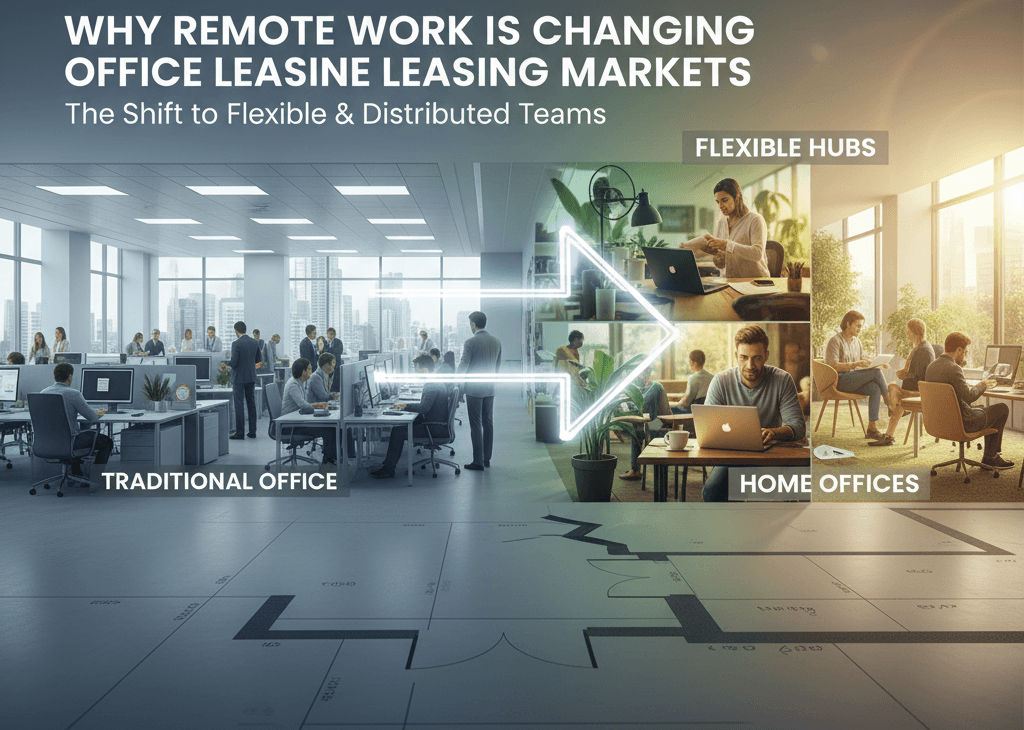
Why Remote Work Is Reshaping the Office Leasing Market?
Why Remote Work Is Reshaping the Office Leasing Market
The office leasing market in the United States is going through one of the most significant changes in its history in 2025. What started out as an urgent move to remote work in 2020 has developed into a long-term reorganization of how businesses utilize and value office space. Five years later, the ripple effects are still changing the commercial real estate market, including business strategy, urban development, property values, and rental prices.
Vacancy rates in big cities have risen to previously unimaginable heights. Businesses are choosing hybrid scheduling, renewing leases for smaller facilities, and, in many situations, completely giving up on the traditional office paradigm. In the meantime, flexible coworking spaces and suburban markets are experiencing a revitalization.
HSBC Cashback Credit Card 2025 – Benefits, Rewards & How to Apply?

A Lasting Cultural Change: Working Remotely Is No Longer the Exception
Economists questioned whether remote labor would be sustainable in the long run at the beginning of the pandemic. The outcomes are now evident: remote and hybrid models have become a mainstay of workforce planning.
Major research firms’ surveys consistently reveal that:
- A majority of workers prefer hybrid schedules.
- Employers save significantly on real estate costs when reducing office footprints.
- Productivity for many industries remains stable outside traditional office settings.
As a result, companies are rethinking the necessity of maintaining large corporate campuses or multi-floor office leases in central business districts. The old model—giant centralized offices with every employee on-site—simply no longer matches today’s economic or cultural realities.
Record-High Vacancy Rates Across U.S. Cities
Throughout 2024 and into 2025, commercial real estate analysts have reported historically high vacancy rates in major metropolitan areas.
In cities like San Francisco, New York, Seattle, Los Angeles, Chicago, and Washington, D.C., vacancy rates have exceeded or approached levels unseen in decades. Many buildings built during earlier real estate booms now sit partially empty.
Several factors contribute to this:
- Corporate Footprint Reduction
Companies are downsizing leases by 20–60 percent as they adopt hybrid schedules. Even firms enforcing limited return-to-office days are opting for shared workstations, eliminating the need for individualized desk space.
- Lease Expirations Without Renewals
Long-term, pre-pandemic leases are expiring, and many firms are choosing not to renew—or only renewing a fraction of their previous space.
- Sublease Space Flooding the Market
Corporations that over-leased in the 2010s are now offloading floors or entire buildings onto the sublease market, adding downward pressure on rents.
The Hybrid Model: The New Standard for Corporate America
While a minority of companies have attempted to bring workers back full-time, most firms have adopted hybrid schedules that combine remote and in-office work. This model directly influences how much office space a company needs and how it configures that space.
Hybrid Work Impact on Office Leasing
- Offices now serve as collaboration hubs, not daily workplaces.
- Companies prioritize meeting rooms, open project spaces, and shared environments.
- Traditional cubicles and dedicated desks are disappearing.
This shift reduces the square footage per employee and eliminates the need for large, fixed office footprints. In industries like tech, finance, consulting, and marketing, hybrid work is now deeply embedded in organizational culture.
Financial Pressure Mounts on Office Property Owners
Commercial landlords are facing steep challenges. High vacancy rates reduce revenue, decrease building valuations, and in many cases strain debt obligations. Buildings purchased or refinanced at pre-pandemic valuations are especially vulnerable.
Major issues confronting property owners include:
- Falling asset values threatening loan refinancing.
- Increased operating costs amid lower tenant occupancy.
- Difficulty maintaining building amenities without consistent rental income.
- Rising interest rates increasing debt burdens.
Many building owners are now exploring alternatives such as conversions (to residential or mixed-use), although these are complex and expensive.
The Rise of Flexible Workspaces and Coworking Models
While traditional office leases struggle, the flexible workspace sector is expanding. Coworking operators—both established names and new entrants—are capturing demand from companies unwilling to commit to multi-year leases.
Why companies prefer flexible spaces in 2025:
- Month-to-month or short-term agreements reduce long-term risk.
- Fully furnished spaces eliminate build-out costs.
- They support hybrid teams that meet occasionally rather than daily.
- They allow national companies to maintain smaller hub offices.
Coworking spaces also appeal to freelancers, small businesses, remote-first startups, and large firms with distributed teams. Even major corporations are using coworking centers as satellite offices to support employees living outside traditional headquarters locations.
Return-to-Office Mandates Haven’t Reversed the Trend
Despite efforts by some CEOs to bring employees back full-time, most RTO mandates have had limited long-term impact. Many mandates resulted in:
- Temporary compliance followed by decreasing attendance
- Higher employee turnover
- Difficulty recruiting talent in competitive fields
Even companies enforcing three or four required days in the office still lease less space due to hybrid seating strategies and downsizing efforts.
The conclusion is clear: return-to-office policies have not reversed the structural shift in office leasing markets.
Conclusion: Why Remote Work Is Reshaping the Office Leasing Market?
The rise of remote and hybrid work has changed the U.S. office leasing market more profoundly than any economic trend in decades. Vacancy rates remain high, companies are reducing footprints, and flexible workspace demand continues to rise. Landlords are under pressure, cities are adapting, and employees now have greater influence over work culture than ever before.
While the transformation presents challenges—especially for commercial real estate investors and urban centers—it also introduces opportunities for innovation. New workplace models, redesigned offices, repurposed buildings, and decentralized corporate structures are reshaping the economic and physical fabric of American cities.
How Reverse Mortgages Work for Seniors in 2025: A Complete Guide to Retirement Home Equity
How Reverse Mortgages Work for Seniors in 2025: A Complete Guide to Retirement Home Equity