 A K
A K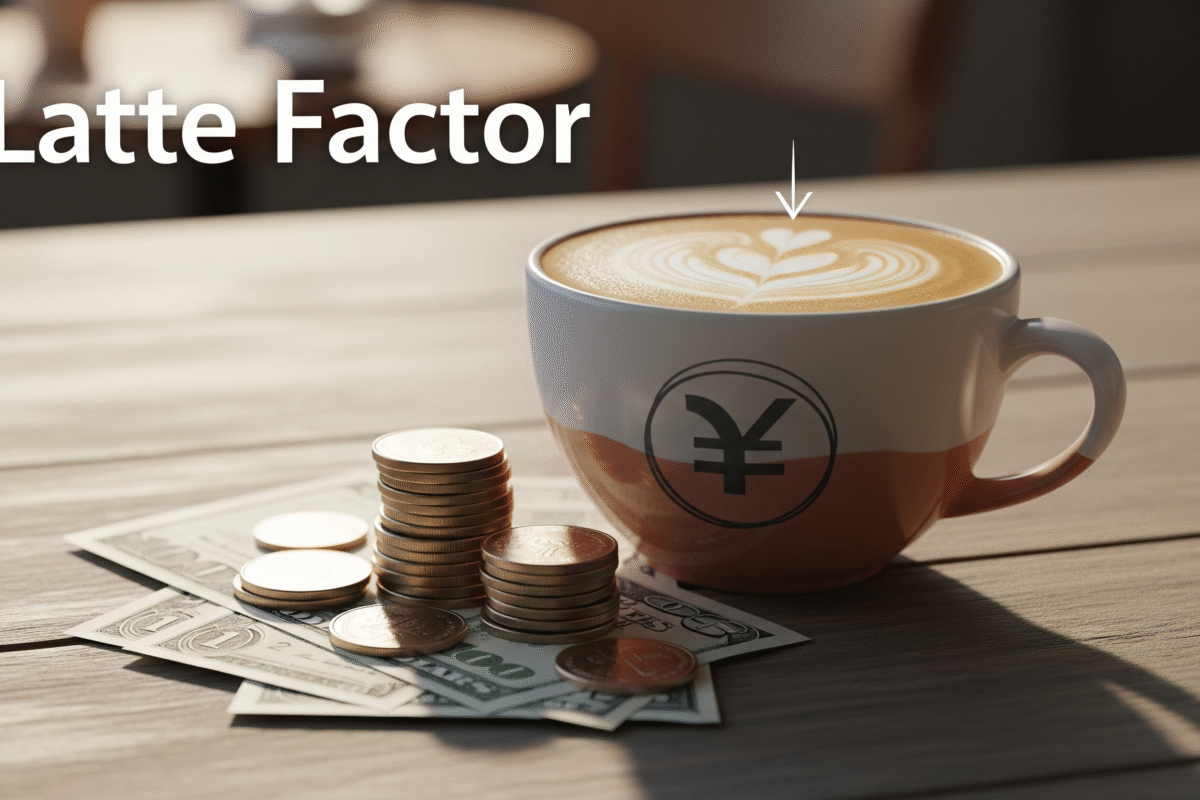
The Latte Factor: Myth or Reality?
The Latte Factor: Myth or Reality?
One term has repeatedly surfaced in conversations about personal finance over the last 20 years: The Latte Factor. The phrase, which was coined by financial expert David Bach, implies that giving up tiny, daily indulgences, such as your $5 morning cappuccino, can result in significant savings and, eventually, financial independence.
The idea is catchy, simple to recall, and even simpler to critique. While some contend that it oversimplifies financial reality, others insist that it is a paradigm shift that will change their lives. However, is The Latte Factor merely a convenient fiction for self-help books, or is it actually a golden guideline of money management?
HSBC Cashback Credit Card 2025 – Benefits, Rewards & How to Apply?

The Latte Factor’s History
The Latte Factor initially surfaced in David Bach’s best-selling novels, such as The Automatic Millionaire (2004) and Smart Women Finish Rich (1999). His main argument was straightforward: most individuals don’t realize how much money little daily purchases add up over time.
For instance:
- $150 a month ($5 a day × 30 days).
- $150 a month times 12 months is $1,800 annually.
- That is more than $180,000 if invested for 30 years at a 7% yearly return.
Bach’s argument was more about consciousness than coffee. He wanted people to understand that making regular, thoughtful spending decisions over time leads to financial freedom rather than requiring one big sacrifice.
Why People Connect With The Latte Factor
This concept persisted for a long time for several reasons:
- Relatability – Almost everyone has a daily indulgence (coffee, lunch, streaming subscription, takeout, etc.).
- Simplicity – It’s easier to grasp than complex financial jargon.
- Empowerment – It makes people feel like financial freedom is within their control.
- Behavioral Psychology – It highlights the concept of opportunity cost—the idea that money spent today could be invested for tomorrow.
In an era where most financial advice felt overwhelming, Bach gave people an easy-to-apply formula.
Does It Add Up in the End?
Let’s use a real-world example to dissect the figures.
- Price of a Latte per Day: $5
- Five days a week is the frequency.
- Cost per month: $100
- Cost per year: $1,200
If the $100 is invested each month in a diversified index fund that yields an average yearly return of 8%:
- Ten years: around $18,000
- 20 years: around $59,000
- 30 years: around $150,000
There is no denying the math: little saves do add up to big sums. This is where the argument starts, though.
The Rebuttal: The Reasons Some Refer to It as a Myth
The Latte Factor has drawn harsh criticism from economists, financial analysts, and regular customers despite its widespread use. This is the reason:
Oversimplifying financial difficulties
The Latte Factor makes the assumption that people have enough money to save. Coffee isn’t the issue for many Americans who are living paycheck to paycheck; rather, it’s stagnant salaries, rising healthcare bills, and rising rent.
Ignoring the High Costs
Medical problems, soaring housing costs, and crippling student loans cannot be resolved by skipping coffee. Lattes, according to critics, are a diversion from more significant systemic problems.
Life Quality versus Penny Pinching
If you eliminate all happiness, what good is financial independence? For other people, a daily latte is more than simply caffeine; it’s a symbol of routine, coziness, or camaraderie. The potential future gain might not justify making that sacrifice.
Repercussions on the Mind
Denying yourself little pleasures on a regular basis might eventually result in financial exhaustion, resentment, and even worse spending patterns.
The Latte Factor’s Psychological Foundation
The psychology is strong, even when the math is questionable. Research on behavioral finance demonstrates that:
- Individuals frequently underestimate their meager discretionary income.
- Automatic routines, such as brewing coffee at home, promote regularity and lessen decision fatigue.
- Prioritizing is made easier when opportunity cost is visualized.
To put it another way, The Latte Factor functions more as a tool for thinking than as a rigid financial rule.
The Real Deal: Where the Latte Factor Is Effective and Where It Is Not
Where It Operates:
- For those who wish to save more money yet currently cover necessities.
- for imparting the power of compounding to children and young people.
- for raising awareness of “invisible spending” such as ridesharing, snacks, and subscriptions.
Where It Is Ineffective:
- for families that are barely making ends meet.
- For people who owe a lot of money and whose interest costs exceed their savings.
- when it stops being a conscious decision and instead turns into a constraint motivated by guilt.
Alternative Approaches to Saving Money
If you’re skeptical about The Latte Factor, here are other impactful strategies:
- Focus on Big Wins – Negotiate rent, refinance loans, or change insurance plans. These can save thousands.
- Automate Investments – Set up recurring transfers to retirement or brokerage accounts.
- Adopt the 50/30/20 Rule – 50% needs, 30% wants, 20% savings.
- Cut Lifestyle Creep – Avoid upgrading expenses every time your income rises.
- Build an Emergency Fund – Reduce reliance on credit cards during crises.
The Latte Factor in 2025: Still Relevant?
In today’s economy, with inflation pushing coffee prices higher than ever, The Latte Factor is back in the spotlight. For some, it’s proof that small luxuries really do add up. For others, it’s tone-deaf to the financial struggles of modern life.
Interestingly, financial influencers on TikTok and YouTube have revived the debate, often reframing it as:
- “Stop shaming people for their lattes.”
- “It’s not about coffee—it’s about making money work for you.”
The conversation is shifting from cutting out lattes to investing in assets.
Examples: The Latte Factor at Work
Case Study 1: Sarah, a 28-year-old marketing expert
Every workday, Sarah used to purchase a $6 latte. She saved $120 a month by switching to home-brewed coffee after reading about The Latte Factor. She invested that money into a Roth IRA. Her account increased to about $5,000 after three years. Sarah felt empowered by the trade-off.
Case Study 2: 35-year-old teacher Marcus
Marcus estimated that he spent roughly $1,500 a year on lattes. The savings from the latte, however, seemed negligible in comparison to his $12,000 yearly student loan payment. Rather, he refinanced his loan, which resulted in a considerably greater victory by reducing his monthly expense by $200.
Conclusion: Achieving Financial Equilibrium in Personal Life
The Latte Factor persists because it is a metaphor rather than merely a mathematical formula. It makes us consider if we are spending money purposefully or carelessly.
Drink your latte guilt-free as long as it makes you happy and doesn’t break the bank. However, tiny daily routines are a great place to start if you’re seeking for extra money to invest.
Ultimately, having financial independence is about choice more than deprivation. And whether you drink your latte or not, the main objective is to create a financially secure future that you are proud of.
The Role of AI Technology in Healthcare: Transforming Patient Care in 2024
The Role of AI Technology in Healthcare: Transforming Patient Care in 2024