 A K
A K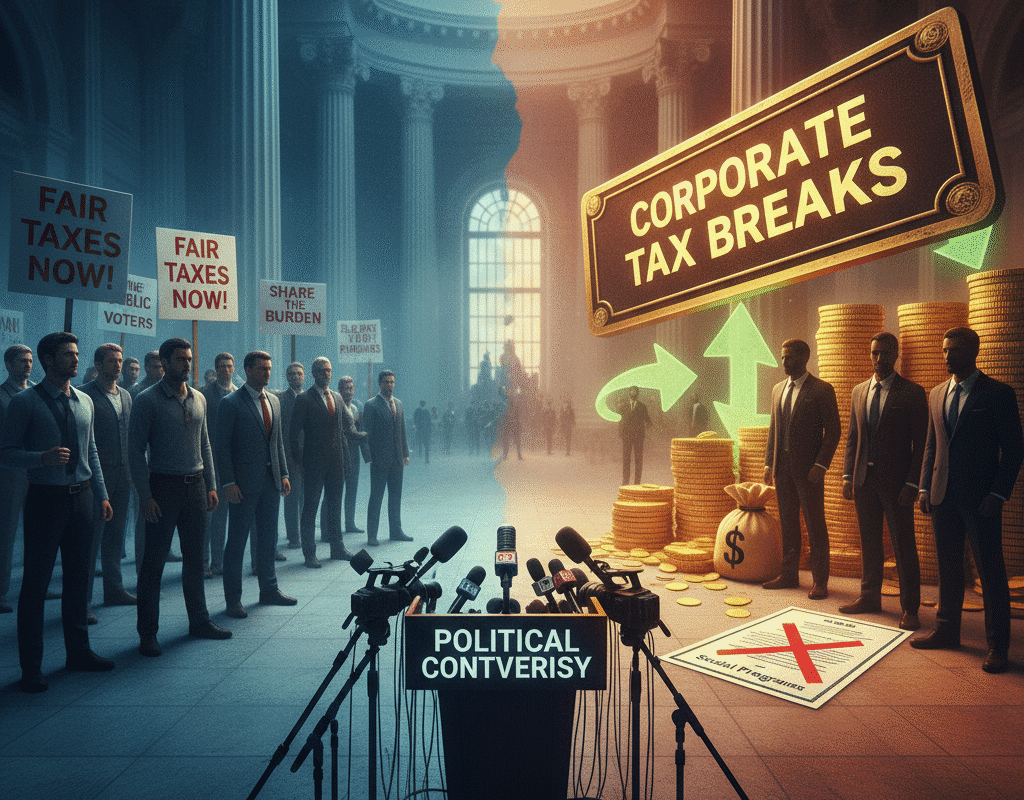
Why U.S. Tax Breaks for Corporations Spark Political?
Why U.S. Tax Breaks for Corporations Spark Political?
In the United States, corporate tax breaks have long been a flashpoint in political debates, drawing sharp lines between parties, interest groups, and the public. While proponents argue that tax breaks stimulate economic growth, opponents claim they exacerbate income inequality and deprive the government of essential revenue. The controversy around corporate tax cuts reflects broader tensions in U.S. politics, including debates over fiscal responsibility, corporate influence, and the role of government in shaping economic outcomes.
HSBC Cashback Credit Card 2025 – Benefits, Rewards & How to Apply?

What Are Corporate Tax Breaks?
Corporate tax breaks, also referred to as corporate tax incentives, are reductions in taxes that the government grants to businesses. These can take many forms, including:
- Reduced corporate tax rates
- Tax credits for research and development
- Accelerated depreciation on investments
- Tax deductions for specific expenses
The primary aim is often to encourage investment, job creation, and economic expansion. For example, a company might receive tax incentives to open a factory in a particular region, theoretically creating jobs and stimulating local economies.
Historical Context of Corporate Tax Breaks
The U.S. has a long history of corporate tax incentives. In the early 20th century, tax breaks were sporadically applied, mostly to industries deemed vital to national interests. After World War II, the focus shifted to industrial growth, technological innovation, and international competitiveness.
The 1980s Reagan administration marked a significant turning point, advocating for lower corporate taxes under supply-side economic theories. The 2017 Tax Cuts and Jobs Act, passed under the Trump administration, further reduced the federal corporate tax rate from 35% to 21%, igniting intense political debate.
Examples of Corporate Tax Breaks That Are Politically Contentious
The Tax Cuts and Jobs Act of 2017
The 2017 Act slashed the corporate tax rate from 35% to 21%. Proponents claimed it would boost investment, increase wages, and return the U.S. to a competitive position globally. Critics argued it overwhelmingly benefited wealthy shareholders and large corporations, increasing the national deficit without guaranteed benefits for workers.
State-Level Rewards
To entice firms, several U.S. states provide tax incentives. For instance, Amazon has been given significant incentives to locate its headquarters and fulfillment facilities in particular states. These agreements frequently provoke public indignation, particularly when the anticipated employment or economic expansion do not materialize.
Green tax credits and renewable energy
There are disputes over tax incentives for renewable energy firms. Although they encourage environmental sustainability, some critics contend that subsidies for big energy companies take funds away from public investment and unfairly favor existing successful businesses.
Public Opinion on Corporate Tax Breaks
Public opinion polls suggest that Americans are skeptical of corporate tax breaks. Many believe that large corporations should pay their “fair share” and that tax incentives often favor the wealthy. Politicians opposing corporate tax cuts frequently highlight the need for a fairer tax system and reinvestment in public services. Conversely, supporters emphasize the potential for economic growth and international competitiveness.
International Comparisons
The U.S. is not alone in offering corporate tax incentives. Many countries use similar tools to attract investment, but controversy is particularly intense in the U.S. due to the country’s political polarization and ongoing debates over income inequality. Some countries, such as those in Scandinavia, rely less on corporate tax breaks and more on public investment and social welfare programs, highlighting alternative approaches to economic growth.
Conclusion: Why U.S. Tax Breaks for Corporations Spark Political?
U.S. corporate tax breaks are a politically charged issue with economic, social, and ethical dimensions. Supporters argue they incentivize growth, investment, and job creation, while critics decry their role in increasing inequality, reducing government revenue, and empowering corporate influence over policy. The debate over corporate tax breaks illustrates larger tensions in American politics between economic efficiency, fairness, and fiscal responsibility.
As the nation continues to grapple with these questions, the political controversy surrounding corporate tax breaks is unlikely to subside. Lawmakers, economists, and citizens will continue to weigh the costs and benefits of incentivizing corporations versus ensuring a fair and equitable tax system.
Why Many Small Businesses Operate as LLCs in 2025: Benefits, Trends, and Legal Advantages
Why Many Small Businesses Operate as LLCs in 2025: Benefits, Trends, and Legal Advantages