 A K
A K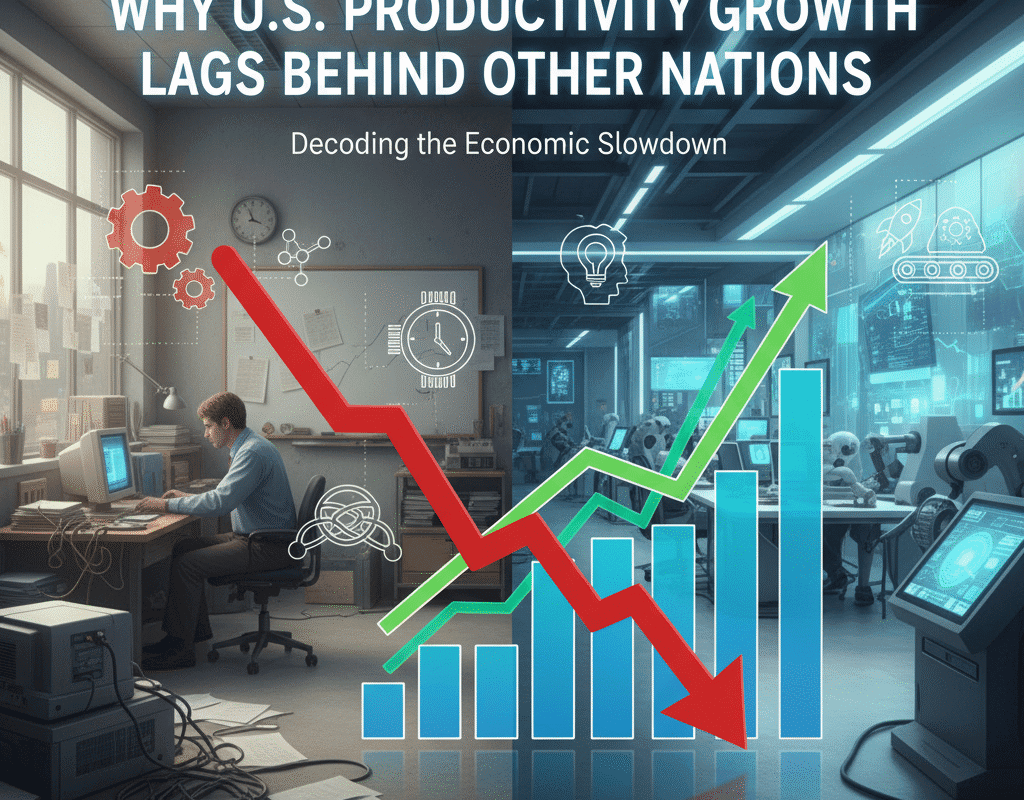
Why U.S. Productivity Growth Lags Behind Other Nations?
Why U.S. Productivity Growth Lags Behind Other Nations?
In an era where global economic competition is intensifying, the United States faces a concerning trend: its productivity growth is falling behind that of other major nations. While U.S. companies and workers are still among the most advanced in the world, recent data indicate that productivity—output per hour worked—has grown at a slower pace than in peer economies like Germany, France, and even some emerging markets.
This slowdown has significant implications for wages, competitiveness, and long-term economic growth.
Understanding why U.S. productivity lags behind other nations is critical not only for policymakers but also for businesses, investors, and the general public. This article explores the factors behind this productivity slowdown, the consequences for the U.S. economy, and potential strategies to reverse the trend.
HSBC Cashback Credit Card 2025 – Benefits, Rewards & How to Apply?

What Is Productivity Growth and Why Does It Matter?
Productivity growth measures how efficiently goods and services are produced, typically expressed as output per hour worked. Higher productivity allows businesses to produce more with fewer resources, which can lead to higher wages, lower prices, and stronger economic growth.
The U.S. economy has historically relied on high productivity growth to maintain its global economic dominance. For decades after World War II, productivity in the U.S. grew at around 2-3% per year. However, since the early 2000s, productivity growth has slowed significantly, averaging less than 1.5% per year in recent years.
Innovation’s Contribution to Productivity Growth
Historically, one of the main factors influencing American productivity has been innovation. In the latter half of the 20th century, industries were revolutionized by the internet, microprocessors, and sophisticated software. But in recent years, disruptive innovation has slowed down, especially in industries with big workforces.
Countries that invest heavily in R&D and adopt innovations widely tend to see faster productivity gains. South Korea, Japan, and Germany, for example, have strong government-business collaboration in technology adoption, which boosts productivity across industries.
Demographic and Social Factors
Demographic trends also affect productivity. The U.S. faces an aging workforce, which can reduce labor force participation and slow the adoption of new technologies. Additionally, rising income inequality and uneven access to quality education create disparities in worker skills and efficiency.
Global Competition and Economic Integration
Globalization has had mixed effects on U.S. productivity. While access to global markets can increase efficiency, offshoring and competition from lower-cost countries have pressured some U.S. industries. Moreover, countries that integrate seamlessly into global supply chains often benefit from productivity spillovers that the U.S. may not fully capture.
The Consequences of Persistent Productivity Lag
If U.S. productivity continues to lag, several negative outcomes may arise:
- Slower wage growth: Productivity is a key driver of wages. Lagging productivity can result in stagnant incomes for workers.
- Weakened competitiveness: Lower productivity reduces the ability of U.S. firms to compete globally.
- Reduced GDP growth: Sustained low productivity growth limits overall economic expansion.
- Pressure on social programs: Slower growth may increase the strain on programs like Social Security and Medicare as fewer resources are available per worker.
In conclusion: Why U.S. Productivity Growth Lags Behind Other Nations?
The U.S. faces a critical challenge: productivity growth has slowed relative to other nations, posing risks to wages, competitiveness, and long-term economic growth. The reasons are multifaceted, ranging from technology adoption and workforce skills to infrastructure, regulation, and sectoral imbalances.
Addressing this challenge requires bold investments in people, technology, and infrastructure, alongside smarter policies that foster innovation and efficiency. By learning from global best practices and leveraging its own technological strengths, the U.S. can reverse the productivity slowdown and secure sustained economic prosperity in the 21st century.
Why U.S. Manufacturing is Shifting from China to Mexico: Trends, Challenges, and Opportunities
Why U.S. Manufacturing is Shifting from China to Mexico: Trends, Challenges, and Opportunities