 A K
A K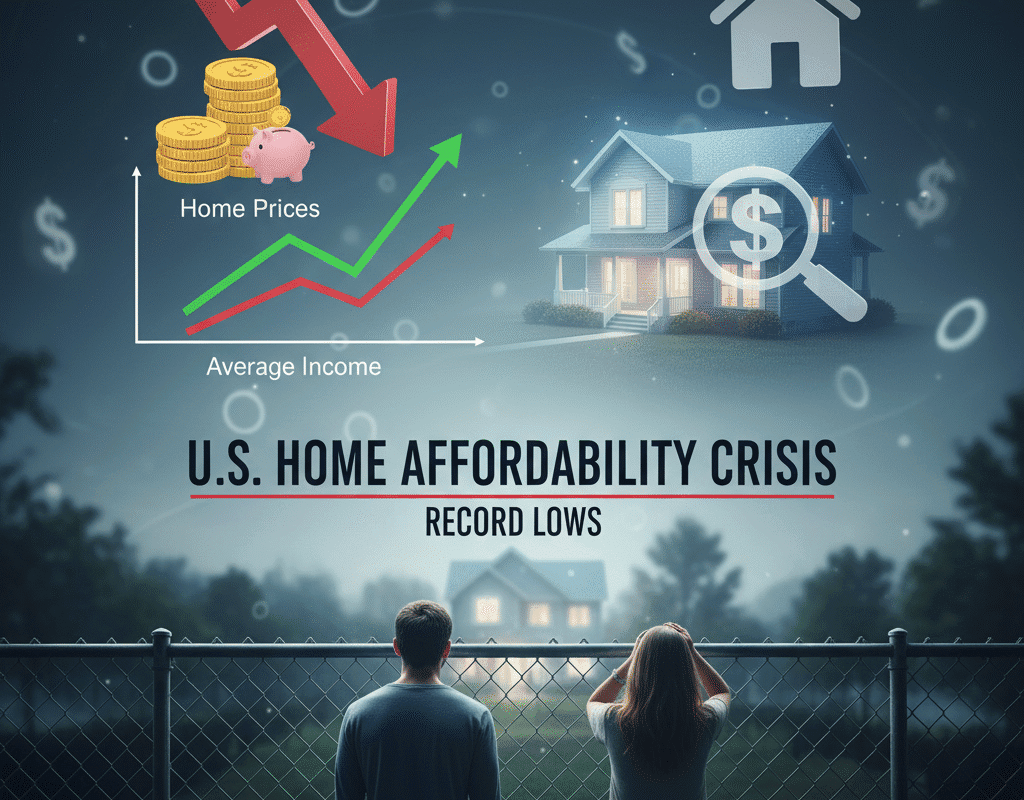
Why U.S. Home Affordability Hits Record Lows?
Why U.S. Home Affordability Hits Record Lows?
In 2025, homeownership in the United States is becoming more of a dream than a reality for many Americans. Recent data and expert analyses show that housing affordability has plunged to record lows, driven by a confluence of economic, regulatory, and demographic forces. To understand this crisis, we must examine the root causes—from soaring mortgage rates to a chronic shortage of supply, and even structural constraints like zoning and construction costs.
HSBC Cashback Credit Card 2025 – Benefits, Rewards & How to Apply?

Mortgage Rates Are Crushing Buyer Power
One of the most immediate culprits behind falling affordability is elevated mortgage rates. Currently, 30-year fixed mortgage rates are hovering in the 6–7% range, a stark contrast to the ultra-low rates (below 3%) many homeowners locked in during the pandemic.
These higher rates dramatically increase monthly mortgage payments, eroding the purchasing power of potential buyers. According to a report by BOK Financial, even though mortgage rates are high by recent standards, they remain significantly above what many first-time buyers can comfortably afford.
Locked-In Homeowners Restrict Inventory
As touched on earlier, the “golden handcuffs” effect is a key factor worsening affordability. A large portion of U.S. homeowners are locked into mortgage rates well below today’s averages. According to Forecasts & Trends, an estimated 82% of outstanding mortgages have rates below 6%, and about 25% are even lower than 3%.
When people don’t sell, fewer homes come on the market, and that restricts supply. This lack of inventory doesn’t just drive up prices—it also gives sellers more power to demand higher offers.
Rising Insurance and Property Costs
Homeownership isn’t just about mortgage payments. For many Americans, insurance premiums and property taxes are escalating rapidly. A report from Mortgage Professional highlights that home insurance costs jumped 57% from 2019 to 2024, especially in disaster-prone regions.
This adds another layer of financial burden to potential buyers. Even when someone qualifies for a mortgage, the total ongoing cost of owning a home may feel out of reach.
Income vs. Price Growth: A Mismatch
One of the most fundamental challenges is the widening gap between income growth and home price increases. According to ATTOM’s third-quarter 2025 Home Affordability Report, monthly housing costs now consume over 33% of the average wage in many counties.
An increasing number of people are “priced out” when incomes remain stagnant but home prices keep rising. According to a 2025 National Association of Home Builders (NAHB) research, about 75% of American households cannot afford a new home at the median price.
Inflation’s Hidden Role
Inflation, though broadly discussed in the context of food and fuel, has quietly played a huge part in the housing crisis. The cost of construction materials—lumber, steel, copper, and more—has skyrocketed, driving up the price of new homes.
On top of that, inflation erodes consumer purchasing power, making down payments, monthly payments, and even mortgage qualification more painful for potential buyers.
Regulatory Barriers: Zoning and Land-Use Restrictions
Land-use regulations and zoning laws are playing a bigger-than-ever role in limiting housing supply. Restrictive zoning prevents the construction of dense, affordable housing like duplexes, triplexes, or apartment buildings.
Certain areas are more severely impacted, particularly coastal metropolitan areas and suburbs. Local resistance to new developments—commonly called “Not In My Backyard” (NIMBY) sentiment—often throttles attempts to build affordable housing.
Institutional Purchasing and Investor Activity
The growing number of corporate landlords and institutional investors in the housing sector is another factor raising prices and decreasing affordability. Investopedia claims that investors are purchasing apartment complexes, single-family houses, and even mobile home parks.
Regular buyers have less access to these properties since these investors occasionally rent them out or leave them unoccupied. This means that there will be greater competition and fewer reasonably priced options for first-time homeowners.
In conclusion: Why U.S. Home Affordability Hits Record Lows?
The U.S. housing affordability dilemma is a structural issue caused by high mortgage rates, limited supply, regulatory obstacles, and growing expenses rather than a passing fad. Millions of Americans are prevented from becoming homeowners, and many with extremely cheap loans from the epidemic era are still hesitant to sell.
Bold action at several levels will be needed to address this situation, including financial support, regulatory ease, zoning reform, and improved public-private cooperation. A significant portion of prospective homebuyers are likely to stay unaffordable in the absence of significant legislative changes.
The Hidden Price Tag: How Much U.S. Small Businesses Pay for Tax Compliance
The Hidden Price Tag: How Much U.S. Small Businesses Pay for Tax Compliance