 A K
A K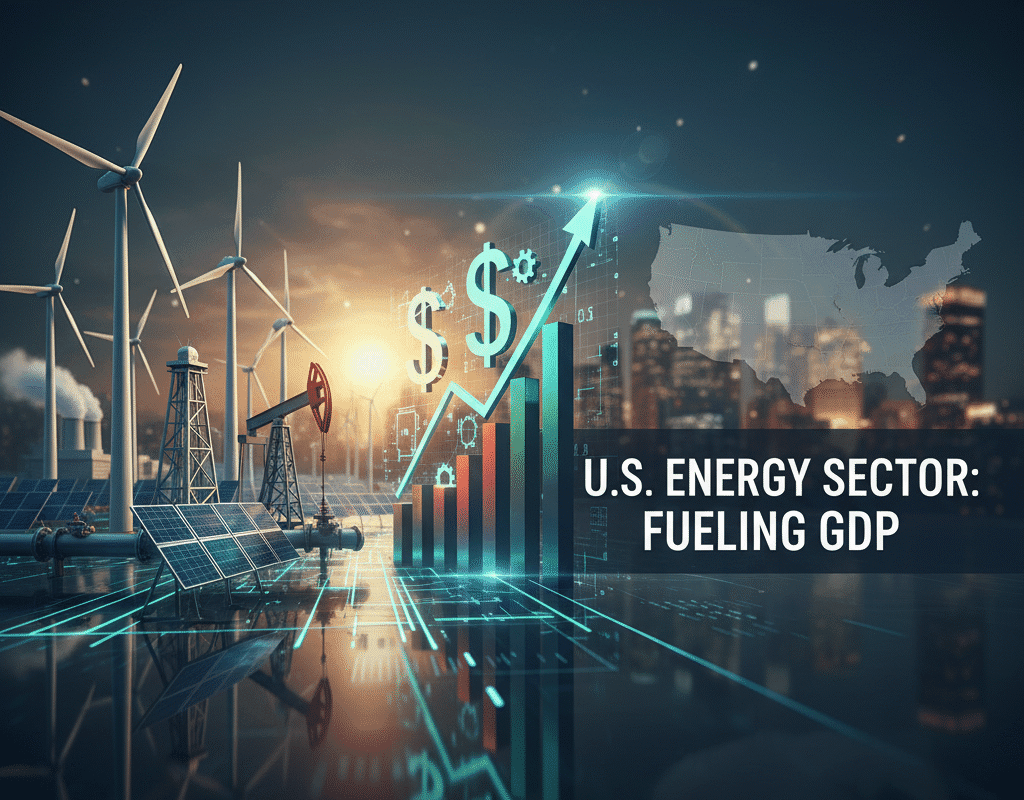
Why the U.S. Energy Sector Remains a Key Driver?
Why the U.S. Energy Sector Remains a Key Driver?
The U.S. energy sector has long been a cornerstone of the nation’s economy. Even amid global energy transitions and the rise of renewable energy, the sector continues to play a pivotal role in driving gross domestic product (GDP) growth, generating employment, and reinforcing the country’s position as a global economic leader. In 2025, the sector remains a dynamic engine of growth, balancing traditional fossil fuels with renewable energy and innovation to meet evolving domestic and international demand.
HSBC Cashback Credit Card 2025 – Benefits, Rewards & How to Apply?

The Energy Sector and Its Direct Impact on GDP
The U.S. energy sector contributes significantly to the nation’s GDP. According to recent data, energy production—including oil, natural gas, coal, nuclear, and renewable sources—accounts for nearly 8% of total U.S. GDP. This contribution is not just a result of extraction and production; it also includes the vast network of energy infrastructure, distribution, and associated services.
Energy production drives economic activity across multiple industries. Manufacturing, transportation, and construction heavily rely on stable and affordable energy. Without a robust energy sector, production costs rise, affecting domestic prices and global competitiveness. Moreover, the sector’s capital-intensive nature means that large-scale projects—such as refinery expansions or offshore drilling—inject billions of dollars into the economy, generating ripple effects across other industries.
Job Creation and Economic Multiplier Effects
The U.S. energy sector is a major employer, providing millions of direct and indirect jobs. According to the U.S. Department of Energy, the energy industry supports over 7 million jobs nationwide. These range from traditional roles in oil and gas extraction to emerging positions in solar, wind, and energy storage technologies.
Job creation in the energy sector has significant multiplier effects. Employees in energy-related jobs spend wages in local economies, support local businesses, and contribute to tax revenues. For every direct energy job, economists estimate that 2 to 3 additional jobs are created indirectly in supporting industries, including logistics, engineering, and technology services.
Energy Investment as a Growth Catalyst
Investment in the energy sector drives innovation and productivity, which are essential for GDP growth. Private and public investments in energy infrastructure—such as power plants, pipelines, and smart grid technologies—stimulate economic activity. In recent years, investment in renewable energy has surged, with billions allocated to solar farms, wind turbines, and battery storage.
These investments are crucial for maintaining energy security, lowering production costs, and ensuring long-term economic stability. Additionally, the energy sector attracts foreign investment, reinforcing the U.S. position as a global economic leader.
Innovation’s Contribution to the Growth of the Energy Sector
The GDP of the United States now heavily depends on innovation in the energy industry. Advanced technologies, such as carbon capture, nuclear fusion research, and offshore wind turbines, create new opportunities for economic expansion. Innovations in energy efficiency and grid management reduce operational costs for businesses and households, freeing up capital for other productive investments.
Furthermore, technological advances increase the competitiveness of U.S. energy exports. By leading in energy technology innovation, the United States can expand its global market share, boosting trade balances and contributing to GDP growth. The integration of digital technologies, artificial intelligence, and predictive analytics into energy management also optimizes production and distribution, enhancing overall sector efficiency.
Renewable Energy and Sustainable GDP Growth
The transition to renewable energy is not only an environmental imperative but also an economic opportunity. Solar, wind, and hydropower projects create high-value jobs and attract long-term investment. Analysts estimate that renewable energy alone could account for a 1–2% boost to GDP over the next decade if current growth trajectories continue.
Sustainable energy also stabilizes the economy by reducing dependency on volatile fossil fuel markets. By diversifying energy sources, the U.S. reduces the risk of supply shocks and price spikes, ensuring predictable growth patterns. Moreover, renewable energy fosters innovation clusters, particularly in manufacturing, storage technologies, and smart grids, which further strengthens the GDP contribution of the sector.
In conclusion: Why the U.S. Energy Sector Remains a Key Driver?
The U.S. energy sector remains a critical pillar of the nation’s economy, driving GDP growth through job creation, investment, innovation, and exports. From traditional fossil fuels to cutting-edge renewable technologies, the sector supports multiple industries, stabilizes domestic markets, and strengthens global competitiveness. As the U.S. pursues sustainable growth and energy security, the energy sector’s role in fueling economic prosperity will remain indispensable.
The ongoing transition toward renewable and clean energy sources, coupled with continuous technological innovation, ensures that the energy sector is not only a current contributor but also a long-term engine of GDP growth. Policymakers, investors, and businesses that recognize and leverage this sector’s potential will continue to benefit from its robust economic impact.
Why U.S. States Fiercely Compete for Federal Transportation Grants in 2025
Why U.S. States Fiercely Compete for Federal Transportation Grants in 2025