 A K
A K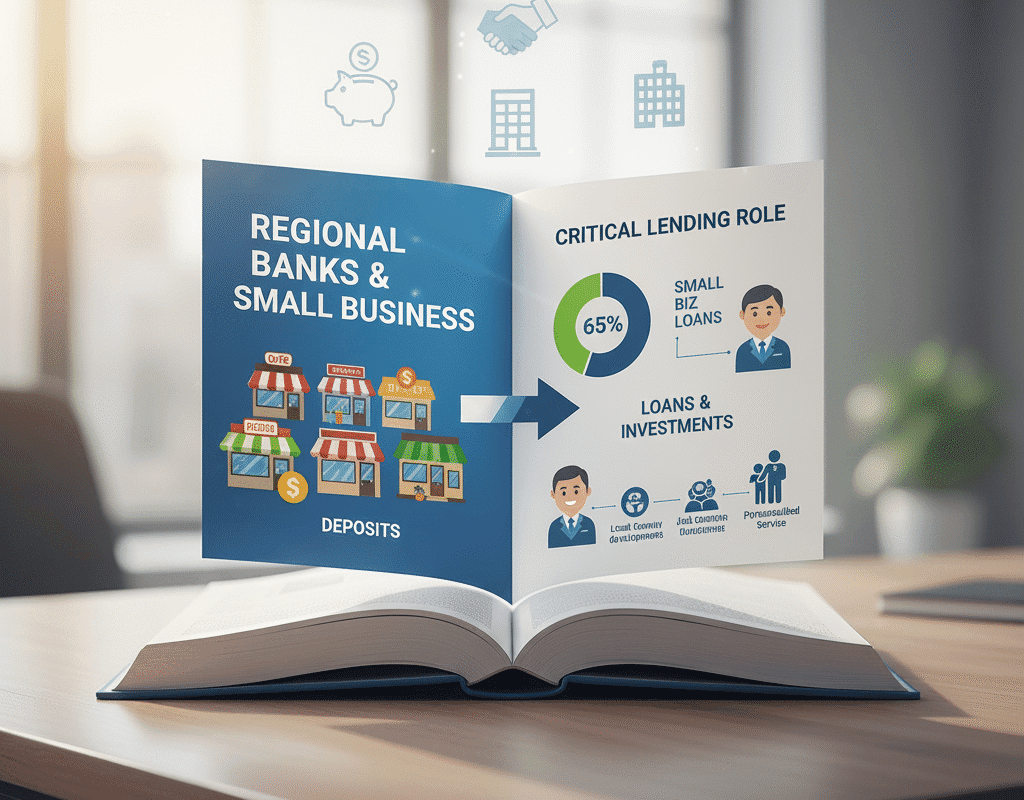
Why Regional Banks Remain Crucial?
Why Regional Banks Remain Crucial?
Small businesses remain the backbone of the American economy, accounting for nearly half of all U.S. employment and driving innovation, local investment, and new job creation. Regional and community banks continue to play a disproportionately significant role in funding America’s small-business sector, despite the emergence of digital lenders and the dominance of large national banks. Their contribution is not only economic—it is structural, cultural, and essential for maintaining local economic resilience.
In 2025, as inflation pressures ease but borrowing costs remain elevated, small businesses face new challenges in accessing affordable credit. Economic uncertainty, demographic shifts, and technology transformation have changed how banks evaluate borrowers. Yet regional banks have preserved the personal, relationship-driven lending approach that many small-business owners depend on.
HSBC Cashback Credit Card 2025 – Benefits, Rewards & How to Apply?

The Unique Financial Role of Regional Banks
Regional banks, typically defined as institutions with assets ranging from a few billion to a few hundred billion dollars, operate between community banks and national giants. They are large enough to offer diverse products and competitive rates but local enough to understand the economies they serve.
They fill an essential niche in the banking ecosystem:
- They maintain closer relationships with local businesses than national lenders.
- They rely on relationship-based underwriting, not just automated scoring models.
- They circulate deposits back into the communities where they originate.
- They fund industries underserved by large banks, such as retail, construction, hospitality, and local manufacturing.
Lending Data Shows Regional Banks Punch Above Their Weight
One of the most important facts about regional banks is that they provide a far greater share of small-business loans than their size would suggest. While the largest U.S. banks hold more than half of all deposits in the country, their share of small-business lending remains significantly smaller.
Regional and community banks:
- Issue close to 50–60% of all small-business loans
- Offer more flexible terms and more personal underwriting
- Are more likely to lend to startups, young businesses, and minority-owned firms
- Approve loans more frequently for local borrowers than national banks
The Digital Revolution: A Difficulty and a Possibility
The way that digital trends are changing financial services cannot be ignored by regional banks. Nowadays, a sizable portion of the small-business lending sector is dominated by fintech lenders, especially for microloans and merchant cash advances.
However, many local banks have teamed up with fintech companies to enhance rather than replace:
- Loan processing speed
- Data analysis
- Risk assessment
- Customer onboarding
SBA Lending: Regional Banks Lead the Way
The U.S. Small Business Administration (SBA) partners with banks to guarantee loans made to entrepreneurs. These loans often go to businesses that cannot qualify for traditional financing.
Regional banks:
- Remain among the largest SBA loan originators
- Provide more 7(a) and 504 loans compared to national banks
- Work closely with startups and family-owned companies
The Future of Regional Banks and Small-Business Lending
The role of regional banks is evolving, not diminishing. The future will likely involve:
- More digital tools paired with relationship banking
- Greater specialization in small-business lending
- Stronger partnerships with fintech firms
- Enhanced community engagement
- More flexible credit models
If regional banks continue adapting while preserving their community-focused values, they will remain a cornerstone of American economic growth.
Conclusion: Why Regional Banks Remain Crucial to U.S.?
Regional banks are not just financial institutions—they are economic lifelines for millions of small businesses across the United States. Their knowledge of local markets, willingness to consider individual circumstances, and strong community ties make them essential players in U.S. small-business lending.
As economic conditions shift and competition intensifies, regional banks continue to provide stability, opportunity, and growth for the entrepreneurs who keep America’s economy moving.
Without them, the landscape of American small business—and the fabric of local communities—would look dramatically different.
The Role of the FTC in Preventing Monopolies: How the Agency Protects Competition in the U.S.
The Role of the FTC in Preventing Monopolies: How the Agency Protects Competition in the U.S.