 A K
A K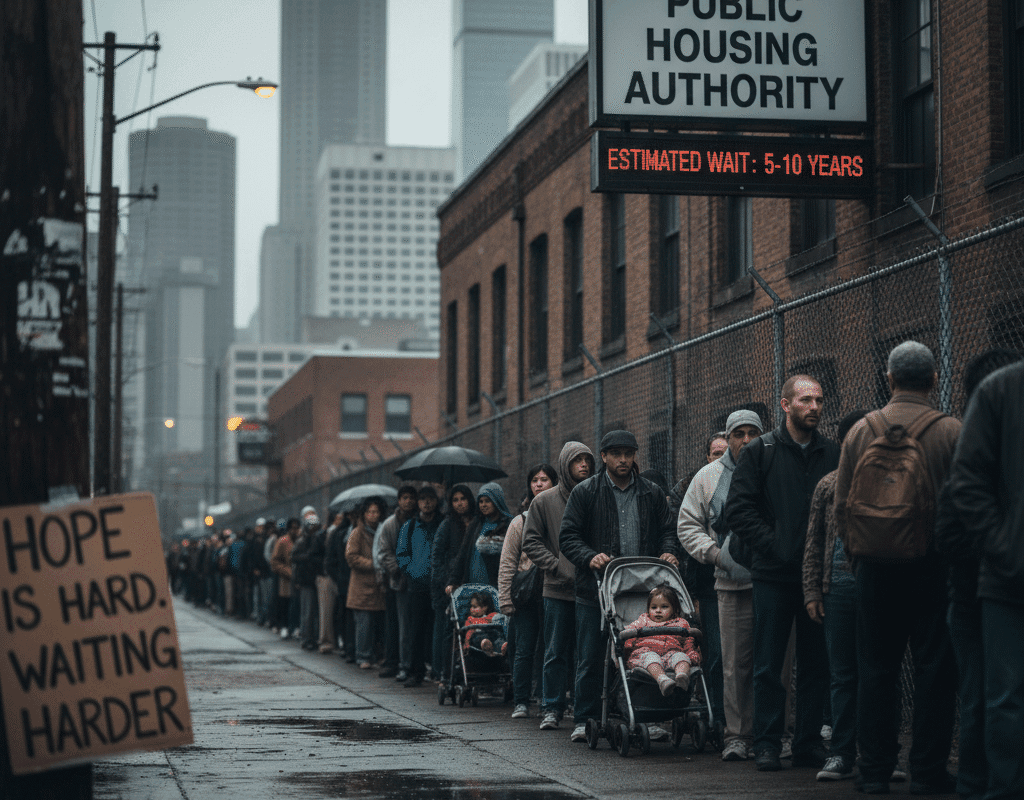
Why Public Housing Waiting Lists Are Years Long?
Why Public Housing Waiting Lists Are Years Long?
For many years, public housing has been a vital component of America’s social safety net, offering secure and reasonably priced housing to low-income families, the elderly, and individuals. However, obtaining public housing can seem like an unattainable goal in many American communities.
Many families are left in insecure living situations as a result of years-long waiting lists for public housing. However, why are these waiting lists so lengthy? Understanding this issue requires examining a combination of factors, from funding shortages and bureaucratic challenges to broader housing market dynamics.
HSBC Cashback Credit Card 2025 – Benefits, Rewards & How to Apply?

The Problem’s Scope
Millions of Americans are eligible for public housing aid, yet only a small percentage actually receive it, according to the U.S. Department of Housing and Urban Development (HUD). The wait time for a public housing unit might be more than ten years in certain major locations. In cities such as New York, San Francisco, and Los Angeles, some applicants remain on waiting lists for nearly a decade.
The demand far outstrips the supply, leaving low-income families and vulnerable populations with few options. The result is a growing crisis, one that highlights deep-seated inequalities in access to affordable housing and raises questions about the effectiveness of public housing programs.
Impact on Families and Communities
The prolonged wait for public housing has far-reaching consequences for families and communities. Families may remain in unsafe or overcrowded conditions, affecting health, education, and overall quality of life. Children growing up in unstable housing often face challenges in school performance and social development.
Communities also bear the brunt of insufficient public housing. Overcrowding in rental units, increased homelessness, and higher demand for emergency shelters place pressure on social services and local infrastructure. The lack of stable housing can perpetuate cycles of poverty and economic instability.
Case Studies: Cities With the Longest Waiting Lists
New York City
New York City has one of the longest public housing waiting lists in the country. With over 150,000 families on the list and limited new construction, many applicants wait over a decade for placement. Rising rents in Manhattan and Brooklyn have exacerbated the problem, making public housing a critical lifeline for low-income residents.
San Francisco
San Francisco’s housing crisis is infamous, with tech-driven rent surges pushing low-income families to the brink. Public housing waiting lists often exceed 10 years, and the city struggles to expand affordable housing due to high land costs and strict zoning regulations.
Los Angeles
In Los Angeles, homelessness and housing insecurity are interlinked with public housing wait times. The city faces a shortage of over 500,000 affordable units. Families often spend years on waiting lists while relying on temporary shelters or overcrowded rentals.
Possible Ways to Shorten Wait Times
Expand State and Federal Funding
Increasing financing for the building and upkeep of public housing is essential. Increased federal funding might speed up the development of new units, restore older structures, and shorten application wait times.
Increase Housing Subsidies and Vouchers
Housing voucher programs, such as Section 8, can provide low-income families with immediate rental assistance in the private market. Expanding these programs can relieve pressure on public housing waiting lists while offering families more choice and flexibility.
Reform Zoning and Land Use Policies
Cities can amend zoning laws to allow for higher-density housing and subsidized developments. Reducing regulatory barriers can make it easier to build affordable units in high-demand areas, increasing overall housing availability.
In conclusion: Why Public Housing Waiting Lists Are Years Long?
The United States’ lengthy waiting lists for public housing are caused by a number of intricate interrelated variables, including population increase, bureaucratic obstacles, rising expenses, limited funds, and stringent zoning laws. Waiting years for secure housing is not only annoying for millions of Americans, but it may also have a profound impact on their lives.
A multimodal strategy is needed to address this situation, including greater housing investment, legislative changes, and creative housing alternatives. Reducing public housing wait periods is essential to guaranteeing justice, stability, and dignity for all families in need, and it goes beyond simple administrative efficiency.
How Retirement Insecurity Is Driving U.S. Savings Rates and Financial Behavior
How Retirement Insecurity Is Driving U.S. Savings Rates and Financial Behavior