 A K
A K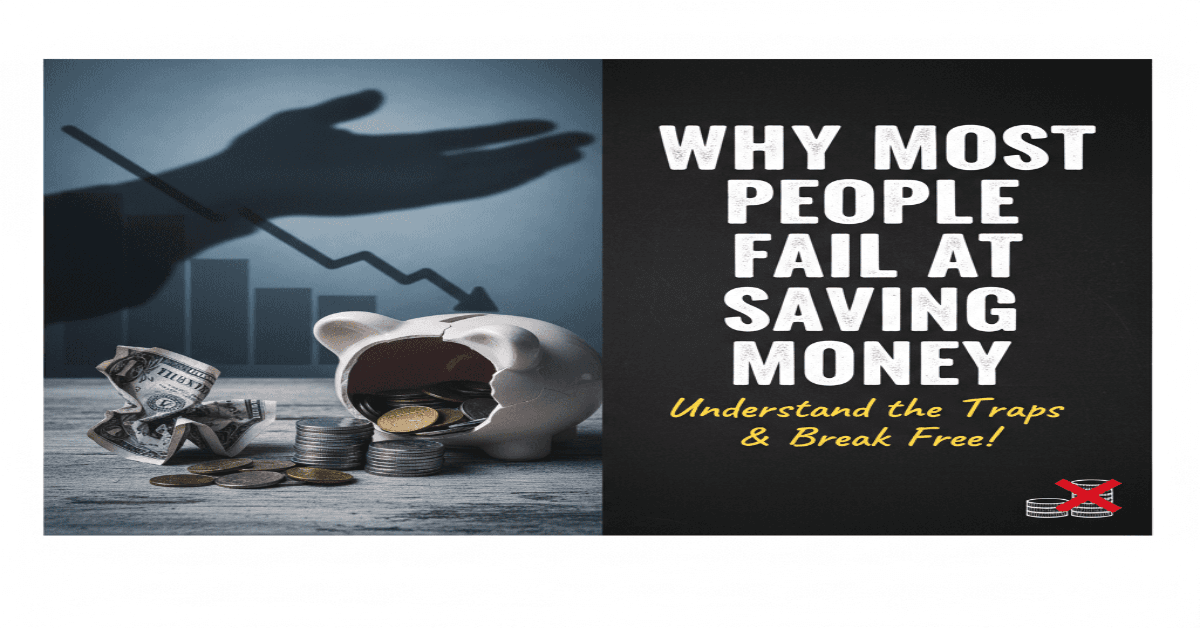
Why Most People Fail at Saving Money:
Why Most People Fail at Saving Money:
One of the most universal financial objectives is saving money. Nearly everyone wants to increase their nest fund, lessen their financial stress, and feel more secure, according to surveys. However, the majority of Americans continue to report living paycheck to paycheck with little to no emergency savings year after year. Despite the proliferation of budgeting tools, apps, and financial literacy programs, the majority of individuals are unable to save money.
This article examines the economic, social, and psychological factors that contribute to the difficulty of saving money as well as practical solutions to end the cycle.
HSBC Cashback Credit Card 2025 – Benefits, Rewards & How to Apply?

1.The Shocking Truth of America’s Savings Crisis
A concerning tendency is highlighted by recent studies:
- More than 60% of Americans claim that they would find it difficult to pay for an unforeseen $1,000 bill.
- The ability to save money is undermined by the fact that many households have credit card debt with record-high interest rates.
- Even middle-class families are experiencing financial instability as a result of inflation’s continued pressure on budgets.
Saving money is a battle that involves not just income but also priorities, behavior, and structural issues.
2.Why Most People Fail at Saving Money
2.1 Getting by on a paycheck
One of the main reasons people can’t save is because their expenses match or exceed their income. Rising rents, healthcare costs, and student loans leave little room for savings. For many households, even small luxuries like dining out or subscription services push them further behind.
2.2 Lack of Financial Education
Money management is rarely taught in schools. Many adults enter the workforce without understanding how to budget, build credit, or plan for retirement. Without financial literacy, saving feels like an abstract idea rather than a practical strategy.
2.3 The Psychology of Instant Gratification
Human psychology plays a powerful role in saving behavior. Studies in behavioral economics show that people naturally prefer immediate rewards over long-term benefits. This explains why buying a new gadget feels better than setting money aside in a savings account.
2.4 Lifestyle Inflation
As people earn more, they often spend more. This “lifestyle creep” means that pay raises don’t translate into savings. Instead, new income is consumed by bigger homes, better cars, and more expensive vacations.
2.5 Debt Burden
High-interest debt drains financial resources. Credit card balances, payday loans, and car payments create a cycle where income goes toward servicing debt rather than building savings.
2.6 Insufficient Objectives
A lot of people claim to desire to save money, but they never specify why or how much. Without specific savings goals (like “$10,000 for an emergency fund in two years”), it’s easy to abandon the effort.
2.7 Social Pressure and Comparison
Modern culture glamorizes consumption. Social media showcases luxury lifestyles that encourage people to spend more to keep up appearances. Peer pressure, even subtly, can push individuals to prioritize image over savings.
2.8 Economic Uncertainty
When the cost of living rises faster than wages, saving becomes harder. Inflation, healthcare bills, and housing shortages leave people feeling like saving is nearly impossible.
3.The Psychology Behind Failing to Save
3.1 Mental Accounting
People mentally separate money into categories. For example, they might splurge with a tax refund while struggling to save from regular income. This mental bias prevents consistent saving habits.
3.2 Optimism Bias
Many assume they will save “in the future” when they make more money, forgetting that future expenses will also increase. This false optimism delays savings indefinitely.
3.3 Overconfidence in Credit
Easy access to credit cards makes people feel secure, even if they have no savings. They rely on debt as a safety net, which only deepens financial vulnerability.
4.The Impact of Failing to Save
4.1 Financial Stress
Living without savings creates constant anxiety. Every unexpected expense—car repair, medical bill, job loss—can feel catastrophic.
4.2 Limited Opportunities
Without savings, people can’t invest, buy a home, or take advantage of opportunities like further education. This perpetuates financial stagnation.
4.3 Generational Effects
Parents without savings often struggle to support children’s education or emergencies, creating a cycle of financial instability across generations.
5.How to Start Saving and End the Cycle
Notwithstanding the difficulties, modest, focused adjustments can result in financial savings. Here are several tried-and-true methods:
5.1 Put Savings on Autopilot
Configure automatic transfers from savings to checking. Think of savings as an expense that needs to be paid first.
5.2 Begin Small and Develop Routines
Momentum is generated by even $5 or $10 per week. The habit of saving is formed by small donations that accumulate over time.
5.3 Establish a Budget That Is Reasonable
Keep an honest record of your earnings and outlays. Find wasteful expenses like unused subscriptions, impulsive buys, or a lot of takeaway.
5.4 Establish an Emergency Fund
A starter emergency fund of $1,000 can prevent reliance on credit cards. Once achieved, aim for 3–6 months of living expenses.
5.5 Prioritize Debt Repayment
Paying off high-interest debt is one of the best ways to free up income for savings. Consider the snowball or avalanche method to reduce balances strategically.
5.6 Define Clear Goals
Saving becomes easier when tied to specific outcomes—buying a home, traveling, retirement, or building financial independence.
5.7 Embrace Minimalism
Living below your means doesn’t have to mean deprivation. It’s about prioritizing what matters most and cutting out unnecessary spending.
5.8 Seek Professional Advice
Financial advisors or counselors can help create customized strategies and hold people accountable to their goals.
6. The Role of Technology in Saving
Today, countless apps and digital tools encourage better saving habits:
- Round-up apps automatically transfer spare change to savings.
- Budgeting apps categorize spending and highlight waste.
- High-yield savings accounts online often pay more interest than traditional banks.
Technology makes saving easier, but discipline and consistency remain the most critical factors.
7. Narratives from Ordinary Savers
Numerous people throughout the nation demonstrate that saving is feasible:
- A young couple in Texas eliminated $30,000 in credit card debt by cutting subscriptions and automating savings.
- A single mother in Ohio built a $5,000 emergency fund by taking a side hustle and applying the income solely toward savings.
- A college graduate in California redirected student loan payment savings into investments once loans were repaid.
These real-life examples show that mindset and persistence matter more than income level.
8. Looking Ahead: Establishing a Savings Culture
America needs a cultural change, according to financial experts. Instead of being overwhelmed by materialism, saving money should be accepted and appreciated. Policymakers, employers, and educational institutions can all help by:
- providing early financial literacy instruction.
- using matching programs to promote retirement savings at work.
- establishing laws to combat the exorbitant expense of living.
Both people and society at large bear some of the blame.
Concluding remarks
The majority of people fail to save money because of economic, social, and psychological factors rather than because they don’t want to. Anyone can transition from financial stress to financial security by comprehending these forces and acting consciously.
Saving money is about more than simply financial figures; it’s about freedom, opportunity, and peace of mind. The impact lasts a lifetime, yet the initial step is tiny.
How Emerging Markets Attract Foreign Investment in 2025 | Growth Strategies & Challenges
How Emerging Markets Attract Foreign Investment in 2025 | Growth Strategies & Challenges