 A K
A K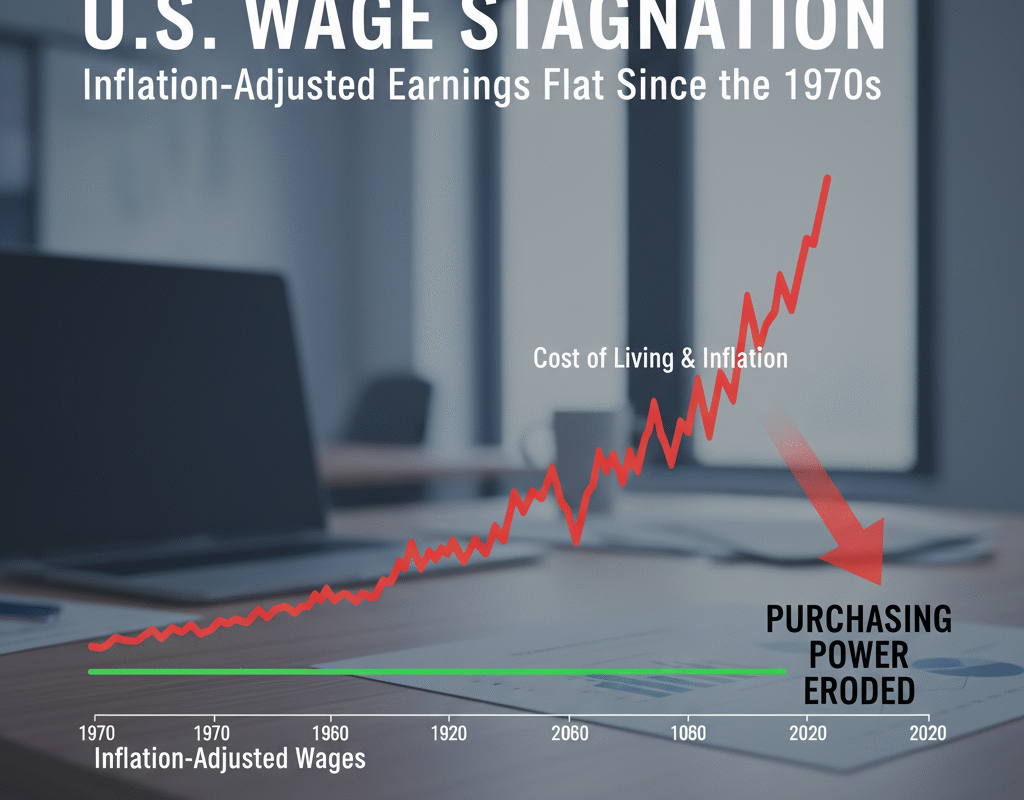
U.S. Inflation-Adjusted Wages Stagnate Despite Economic Growth
U.S. Inflation-Adjusted Wages Stagnate Despite Economic Growth
For more than a decade, American workers have heard that the economy is growing, unemployment is low, and companies are hiring at the fastest pace in years. Yet for millions of households, their paychecks tell a different story. After adjusting for inflation — the metric experts use to measure “real wages” — many Americans are earning roughly the same, or in some cases less, than they did years ago.
The stagnation of inflation-adjusted wages has become one of the most pressing economic issues in the United States. While the national economy continues to expand and corporations report strong profits, the financial comfort of ordinary workers has barely improved.
HSBC Cashback Credit Card 2025 – Benefits, Rewards & How to Apply?

Real Wages vs. Nominal Wages: Why the Difference Matters
Before diving into the numbers, it’s important to understand the difference between nominal wages and real wages.
- Nominal wages are the dollar amount on your paycheck.
- Real wages adjust that number for inflation — measuring what your income can actually buy.
If your salary increases by 3 percent but inflation rises by 5 percent, your real wages have declined, because the cost of living has increased faster than your pay. This mismatch is the core of today’s wage stagnation debate.
Over the last several years, inflation surged at rates unseen in four decades. Even though wages did grow, they did not grow fast enough to maintain or increase purchasing power for most workers.
The Data: A Decade of Weak Real Wage Growth
Multiple economic research groups and government analytics indicate that inflation-adjusted wages have been largely flat when measured over the last 10–15 years.
Key trends include:
- Wages rose significantly between 2021–2023, but inflation rose even faster.
- Higher-income earners saw stronger wage gains than middle- and lower-income workers.
- The cost of essentials — housing, healthcare, food, transportation — rose far more quickly than general inflation.
- Younger workers, especially those entering the labor market after 2010, experienced some of the slowest wage growth of any modern generation.
A Generational Divide: Younger Employees Are Most Affected
Inflation-adjusted incomes have grown at the weakest rate among younger Americans, particularly those between the ages of 18 and 35. They encounter particular difficulties:
- Joining the labor in recessionary times
- Significant debt from student loans
- High cost of housing
- Delayed acquisition of a home
- Early-career job markets that are unstable
Even with college degrees and full-time jobs, many young workers believe they are lagging behind older generations financially.
Why Wage Growth Was Seen by Some Employees
Some groups saw significant salary increases despite general stagnation:
- Raises were higher for workers who changed employment than for those who stayed.
- Aggressive pay increases were offered by certain industries with significant demand.
- Wage pressure was more intense in states with tighter labor markets, such as the South and Mountain West.
Because of this, the gap between employees who can change roles and those who are trapped into permanent positions is growing.
Are Real Wages Improving in 2025?
Forecasts for wage growth vary. Many economists predict:
- Moderating inflation, easing pressure on households
- Slower job growth, meaning lower wage increases
- Persistent affordability challenges, especially in housing
Real wages have begun to show slight improvements as inflation cools, but they remain below pre-surge purchasing power levels for many workers.
Conclusion: U.S. Inflation-Adjusted Wages Stagnate Despite Economic
Despite a resilient economy and strong job numbers, inflation-adjusted wages for many Americans have been stagnant, leaving households with less purchasing power and heightened financial stress.
The challenge is complex, driven by structural economic changes, rising living costs, and shifting labor dynamics. While some industries and workers have seen real wage improvement, the majority continue to grapple with a cost-of-living landscape that outpaces earnings.
Looking ahead, the future of real wage growth will depend on inflation trends, economic policy, and how the labor market evolves in a rapidly shifting global economy. The issue remains at the center of national conversations about prosperity, opportunity, and economic fairness.