 A K
A K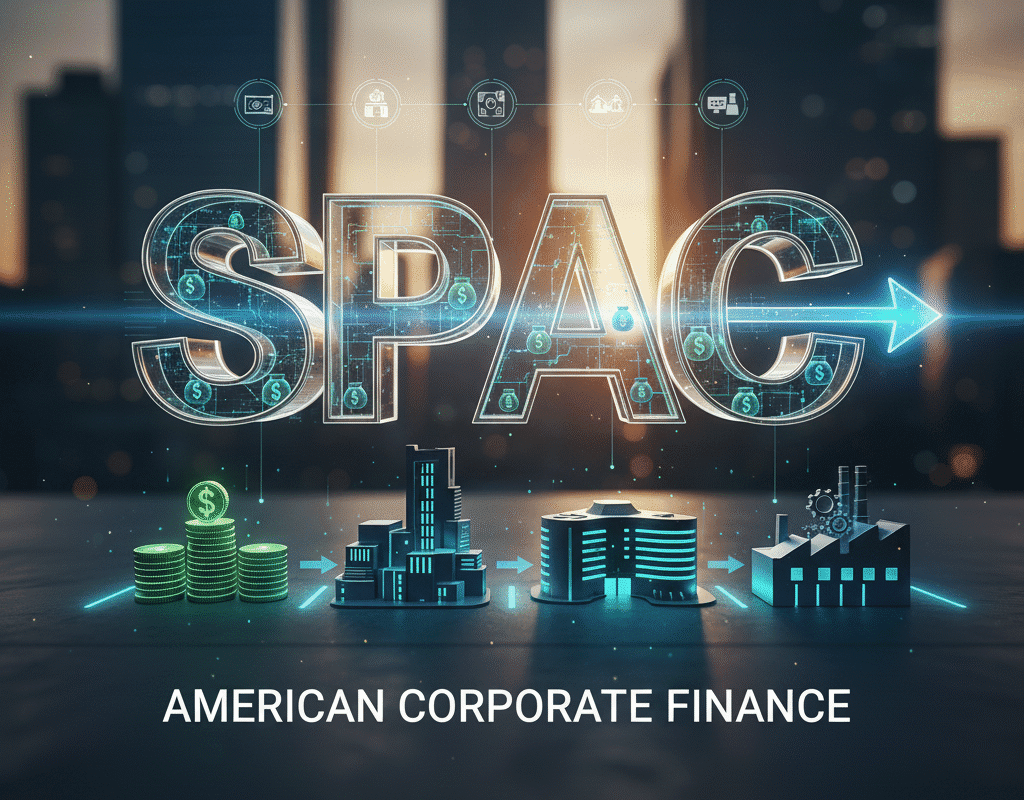
The Role of SPACs in American Corporate Finance
The Role of SPACs in American Corporate Finance
Special Purpose Acquisition Companies (SPACs) have been a significant player in American corporate financing in recent years. Once a specialized tool, SPACs have developed into a popular substitute for conventional IPOs, generating discussion, regulatory interest, and sizable capital inflows. The functioning of SPACs, their significance, their benefits and limitations, and the implications of their growth for the larger American financial system are all covered in this article.
HSBC Cashback Credit Card 2025 – Benefits, Rewards & How to Apply?

Knowing SPACs: What They Are and How They Operate
At the time of its initial public offering (IPO), a Special Purpose Acquisition business (SPAC) is essentially a publicly traded shell business without any commercial activity. Its only goal is to earn money through an initial public offering (IPO) and then buy out or merge with a private business to make it public.
Important traits of SPACs consist of:
- Blank-check structure: Investors put their faith in the sponsor’s capacity to discover a suitable purchase by investing in the SPAC before any target is identified.
- Trust funds: Until a purchase is finalized, the money raised through the IPO is kept in an escrow or trust account.
- Time limit: The majority of SPACs have a set amount of time, usually between 18 and 24 months, to find and close a deal. The SPAC is liquidated and investors receive their money back if they fail.
- Sponsor incentive: SPAC sponsors typically receive significant equity stakes (often about 20%) in the post-merger company, which aligns them with the deal’s success but also raises issues of dilution.
High-Profile Trends & Notable Examples
To illustrate SPACs’ impact, a few high-profile examples highlight how they’ve reshaped markets — and why they attract scrutiny.
- Chamath Palihapitiya, often dubbed the “SPAC King,” has launched multiple SPACs, targeting futuristic industries.
- Despite past underperformance, Palihapitiya is reportedly returning to the SPAC market, signaling renewed interest in the vehicle.
- On the corporate side, Vietnamese EV maker VinFast chose a SPAC route to list on U.S. exchanges via a merger with Black Spade Acquisition Co., highlighting how global technology companies also use SPACs to access American capital.
SPACs’ Prospects in American Finance
From here, where do SPACs go?
- Maturing Structure: As the SPAC model matures, we may see deals with more realistic valuations, better alignment of interests, and more rigorous due diligence.
- Regulatory Evolution: Continued regulatory scrutiny could lead to tighter disclosure norms and standardized governance structures to protect retail investors.
- Selective Resurgence: SPAC issuance may rebound, but likely with greater selectivity. Sponsors with domain expertise (e.g., technology, biotech, clean energy) could lead the way.
- Hybrid Models: Newer SPAC variants may blend features of PIPE transactions, traditional IPOs, and SPACs, offering tailored capital-raising strategies.
- Global Role: While SPACs are rooted in U.S. markets, their use by international companies (such as VinFast) suggests a broader global relevance.
In conclusion: The Role of SPACs in American Corporate Finance
SPACs have undeniably altered the landscape of American corporate finance. By offering a fast, flexible, and potentially less cumbersome route to public markets, they provide a powerful alternative to traditional IPOs. Yet, their rise is not without cost — dilution, misaligned incentives, regulatory uncertainty, and post-merger performance pitfalls pose serious risks.
For companies, SPACs can be a strategic capital-raising tool; for sponsors, an opportunity to deploy their expertise; and for investors, a high-risk, high-reward bet. The challenge for the U.S. financial system lies in balancing innovation with accountability, ensuring that SPACs evolve into a mature, fair, and transparent component of the capital markets.