 A K
A K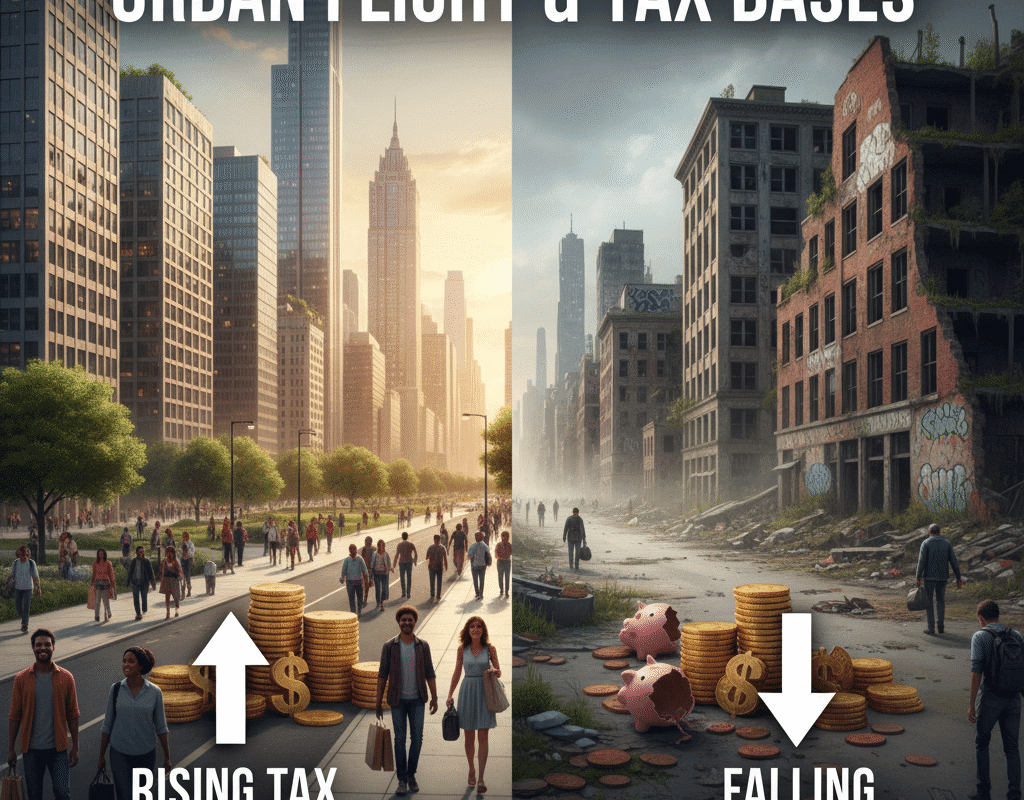
The Impact of Urban Flight on Tax Bases
The Impact of Urban Flight on Tax Bases
One of the biggest demographic migrations in decades is taking place in American cities. Urban flight, which started out as short-term relocations in the early 2020s due to public health issues, distant employment, and growing housing costs, has now solidified into a structural trend. Residents’ relocation from large urban centers to suburbs, exurbs, and smaller cities is becoming a long-term demographic shift rather than a transient response.
The influence on local governments extends well beyond human mobility. Urban flight changes a city’s tax bases, which are its financial foundation.
HSBC Cashback Credit Card 2025 – Benefits, Rewards & How to Apply?

How Urban Flight Shrinks Municipal Tax Bases
Cities rely on a mix of revenue sources, but three dominate: property taxes, sales taxes, and income or wage taxes. Urban flight affects all three.
Property Taxes: The Foundation of Local Government
When residents move out, housing demand softens in certain neighborhoods. This can lead to reduced property values or rising vacancies, eroding the property tax base. Meanwhile, suburbs often see the opposite effect—rising home values and increased construction.
Sales Taxes: Spending Follows Population
Consumers who relocate take their spending power with them. Urban retailers lose customers, and suburban shopping centers benefit. Declining foot traffic in urban businesses—from restaurants to local stores—leads to shrinking sales tax collections and increased retail closures.
Income and Wage Taxes: Fewer Workers, Less Revenue
Cities that rely heavily on wage taxes, such as Philadelphia, New York, and Detroit, face unique challenges. When workers no longer commute into the city or relocate entirely, wage tax receipts decline. This is one of the most significant revenue hits for cities with large office districts still recovering from remote work disruptions.
Which U.S. Cities Are Hit Hardest? A Shifting Urban Environment
While every city’s situation is unique, several major metropolitan areas have experienced notable population decline over recent years. The financial impacts vary, but a common pattern emerges: cities losing residents must cut services or raise taxes—often both.
Major Cities Facing Tax Base Pressures
- New York City: Office vacancies remain elevated, reducing commercial property tax revenue. Out-migration to the suburbs and Sun Belt states continues.
- San Francisco: Tech industry adjustments and remote work trends have hollowed out the downtown region, creating a fiscal crisis tied to declining commercial values.
- Los Angeles: High housing costs and quality-of-life concerns fuel a steady exodus, challenging the city’s revenue stability.
- Chicago: Persistent population loss and pension obligations strain the city’s financial resilience.
At the same time, suburban counties and smaller metros—such as in Texas, Florida, Idaho, Utah, and the Carolinas—experience rapid growth, expanding their tax bases and attracting businesses.
Suburban and Rural Growth: Winners in the Shift
While cities struggle with revenue losses, suburbs and smaller metros see benefits:
Boosted Local Revenues
Growing populations bring:
- Higher property tax collections
- Expanded consumer spending
- Increased business investment
School districts in high-growth areas often see rapid expansions of facilities and staffing.
New Development Booms
Suburbs experience:
- New housing subdivisions
- Retail and commercial developments
- Expanded public infrastructure
However, rapid growth carries challenges too, including traffic congestion, rising housing prices, and increased demand for public services.
The Role of Businesses: A Changing Corporate Geography
Companies follow people—and sometimes lead them. Corporate relocations, especially to states with lower tax burdens, further shrink urban tax bases. Headquarters and regional offices moving to the South and Mountain West amplify the population shift.
Meanwhile, small urban businesses struggle with:
- reduced foot traffic
- rising commercial rents
- increased operational costs
Conclusion: The Impact of Urban Flight on Tax Bases
The impact of urban flight on tax bases is among the most pressing economic issues facing the United States today. Shrinking revenues, rising costs, and shifting populations challenge cities to rethink their financial strategies and long-term planning. Whether urban centers decline or reinvent themselves will depend on bold leadership, smart policies, and the ability to adapt to new demographic realities.
The United States has always been a nation defined by movement and migration. The current trends are no exception—but their financial implications for cities are unprecedented. How policymakers respond will shape the nation’s urban landscape for generations.
The Link Between Union Density and Wage Inequality: How Unions Shape Income Distribution in the US
The Link Between Union Density and Wage Inequality: How Unions Shape Income Distribution in the US