 A K
A K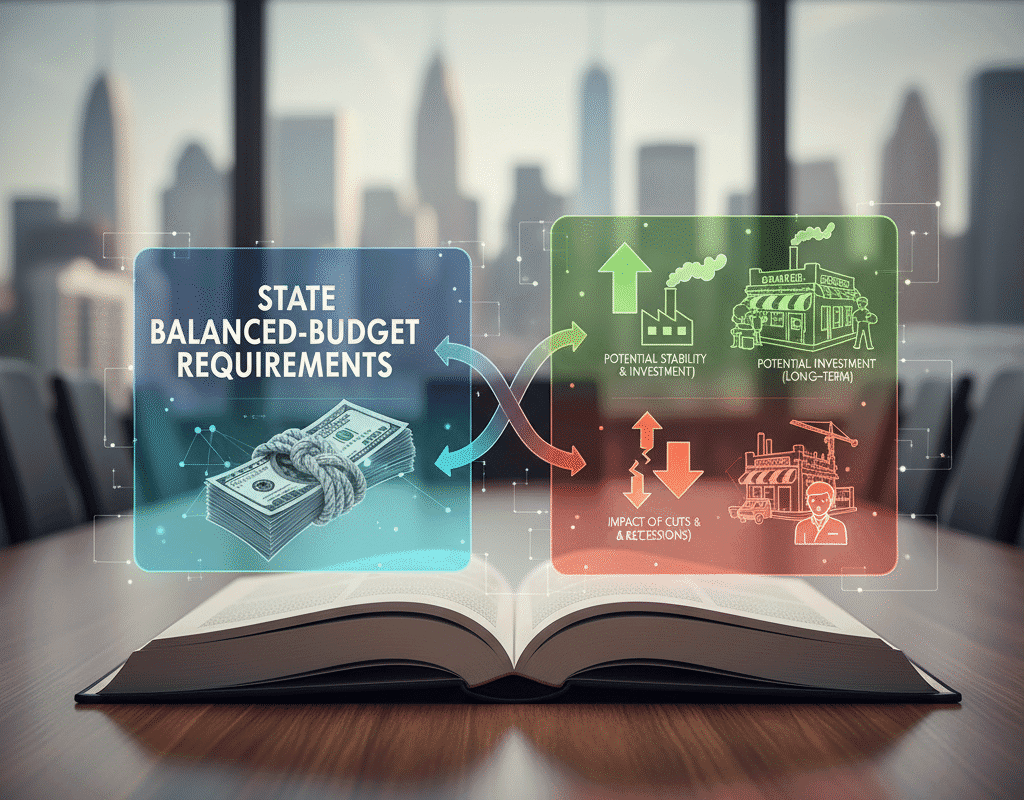
The Impact of State Balanced-Budget Requirements:
The Impact of State Balanced-Budget Requirements:
A key component of fiscal policy in many U.S. states is the necessity for balanced budgets, which are intended to prevent government expenditure from exceeding available revenue. Even though these regulations are meant to promote fiscal restraint, their effects on regional economies are intricate and varied.
The economic, social, and policy ramifications of state balanced-budget laws are examined in this essay, emphasizing both their advantages and disadvantages for nearby areas.
HSBC Cashback Credit Card 2025 – Benefits, Rewards & How to Apply?

Understanding State Balanced-Budget Requirements
A state balanced-budget requirement mandates that state governments cannot spend more than their projected revenues within a fiscal year. Unlike the federal government, which can run deficits, most states operate under statutory or constitutional obligations to balance their budgets.
These rules aim to prevent fiscal irresponsibility, reduce debt accumulation, and maintain investor confidence.
There are three main types of balanced-budget requirements:
- Constitutional Requirements: Enshrined in state constitutions, these rules are legally binding and difficult to override.
- Statutory Requirements: Passed by state legislatures, these laws can be amended but still impose significant fiscal discipline.
- Self-Imposed or Policy Guidelines: These are voluntary targets set by state governments to encourage fiscal responsibility, often accompanied by oversight mechanisms.
Effects on Local Government Spending
Balanced-budget mandates at the state level influence local governments indirectly. Many states control how local governments raise revenue through property taxes, sales taxes, and intergovernmental transfers. When a state tightens its budget, local governments often experience:
- Reduced State Aid: States may cut funding to municipalities, forcing local governments to either raise taxes or reduce services.
- Spending Constraints: Local governments may be prohibited from running deficits, limiting their ability to finance long-term projects.
- Delayed Infrastructure Projects: Investments in roads, bridges, and public facilities may be postponed, affecting employment and economic growth.
Effects on Employment and Public Services
Economic stability and fiscal restraint must be carefully balanced. When local governments operate under tight constraints due to state rules:
- Public Services May Suffer: Essential services such as education, healthcare, and public safety can face budget cuts.
- Employment Can Be Affected: Reduced spending often translates to layoffs in public sector jobs, affecting local employment rates.
- Economic Inequality May Increase: Communities with limited tax bases may struggle to maintain services, exacerbating disparities.
For instance, during the 2008 financial crisis, states with rigid balanced-budget rules had limited capacity to provide stimulus funds to municipalities, leading to slower recovery in local economies.
Case Studies and Examples
- California: California’s constitutional balanced-budget requirement has forced cuts in local government funding during economic downturns. While the state maintains fiscal discipline, municipalities often struggle to maintain public services, particularly in smaller communities with limited tax bases.
- Texas: Texas relies on statutory balanced-budget laws and has a relatively decentralized system of local government finance. Localities have more flexibility in raising revenue, which can mitigate the negative effects of state-level constraints.
- New York: During the COVID-19 pandemic, New York’s balanced-budget requirement limited the state’s ability to provide immediate relief to municipalities, highlighting the tension between fiscal discipline and economic stabilization.
Policy Implications
Policymakers must carefully weigh the benefits of fiscal discipline against the potential negative impacts on local economies. Several strategies can mitigate these challenges:
- Rainy Day Funds: States can maintain reserve funds to support local governments during economic downturns without violating balanced-budget rules.
- Flexible Budget Rules: Some states allow temporary borrowing or deficit spending under specific circumstances, such as emergencies or economic crises.
- Targeted Grants: States can provide conditional grants to support essential services, ensuring fiscal stability while protecting local economies.
- Intergovernmental Collaboration: Coordination between state and local governments can optimize resource allocation and prevent sudden funding shocks.
Obstacles and Reactions
Critics argue that balanced-budget requirements may:
- Limit Local Autonomy: Municipalities have less flexibility to respond to local needs.
- Exacerbate Inequality: Wealthier areas can maintain services, while poorer areas struggle under funding constraints.
- Reduce Economic Resilience: Local economies may be less able to respond to recessions or disasters.
Balancing fiscal responsibility with economic growth requires innovative policy solutions that consider both short-term needs and long-term sustainability.
Conclusion: The Impact of State Balanced-Budget Requirements on Local Economies
State balanced-budget requirements play a crucial role in maintaining fiscal discipline, but their impact on local economies is nuanced. While they promote long-term financial stability, they can constrain local government spending, limit public services, and affect employment and economic growth.
Policymakers must strike a careful balance between fiscal responsibility and economic flexibility, ensuring that local communities can thrive even under strict budgetary rules.
Understanding the relationship between state fiscal policy and local economic health is essential for developing policies that promote sustainable growth, equitable resource distribution, and resilient communities.
As the economic landscape evolves, the challenge will be to design balanced-budget frameworks that support both stability and local prosperity.
Why Americans File Taxes Every Year: Understanding the Unique U.S. Tax System
Why Americans File Taxes Every Year: Understanding the Unique U.S. Tax System