 A K
A K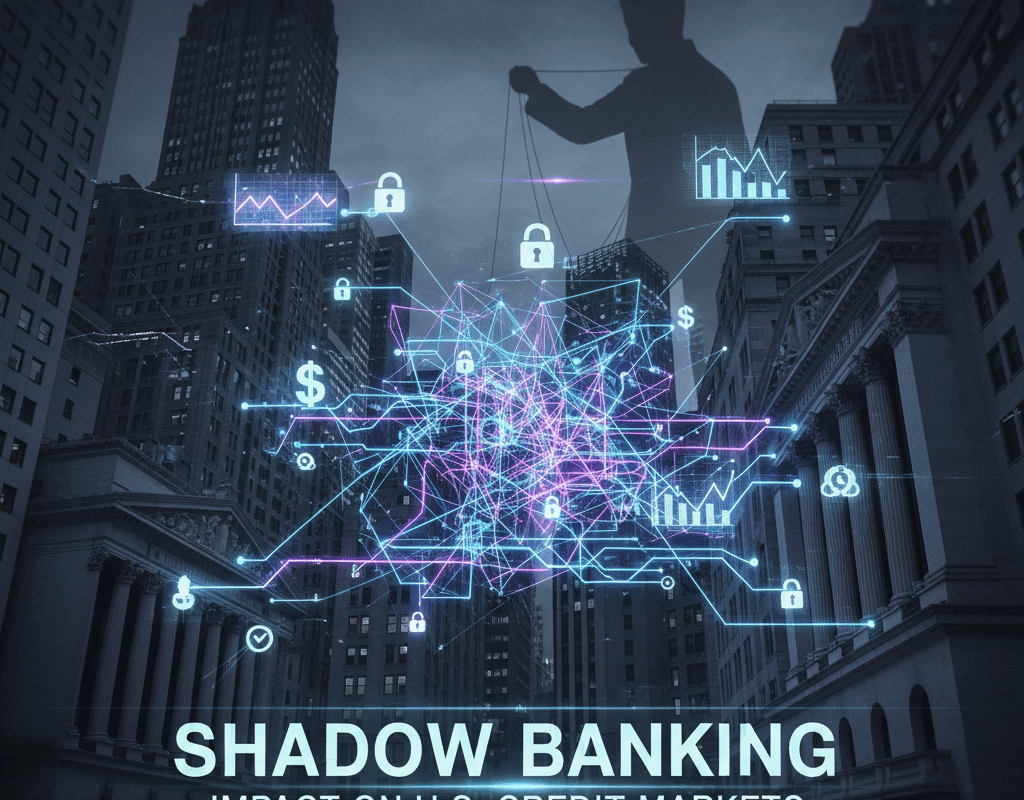
The Impact of Shadow Banking on U.S. Credit Markets
The Impact of Shadow Banking on U.S. Credit Markets
Over the past few decades, the American financial environment has experienced substantial change. The loan industry has long been dominated by traditional banks, but a rival system known as “shadow banking” has become a strong force.
Credit flows, market liquidity, and financial stability are all impacted by this industry, which includes non-bank financial institutions and alternative lending channels. Policymakers, investors, and the whole economy must comprehend its function and effects on the U.S. credit markets.
HSBC Cashback Credit Card 2025 – Benefits, Rewards & How to Apply?

Shadow banking: what is it?
Financial intermediaries that function outside of established regulatory frameworks but offer credit and liquidity services comparable to those of typical banks are referred to as “shadow banks.”
These organizations do not accept deposits covered by the Federal Deposit Insurance Corporation (FDIC), in contrast to commercial banks. Rather, they use tools like money market funds, securitization, and repurchase agreements to transfer money from investors to borrowers.
Growth of Shadow Banking in the U.S.
Shadow banking has significantly increased since the 2008 financial crisis. The U.S. shadow banking industry has trillions of dollars in assets, competing with traditional banks in certain loan categories, according to the Financial Stability Board (FSB). This rise has been attributed to a number of factors:
- Regulatory Arbitrage: The Dodd-Frank Act and other post-crisis banking laws increased the capital and liquidity requirements for conventional banks. Shadow banking entities, less regulated, capitalized on this by offering credit products without the same regulatory burdens.
- Investor Demand: Low-interest rates and the search for higher yields drove institutional and retail investors toward money market funds, securitized products, and private debt, boosting shadow banking activities.
Effect on Credit Markets in the United States
Shadow banking has a profound influence on U.S. credit markets, presenting both benefits and risks:
- Increased Credit Availability
Non-bank lenders often serve borrowers who may not qualify for traditional bank loans. This includes small businesses, startups, and consumers with lower credit scores. By filling this financing gap, shadow banks contribute to economic growth and financial inclusion.
- Competitive Pressure on Traditional Banks
The presence of shadow banks encourages traditional banks to innovate and improve efficiency. It introduces competition in lending rates, credit terms, and product offerings, ultimately benefiting borrowers.
Regulatory Reactions
In order to keep an eye on and control shadow banking without inhibiting innovation, American policymakers have taken the following actions:
- Enhanced Reporting Requirements: Non-bank financial institutions are now required to disclose detailed information on leverage, asset composition, and liquidity risks.
- Stress Testing: Some shadow banking entities are subjected to stress tests to assess their resilience under market stress scenarios.
- Securities Regulation: The Securities and Exchange Commission (SEC) has implemented rules to enhance transparency in money market funds and securitized products.
These measures aim to balance the benefits of shadow banking with the need to protect financial stability.
Consequences for the Economy and Investors
The U.S. economy is impacted by shadow banking in several ways:
- Investment Opportunities: Investors seeking higher yields increasingly turn to private debt, structured products, and hedge funds, fueling shadow banking growth.
- Interest Rate Sensitivity: Shadow banking activity is sensitive to interest rate changes, particularly for products like repo agreements and short-term funding instruments.
- Economic Growth: By expanding credit availability, shadow banking contributes to business expansion, consumer spending, and overall economic activity.
- Financial Stability Concerns: Large-scale defaults or liquidity shocks in the shadow banking sector can trigger cascading effects on traditional banks and markets, underscoring the need for vigilance.
Conclusion: The Impact of Shadow Banking on U.S. Credit Markets
Shadow banking has fundamentally transformed U.S. credit markets. By providing alternative channels for credit, enhancing liquidity, and driving financial innovation, it has become a central player in the modern financial ecosystem. However, the sector’s opacity, leverage, and regulatory gaps present tangible risks that require careful oversight.
For investors, policymakers, and market participants, understanding the dynamics of shadow banking is essential to navigate the evolving landscape of U.S. credit markets.
As the sector continues to grow, striking the right balance between innovation and stability will determine whether shadow banking serves as a catalyst for economic growth or a potential source of systemic vulnerability.
How U.S. Fiscal Multipliers Differ Across Income Groups: Economic Impacts Explained
How U.S. Fiscal Multipliers Differ Across Income Groups: Economic Impacts Explained