 A K
A K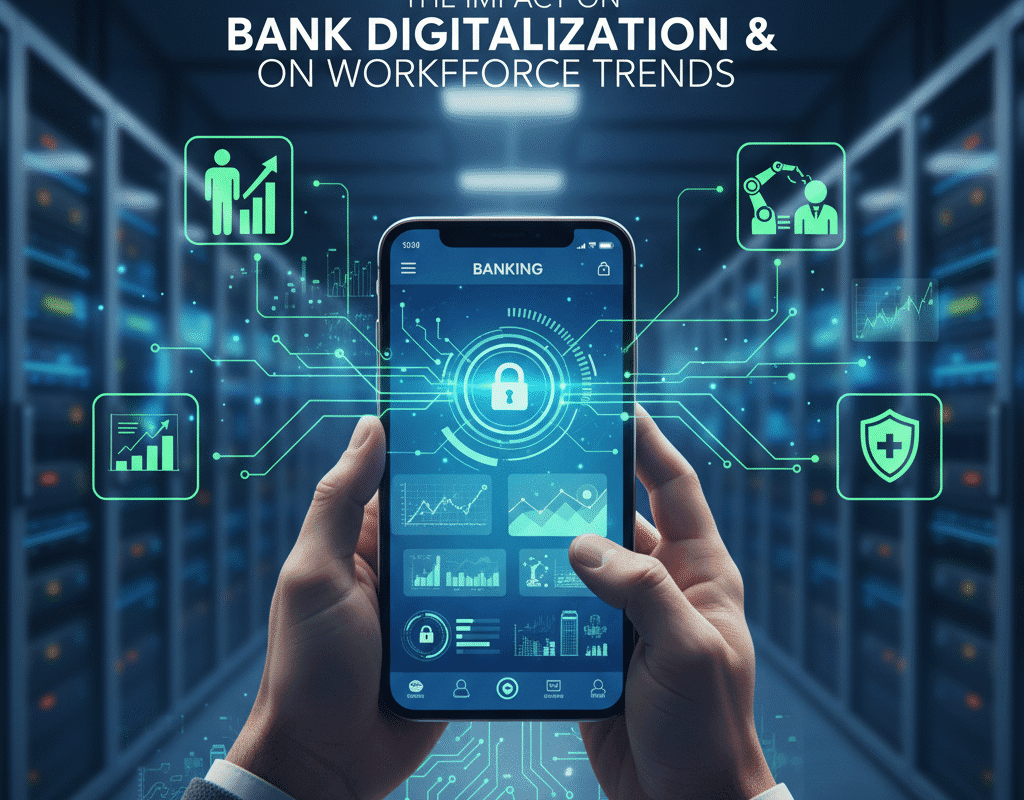
The Impact of Bank Digitalization on Workforce Trends
The Impact of Bank Digitalization on Workforce Trends
The banking industry is experiencing a profound transformation driven by digitalization, reshaping the way financial institutions operate and altering workforce trends in the sector. From the introduction of mobile banking apps to AI-powered financial services, the digital revolution in banking has far-reaching implications for employees, career paths, and overall workforce strategies.
HSBC Cashback Credit Card 2025 – Benefits, Rewards & How to Apply?

The Growth of Digital Banking
The use of digital technologies to boost customer satisfaction, cut expenses, and increase efficiency is known as “bank digitalization.” Banks all around the world have made more investments in digital platforms, online services, and automation tools within the last ten years.
This trend was hastened by the COVID-19 pandemic, which drove banks to switch to contactless services and remote operations, underscoring the significance of technology in preserving business continuity.
Impact on Workforce Trends
- Shift from Routine to Analytical Roles
One of the most visible changes in workforce trends is the shift away from repetitive administrative tasks toward analytical and strategic roles. Traditional banking jobs, such as data entry, check processing, and basic customer service, are increasingly automated.
This shift is prompting banks to focus on hiring employees who possess analytical skills, digital literacy, and the ability to manage technology-driven workflows.
- Emergence of New Job Roles
Digitalization has also created entirely new roles in banking. These include positions such as digital transformation managers, blockchain specialists, AI trainers, and cybersecurity analysts.
These roles require a combination of banking knowledge and technical expertise, highlighting the need for upskilling and reskilling among existing staff.
The Role of AI and Automation in Workforce Transformation
Artificial intelligence and automation are central to workforce transformation in banking. AI-powered chatbots, virtual assistants, and automated loan approval systems enhance efficiency while reducing manual workload. Automation tools such as RPA allow banks to handle high-volume tasks faster and with fewer errors.
The integration of AI has shifted workforce priorities from performing repetitive operations to interpreting AI outputs, improving algorithms, and managing customer relationships. Employees now focus on tasks that require creativity, judgment, and emotional intelligence—skills that technology cannot replicate easily.
Case Studies of Workforce Transformation in Banking
Several banks worldwide have embraced digitalization while reshaping workforce trends:
- JPMorgan Chase: Implemented AI tools for document review, fraud detection, and investment analysis, reducing manual labor and creating roles in AI system management.
- HSBC: Launched extensive reskilling programs for employees in digital banking, data analytics, and cybersecurity.
- DBS Bank (Singapore): Adopted a digital-first strategy, emphasizing agile workforce models and collaborative digital workspaces.
These case studies highlight how proactive workforce management alongside technology adoption can enhance operational efficiency and employee satisfaction.
Outlook for the Future
The ongoing development of digital technologies will have a significant impact on banking employment trends in the future. Among the new trends are:
- Personalized Employee Development: Based on skill gaps and career goals, AI-driven systems will provide employees individualized learning routes.
- Gig Economy Integration: For specialized initiatives, banks may depend more and more on temporary digital specialists and consultants.
- Improved Collaboration Tools: Smooth communication between international teams will be made possible by sophisticated digital collaboration tools.
- Ethical AI Management: Managing compliance, data privacy, and ethical AI use will become more and more important in workforce positions.
In conclusion: The Impact of Bank Digitalization on Workforce
Bank digitalization is more than just a technological upgrade; it is a catalyst for reshaping workforce trends in the financial sector. By embracing digital tools, banks are transitioning toward a more skilled, agile, and technology-driven workforce.
While challenges such as job displacement and skill gaps exist, proactive strategies in reskilling, employee engagement, and ethical AI adoption can help ensure a balanced, future-ready workforce.
As the financial sector continues to evolve, employees who adapt to new technologies, acquire relevant skills, and embrace digital collaboration will thrive. Bank digitalization not only transforms operations but also redefines career opportunities, paving the way for a more innovative and resilient workforce.
The Fiscal Cost of U.S. Border Enforcement Policies: An In-Depth Analysis
The Fiscal Cost of U.S. Border Enforcement Policies: An In-Depth Analysis