 A K
A K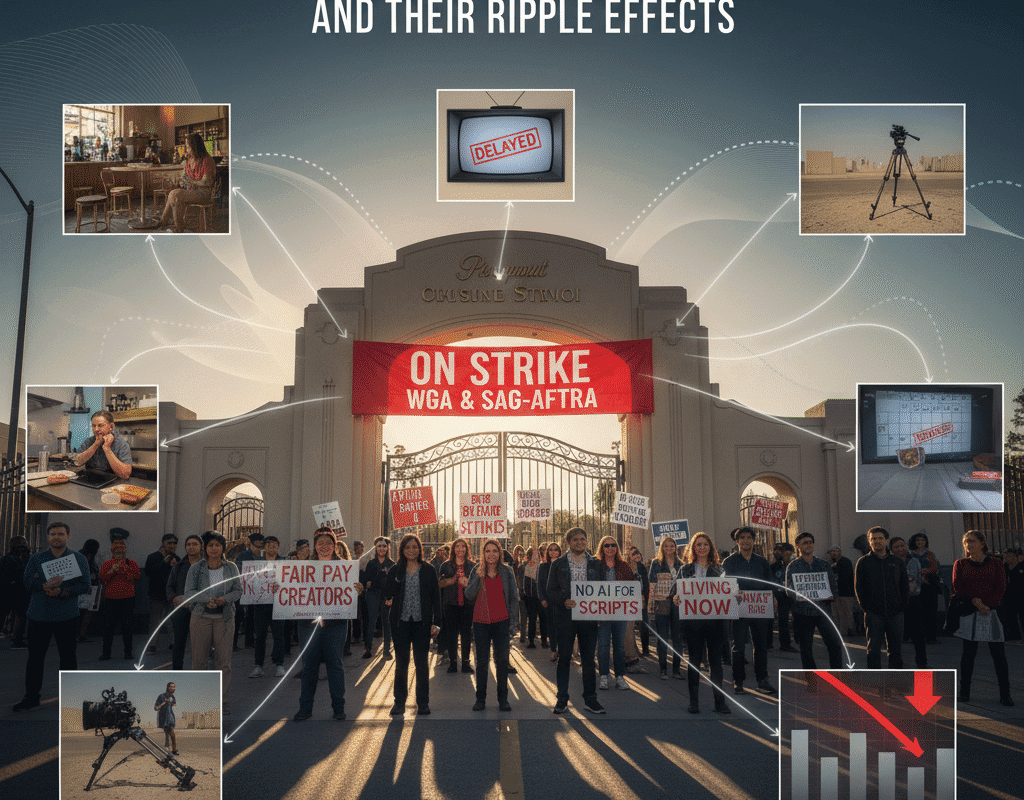
The Economics of Hollywood Strikes: Impact on the Entertainment
The Economics of Hollywood Strikes: Impact on the Entertainment
Hollywood, the global hub of entertainment, is facing a labor disruption that extends far beyond the movie sets and soundstages of Los Angeles.
Recent strikes involving the Writers Guild of America (WGA) and the Screen Actors Guild-American Federation of Television and Radio Artists (SAG-AFTRA) have illuminated the intricate economic web of the entertainment industry—and the wide-reaching consequences that a pause in production can have on the U.S. economy.
Understanding the Current Hollywood Strikes
The WGA and SAG-AFTRA strikes, both unprecedented in their scope, are rooted in disputes over fair compensation, residuals from streaming platforms, and working conditions in an increasingly digital entertainment ecosystem.
HSBC Cashback Credit Card 2025 – Benefits, Rewards & How to Apply?

Direct Economic Impact on Studios and Production Companies
When writers and actors stop working, production halts, delaying film and television schedules. For studios and streaming services, this means:
- Revenue Loss: Delayed releases result in postponed box office earnings, subscription revenue, and advertising income. Big-budget movies can lose millions per week in potential earnings.
- Operational Costs: Studios continue to incur costs for sets, equipment rentals, and marketing campaigns, even when production is halted.
- Talent Costs: Contracts with high-profile actors or directors often include clauses guaranteeing payment regardless of production delays, adding financial strain.
Impact on Streaming Platforms
Streaming platforms such as Netflix, Disney+, Amazon Prime Video, and HBO Max rely heavily on a continuous content pipeline. With strikes:
- Original Content Delays: New series and movies are postponed, affecting subscriber growth and retention.
- Increased Competition: With fewer releases, platforms must compete fiercely for audience attention, sometimes investing in older or acquired content at higher licensing costs.
- Financial Pressure: Quarterly earnings can drop, impacting stock prices and investor confidence.
This disruption underscores how Hollywood’s labor disputes are no longer confined to physical studios—they reverberate across the global digital economy.
Economic Models and Predictions
Economists analyze the impact of Hollywood strikes using multiple models, factoring in:
- Direct revenue loss from halted production
- Delayed marketing and release cycles
- Decreased consumer spending in local economies
- Global distribution losses due to missed theatrical windows
Preliminary studies suggest that a strike lasting several months could reduce U.S. GDP by 0.01% to 0.05%, primarily through the entertainment sector’s contribution. While this may seem small, it translates into billions in lost economic activity.
Financial analysts also warn that the cumulative effect on small businesses, freelancers, and service providers may linger long after strikes end, due to deferred projects and canceled contracts.
Worldwide Consequences
Hollywood is not just an American industry—it’s a global cultural export. Delays in film and TV production ripple worldwide:
- International Box Office: Films scheduled for global release may miss lucrative windows, affecting distributors and international markets.
- Streaming Content Shortages: International subscribers may experience gaps in content availability, influencing subscription trends abroad.
- Cultural Impact: Hollywood sets cultural trends globally, and disruptions can affect advertising, media partnerships, and global pop culture events.
These global implications underscore the intertwined nature of media, labor, and economics in a globalized world.
Strategies to Mitigate Economic Impact
Studios and governments have explored strategies to reduce the economic damage of strikes:
- Financial Reserves: Large studios maintain cash reserves to cover operational costs during production halts.
- Insurance Policies: Some productions invest in strike insurance, though it rarely covers full revenue loss.
- Diversification: Companies invest in multiple revenue streams, including licensing, merchandising, and digital content, to offset potential losses.
- Negotiation Incentives: Proactive labor negotiations can prevent strikes or shorten their duration, minimizing economic disruption.
Conclusion: The Economics of Hollywood Strikes
Hollywood strikes are more than industry disputes—they are economic events with broad ramifications for workers, businesses, and consumers alike. From lost revenue at major studios to reduced incomes for freelancers, and from slowed streaming content pipelines to global market disruptions, the ripple effects extend far beyond the movie set.
For policymakers, business leaders, and economists, these strikes offer insight into the intersection of labor rights, digital transformation, and economic resilience. The resolution of these labor disputes may well set a precedent for the future of creative industries in the United States—and beyond.